Nora Ephron Scripted and Unscripted in Everything Is Copy

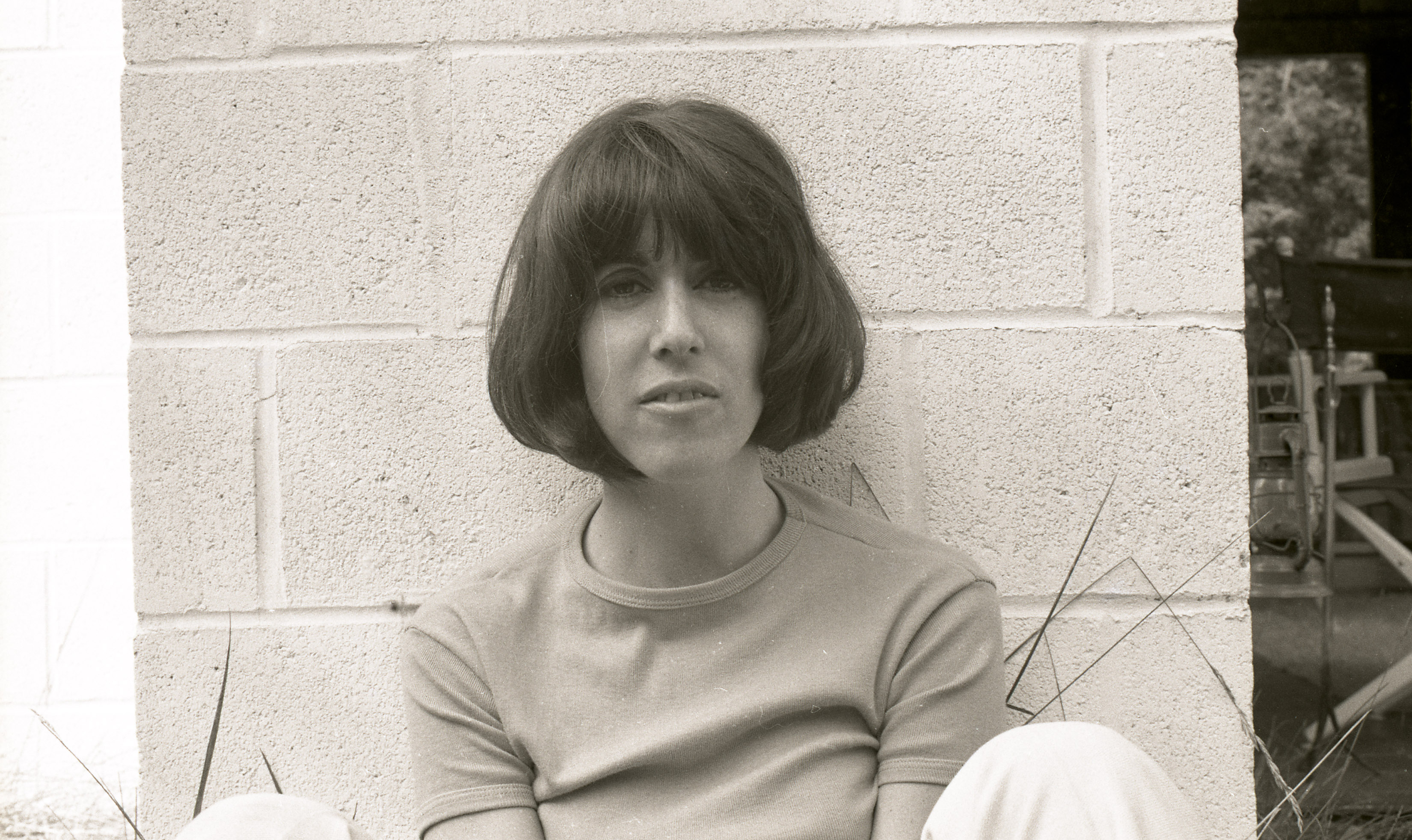
Young and feisty writer Nora Ephron in the 1960s. Photo: Dan Greenburg. Courtesy HBO.

On the cusp of greatness, young and feisty journalist Nora Ephron in the 1960s. Photo: Dan Greenburg. Courtesy HBO.

Sharp-tongued, witty (“writers are predators”) and beloved by notable New York and Washington literati, Nora Ephron is the subject of her eldest son Jacob Bernstein’s touching, smartly filmed and edited profile, Everything Is Copy. The film made its world premiere at the 53rd annual New York Film Festival last fall and debuts on HBO tonight, Monday, March 21, 2016, 9:00 – 10:30 p.m. ET/PT. (Check listings for additional HBO playdates in the weeks ahead and availability on HBO NOW, HBO GO and HBO On Demand.) At this writing, the film is also in limited theatrical release.

I was shocked like many others to hear of Nora Ephron’s untimely death at 71 in 2012. Driven by her mother, screenwriter Phoebe Ephron’s mantra that “everything is copy,” Nora (1941-2012) dove head first into public consciousness as a print journalist, essayist, novelist, humorist, screenwriter and playwright. She also was one of the few women who managed to successfully crack Hollywood’s old boys’ club when she added “film director” to her lofty resumé.

everythingiscopy05

All of them writers… from left: Carl Bernstein, Jacob Bernstein and Nora Ephron in 1996. Photo courtesy HBO.

Journalist and fledgling filmmaker Jacob Bernstein, Nora’s son with second husband Carl (All the President’s Men) Bernstein, does a bang up job of evoking his mom’s mindset, drive and personal peccadilloes in Everything Is Copy.

The film juxtaposes a rich mix of color home movies from her Tinsel Town childhood; clips from her Hollywood films; witty vintage TV “tête-à-têtes” with the obviously smitten Dick Cavett and Charlie Rose; sharp insights from her esteemed literary colleagues; heartfelt recollections from her three younger sisters (Delia, Amy and Hallie) and two ex-husbands (Dan Greenburg and Carl Bernstein); and charmingly breathless readings by her actress pals Meg Ryan, Rita Wilson, Reese Witherspoon, Gaby Hoffmann and Lena Dunham.

“When you slip on a banana peel, people laugh at you,” says Nora Ephron early on in Everything Is Copy.  “But when you tell people you slipped on the banana peel, it’s your laugh. So you become the hero, rather than the victim of the joke.” Her son Jacob captures quite astutely the reality of his mom as hero and victim in her own life and others’ lives as well.

Especially enlightening are the connections made between her words on the page and the drama played out in her life, the secrets she revealed about others and those she didn’t (most notably, her own fatal illness). Bernstein not only joins, on camera, an impressive line-up of articulate literary and Hollywood giants, whose timelines are important to this story; but he also gives ample screen time to his dad, Carl.  Father and son manage an honest dialogue as they and their shared friends discuss Carl’s impact on his ex-wife’s life and work. (His affair during Nora’s second pregnancy led not only to their break-up, but Nora’s best-selling novel and 1986 film adaptation, Heartburn.)

Fortunately, the writer/director/feminist’s body of work lives on to give us a much-needed boost during challenging times of our lives.  Her female characters, most memorably embodied by Meryl Streep and Meg Ryan, tackle many of the issues we face as women as we attempt to forge healthy, loving communicative relationships with men (When Harry Met SallySleepless in Seattle), reinvent ourselves (Julie & Julia, You’ve Got Mail) and navigate the minefields of infidelity (Heartburn), toxic environments (Silkwood) and aging (I Feel Bad about My Neck). There are great clips from all of her movies in Everything Is Copy and readings from her notable essays.
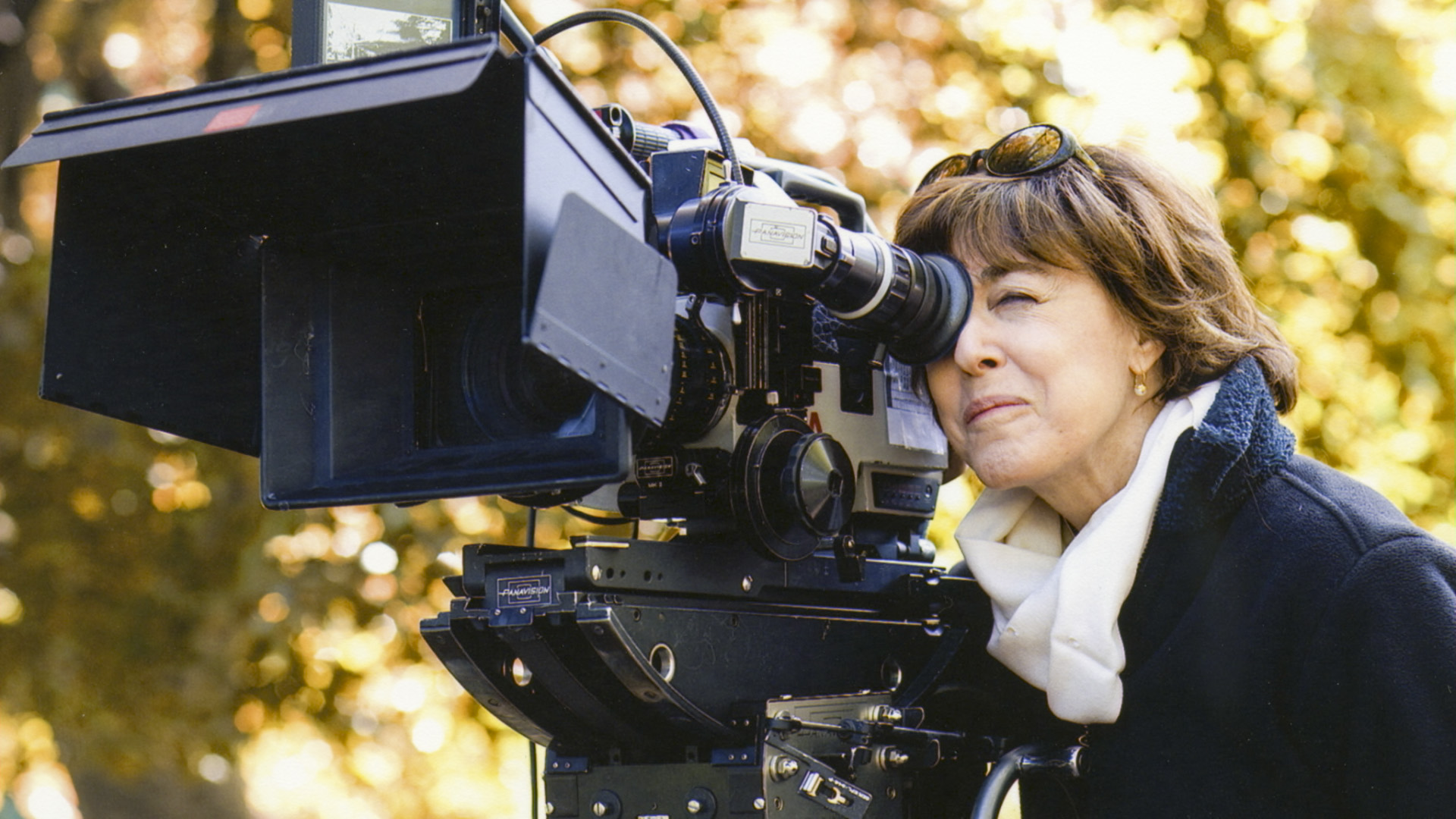
Nora Ephron, film director. Photo courtesy HBO.

Nora Ephron, film director. Photo courtesy HBO.

In real life, Ephron made a good match with husband #3, author Nicholas Pileggi.  In an industry run by men, she conceived, wrote and directed a string of box office hits featuring memorable female protagonists.  Few women, then and now, have had such a track record.  She was raised and dodged bullets in the Hollywood trenches and came out with a solid marriage, two kids and a fine body of work that encourages women to challenge the status quo.

While Ephron’s New York sensibility and sense of humor permeate her work, her films give all women–Blue State, Red State and those in-between–a voice and a happy ending.  For Ephron, obstacles were meant to be surmounted, a point she made clear in her commencement speech to 1996 grads, all women, at her alma mater, Wellesley College (MA):

“My class went to college in the era when you got a master’s degree in teaching because it was ‘something to fall back on’ in the worst case scenario, the worst case scenario being that no one married you and you actually had to go to work. … We weren’t meant to have futures, we were meant to marry them.  We weren’t meant to have politics or careers that mattered, or opinions, we were meant to marry them. … Be the heroine of your life, not the victim. … Whatever you choose, however many roads you travel, I hope you will find some way to break the rules and make a little trouble out there.  And I also hope that you will choose to make some of that trouble on behalf of women.”
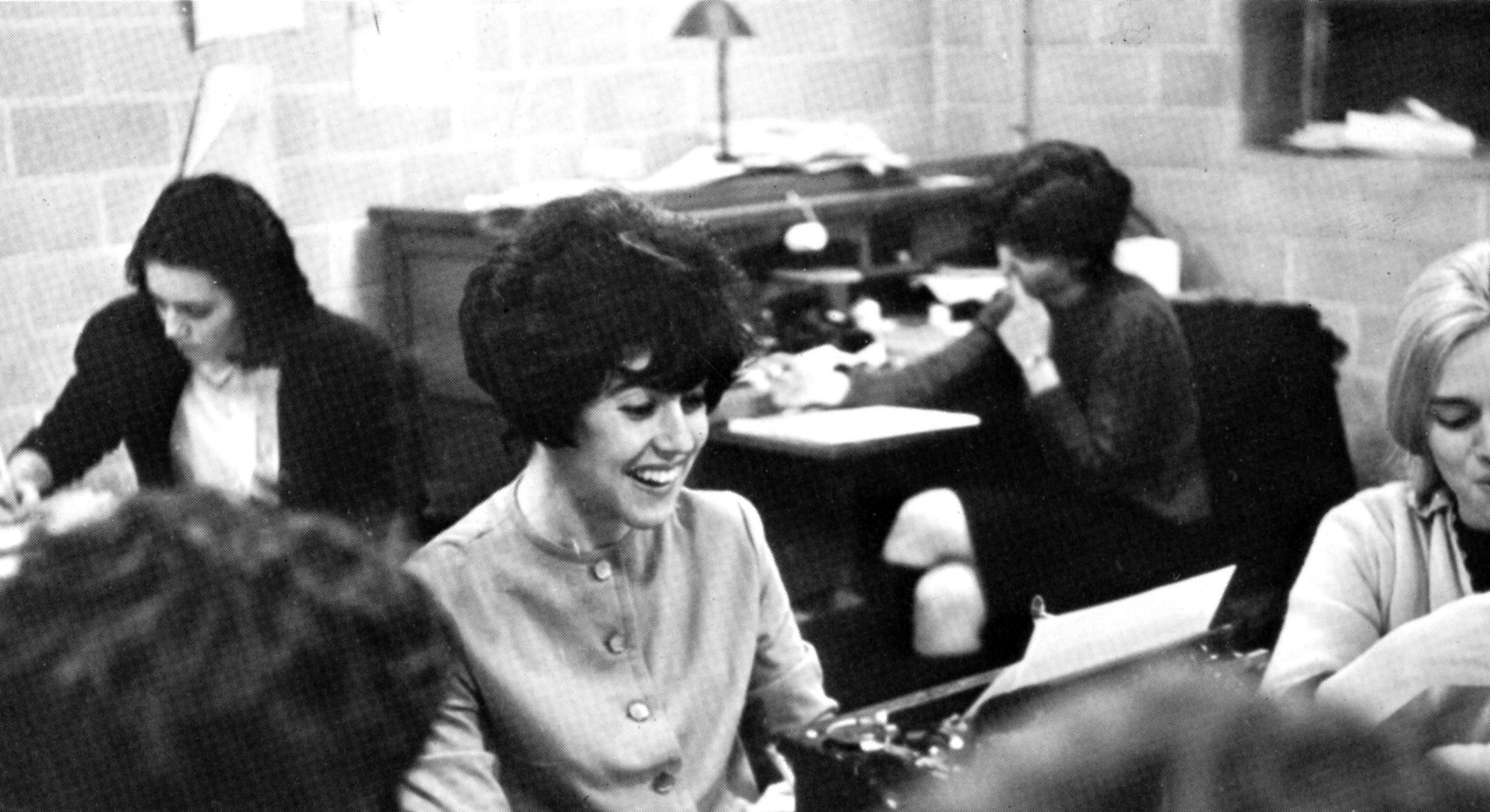
College days at Wellesley. Photo: Wellesley College. Courtesy HBO.

College days at Wellesley. Photo: Wellesley College. Courtesy HBO.

Nora Ephron covered a lot of “trouble” as a writer and feminist. Her son does right by her in Everything Is Copy and certainly has the potential to make his own mark as a filmmaker as well. The film should be an evergreen programming choice in journalism, film appreciation and women’s studies in high schools, colleges, universities and libraries.

You can catch Everything Is Copy on HBO tonight, Monday, March 21, 2016, 9:00 – 10:30 p.m. ET/PT. (Check listings for additional HBO playdates in the weeks ahead and availability on HBO NOW, HBO GO and HBO On Demand.) The film is also currently in limited theatrical release.–Judith Trojan

Posted in Cable, Film, Journalism, Magazines, Newspapers | Tagged , , , , , , , , , , , , , , | 3 Comments

Mavis! Takes Us There on HBO

Be prepared to get caught up in Mavis Staples' glorious spirit in MAVIS! Photo: Miikka Skaffari/Film First. Courtesy HBO.

Be prepared to get caught up in Mavis Staples’ glorious spirit in MAVIS! Photo: Miikka Skaffari/Film First. Courtesy HBO.

Need a little more sunshine in your life? If so, I encourage you to kick back and spend some quality time with Mavis!, the wonderful new documentary profile of singer Mavis Staples. You’ll come away with a smile on your face and a spring in your step, as you fall under the spell of the gospel and soul singing Rock and Roll Hall of Famer.

Mavis! debuts on HBO tonight, Monday, February 29, 2016, 9:00 – 10:15 p.m. ET/PT. (Check listings for additional HBO playdates in the weeks ahead and availability on HBO NOW, HBO GO and HBO On Demand.)

Piggybacked with the release of Ms. Staples’ aptly titled new album, Livin’ on a High Note (2/19/16), Mavis! is an uplifting, thoughtfully filmed and edited bio of the 76-year-old Grammy Award-winning singer whose remarkable 60-year career has crisscrossed the great divide between gospel and secular music.  The film is an especially refreshing time capsule of American gospel, folk and freedom music and a much-needed reminder of the important role played by music in the spiritual and cultural lives of African-Americans and in the civil rights movement.

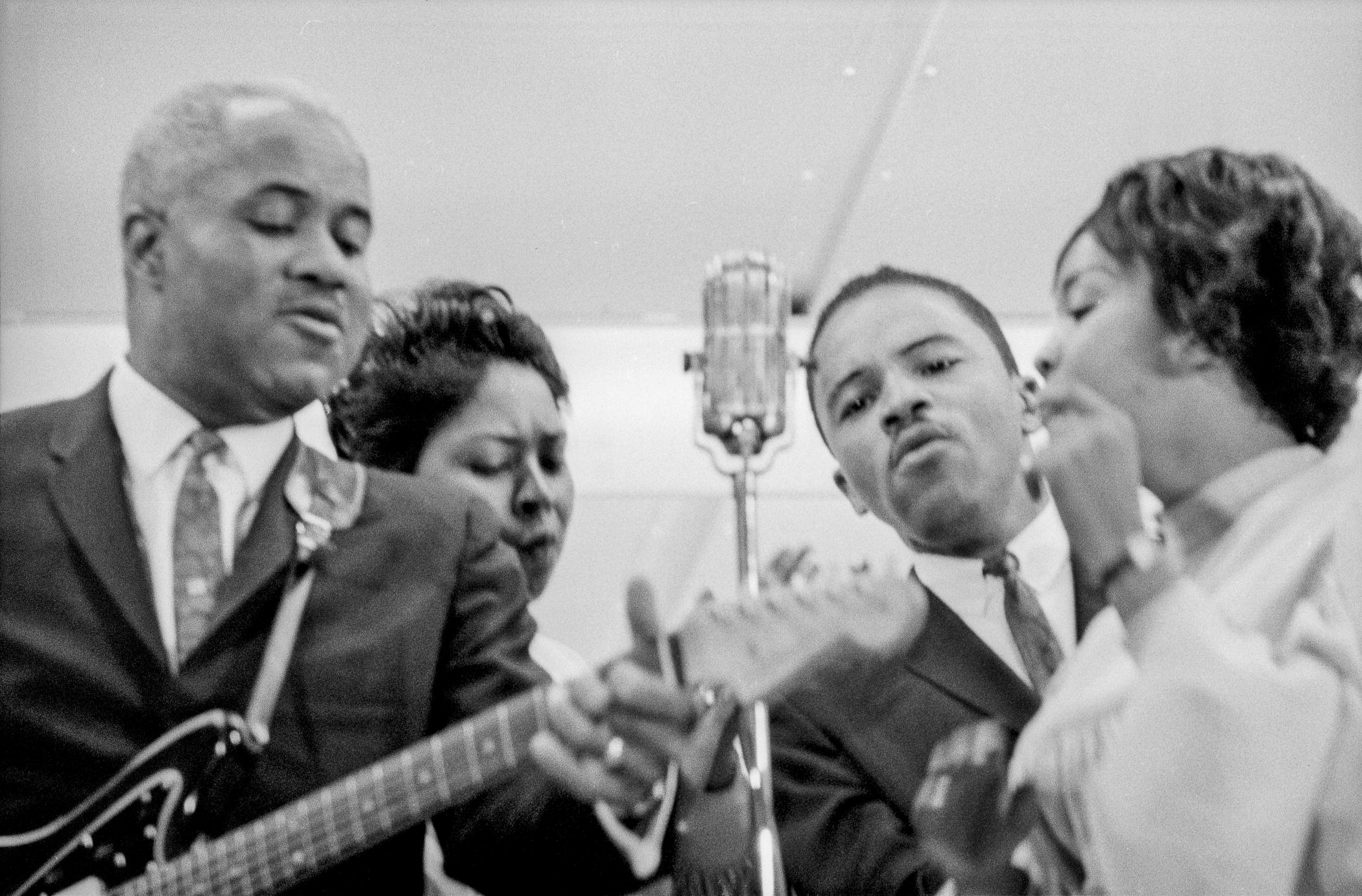
The Staples Singers, from left: Pops Staples, Yvonne, Pervis and Mavis, perfom during the 1960's. Photo: Joe Alper Photo Collection LLC. Courtesy HBO.

The Staples Singers, from left: Pops Staples, Yvonne, Pervis and Mavis, perform during the 1960’s. Photo: Joe Alper Photo Collection LLC. Courtesy HBO.

Kudos to director Jessica Edwards for making wise choices.  Ms. Edwards proves with this film that it’s possible to combine music, spirituality, social and cultural history into an entertaining and edifying 80-minute biography without losing sight of its prime focus. Not only are we given a clear picture of The Staples Singers’ milieu and career timeline; but we are front row center at Ms. Staples’ recent electrifying performances to spellbound audiences of all ages, as well as her seminal performances as The Staples Singers’ lead vocalist.

Gigs at the Newport Folk Festival, then (1964) and now, are  pivotal, as is the visionary role played by her beloved dad, musician Roebuck “Pops” Staples. His back story, nicely highlighted by a brief solo performance clip, is a revelation. Life-altering professional and personal ties with the likes of Martin Luther King and musicians Bob Dylan, Prince, Eric Clapton and Jeff Tweedy are chronicled via vintage performance film clips and photos.

Recollections from friends and collaborators, including Bob Dylan, Bonnie Raitt, the late Levon Helm, Jeff and Spencer Tweedy, her producers, backup singers and musicians, among others, are assets in this briskly paced love fest.

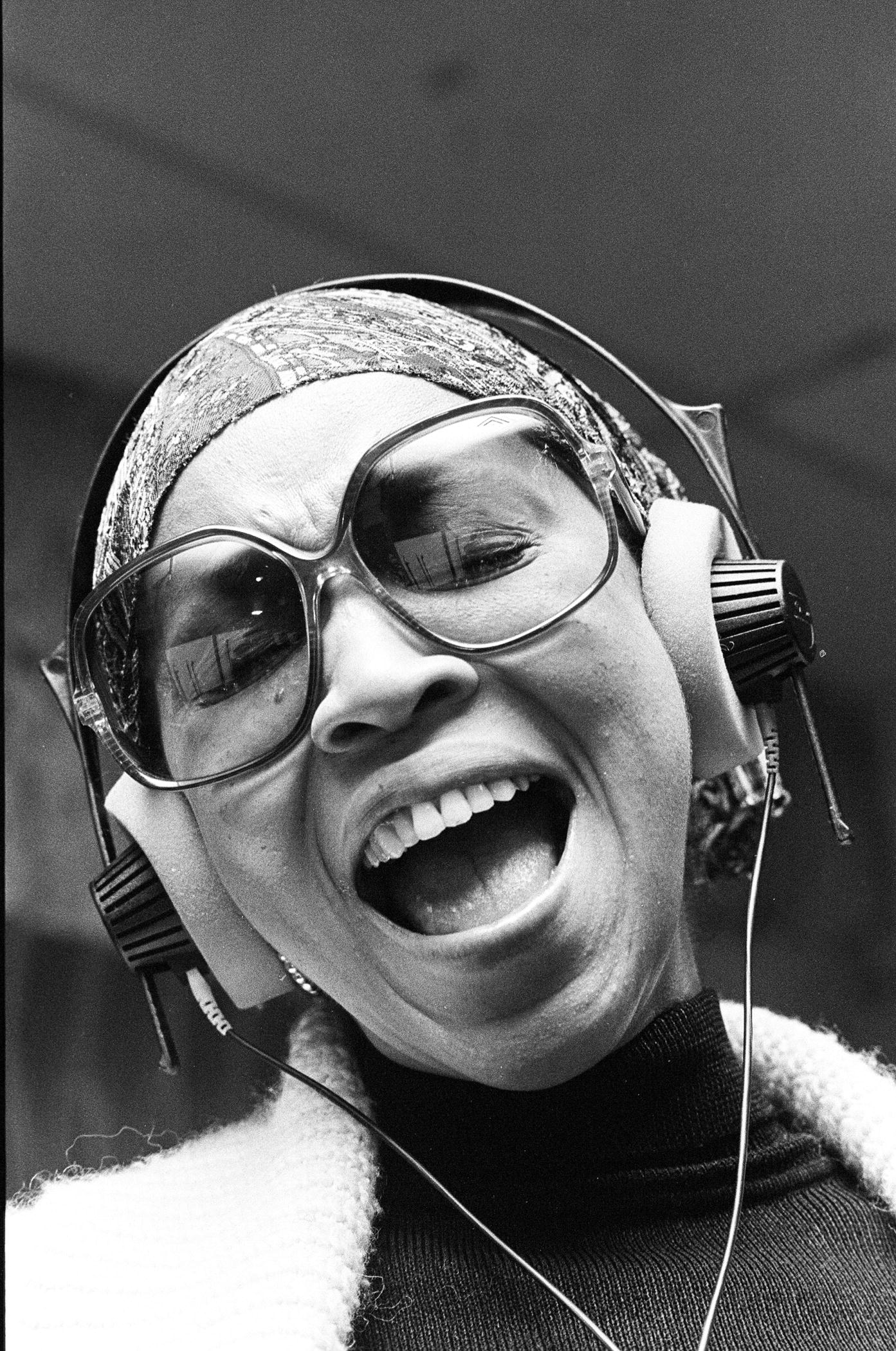
Mavis Staples sings solor in the mid-1970s. Photo: Marc PoKempner. Courtesy HBO.

Mavis Staples singing solo in the mid-1970’s. Photo: Marc PoKempner. Courtesy HBO.

Not one to be sidelined by recent knee replacement surgery, Staples is an exuberant, cane-waving dynamo on stage. Her voice, energy and spirit remain as vital as ever.  “I’ll stop singing when I have nothing left to say,” she says.

Ms. Staples’ journey, on stage and off, her positive outlook driven by strong spiritual and family ties, and   her eagerness to embrace young audiences and musicians will inspire viewers, especially musicians and music lovers of all ages, to be happy and become reacquainted with the music and legacy of The Staples Singers and, most especially, Mavis Staples.

Mavis! debuts on HBO tonight, Monday, February 29, 2016, 9:00 – 10:15 p.m. ET/PT. (Check listings for additional HBO playdates in the weeks ahead and availability on HBO NOW, HBO GO and HBO On Demand.) Be sure to watch!–Judith Trojan

Posted in Cable, Film, Music | Tagged , , , , , , , , , , , , | 1 Comment

Becoming Mike Nichols on HBO Recalls His Early Triumphs

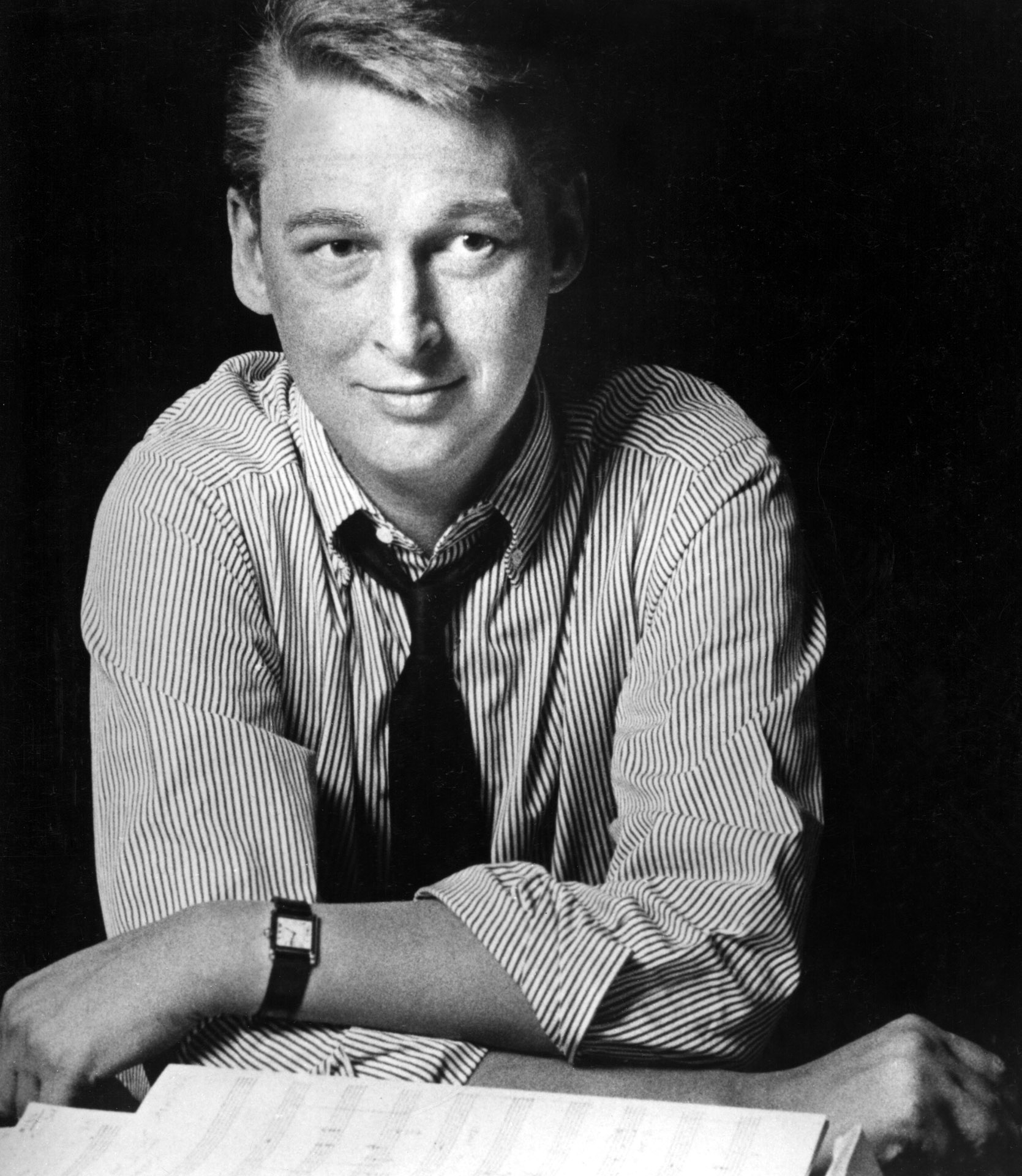
Mike Nichols (1931-2015).

Mike Nichols (1931-2014) recalls his early career breakthroughs with Elaine May, The Odd Couple, Liz, Dick and Dustin in BECOMING MIKE NICHOLS.

“I wasn’t interested in doing a film about anything other than his work as an artist,” says director/executive producer Douglas McGrath about the subject of his new documentary, Becoming Mike Nichols. “It’s not a gossipy piece.”

McGrath’s goal certainly seemed a reasonable way to approach prolific film, TV and theater director, writer, comedian, actor and producer Mike Nichols (1931-2014).  As you will see in Becoming Mike Nichols, McGrath meets that goal admirably.

Fresh from its world premiere at the 2016 Sundance Film Festival, Becoming Mike Nichols debuts on HBO tonight, Monday, February 22, 2016, 9:00 – 10:15 p.m., ET/PT. (Check listings for additional HBO playdates in the weeks ahead and availability on HBO NOW, HBO GO and HBO On Demand.)

If you read my reviews regularly in FrontRowCenter, you know that Becoming Mike Nichols is the second film about Nichols to air in the past month. See also http://www.judithtrojan.com/2016/01/29   Both films rely heavily on interviews with Nichols recorded just prior to his death in November 2014. The first to hit the airwaves, Mike Nichols: American Masters for PBS, was directed by his former partner, comedian Elaine May. It is propelled by Nichols’ running monologue culled from interviews with producer Julian Schlossberg, who never appears on camera. Celebrity anecdotes, photos, film and TV clips rather artlessly frame Nichols’ monologue and condense his massive career trajectory into one 60-minute documentary. It’s a tough squeeze and doesn’t do Nichols or his work justice.

An Evening with Mike Nichols and Elaine May opened on Broadway in October 1960.

AN EVENING WITH MIKE NICHOLS AND ELAINE MAY opened on Broadway in October 1960.

Douglas McGrath’s Becoming Mike Nichols, on the other hand, has clearly defined parameters and focus. Lovers of Nichols’ inventive routines with Elaine May, as well as his early, acclaimed directorial work on stage and in film will have a much more rewarding time of it here.

Becoming Mike Nichols is aptly titled. While it also primarily consists of filmed interviews with Nichols, the interviews were conducted by his friend and colleague, the esteemed stage director, Jack O’Brien, who does appear on camera.  The congenial Nichols-O’Brien chats took place in the summer of 2014, four months before Nichols died. They were filmed in two sessions, one with an audience and one without, on the stage of the Golden Theatre in New York City. The John Golden Theatre was the site of his acclaimed Broadway debut with Elaine May, An Evening with Mike Nichols and Elaine May, that opened in October 1960.

McGrath’s decision to dispense with distracting, schmaltzy celebrity anecdotes is a definite plus. Although Nichols’ body of work garnered an astounding number of awards and accolades, including an Academy Award®, four Emmys, nine Tony Awards and a Grammy; and his film work alone received 42 Academy Award® nominations, McGrath smartly narrows his frame of reference. He zeroes in on Nichols’ early career as an actor and improv performer with Elaine May and his segue into stage and film directing. Although he seemed to hit home runs right off the bat, Nichols provides an honest and invaluable appraisal of the roadblocks he surmounted as a fledgling performer and director.

Photo courtesy Playbill.

Photo courtesy Playbill.

Excellent use is made of numerous, well-chosen film clips and on-stage and on-set archival photos to illustrate Nichols’ anecdotes. There are hilarious, black-and-white archival clips of Nichols and May’s seminal routines that are as fresh and timely today as they were in the Sixties.  Nichols also recalls the surprising challenges he faced and resolved as director of his first two Neil Simon plays–Barefoot in the Park (1964) and The Odd Couple (1965)–both of which won him Tony Awards.

His transition to film directing with Who’s Afraid of Virginia Woolf? (1966) and The Graduate (1967) provides equally fascinating content, as McGrath juxtaposes Nichols’ casting and production insights with lengthy referenced film clips. You will definitely be compelled to take a fresh look at both films after travelling down this road with Nichols.

With this year’s Oscar telecast on the horizon, it’s a perfect time to revisit clips from these two extraordinary, 50-year-old Oscar winners and the Oscar confabs that honored them with a boatload of trophies. Mike Nichols’ acceptance speech upon winning the 1967 Best Director Academy Award® for The Graduate was gracious and quite revelatory.  The Graduate was only his second film, and he was 36 years old at the time.

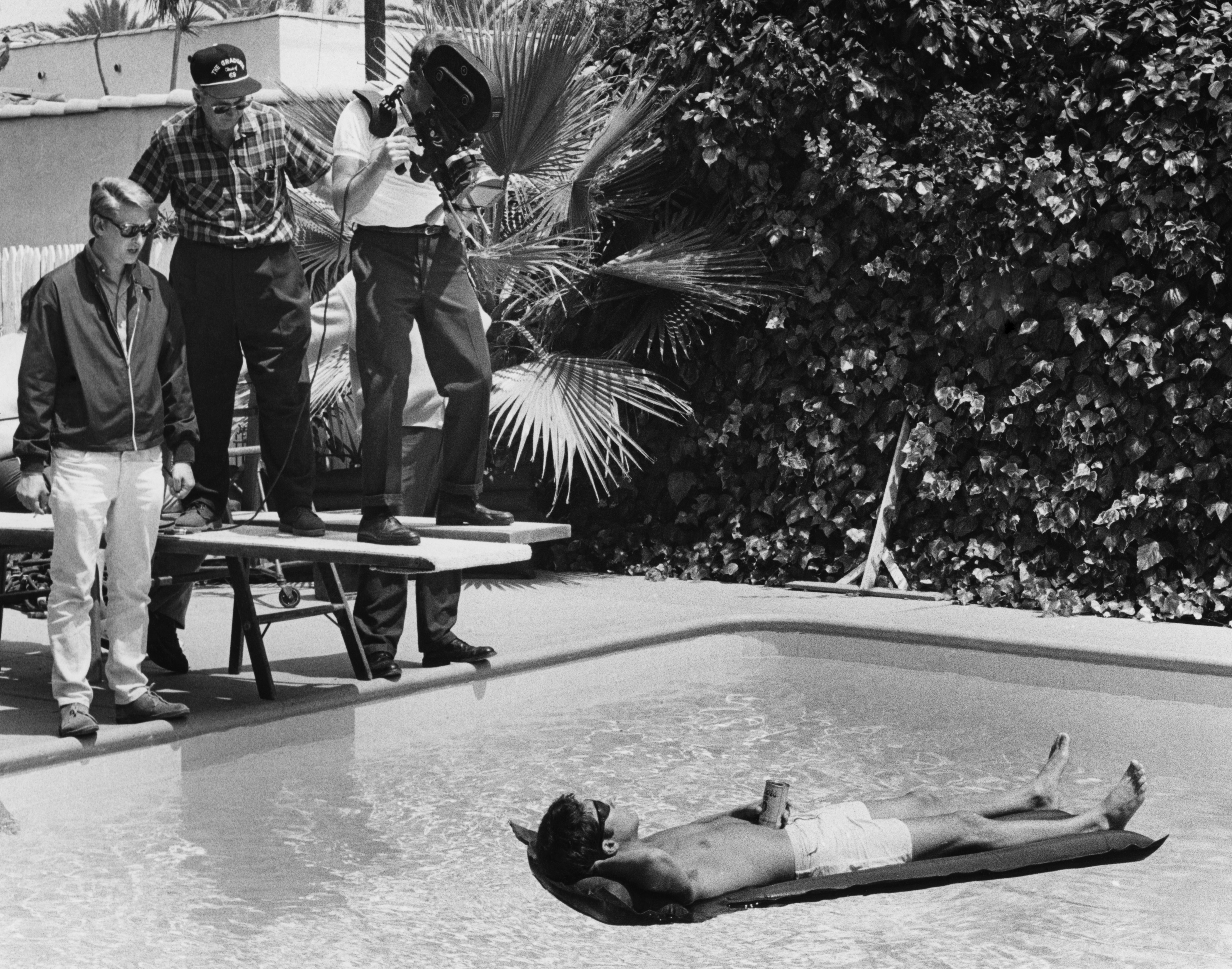
Dustin Hoffman floats, while Mike Nichols directs THE GRADUATE, circa 1967. Photo courtesy United Artists.

Dustin Hoffman floats, while Mike Nichols directs THE GRADUATE, circa 1967. Photo: United Artists, courtesy HBO.

There are a few awkward transitions between the Nichols-O’Brien interview sessions, with and without the audience. And a wacky Jack Warner story that Nichols tells in the American Masters’ profile is oddly truncated in Becoming Mike Nichols.  But the latter is a much more entertaining and substantive resource for students and fans of his early work.

Director Douglas McGrath brings a string of notable writing and directing credits to the table, including his own Academy Award® nomination for the screenplay of Bullets Over Broadway, which he co-wrote with Woody Allen. And, more recently, his book for Beautiful: The Carole King Musical was nominated for Tony, Drama Desk and Outer Critics Circle Awards.

Becoming Mike Nichols debuts on HBO tonight, Monday, February 22, 2016, 9:00 – 10:15 p.m., ET/PT. (Check listings for additional HBO playdates in the weeks ahead and availability on HBO NOW, HBO GO and HBO On Demand.)–Judith Trojan
Posted in Cable, Film, Theater, Theatre, TV | Tagged , , , , , , , , , , , , | Leave a comment

Moose: Life of a Twig Eater Makes Heart-Tugging Debut on PBS

Is this the face only a mother can love? Little Moose calf, one of the stars of MOOSE: LIFE OF A TWIG EATER, circa August 2014, Jasper National Park Alberta, Canada. Photo: Twig Eaters Inc.

Is this the face only a mother could love? Little Moose Calf, one of the stars of MOOSE: LIFE OF A TWIG EATER on NATURE.  Photo ©Twig Eaters Inc.

I love animals and am especially keen on supporting those who safeguard the lives and habitats of endangered animals in the wild.  Great Apes, elephants, whales and dolphins have always been my particular passions. Up until now, I honestly never gave a second thought to Bullwinkle’s flesh and blood relatives. The latest installment in the Award-winning PBS NATURE series, Moose: Life of a Twig Eater, certainly caught me by surprise. It should be a fascinating wake-up call for those who are equally clueless about this resilient, misunderstood animal.  The hour-long documentary debuts on PBS tonight, Wednesday, February 10, 2016, 8:00 – 9:00 p.m. ET.  (Check local listings for air times in your region and  http://www.pbs.org/nature for online streaming and DVD availability.)

Moose are the largest species of the deer family, believe it or not. Big, gangly and frankly not the prettiest critter in the forest, they are hardly a match for Bambi in appeal and unbridled procreation. The moose population in North America is on the decline to a shocking degree, another casualty of climate change that impacts their habitats, food supply and their vulnerability to disease, which makes them especially defenseless around their natural predators.

Little Calf and mom Fall 2014, Jasper National Park Alberta, Canada. Photo c Twig Eaters Inc.

Little Calf and mom, Jasper National Park, Alberta, Canada, Fall 2014. Photo ©Twig Eaters Inc.

Naturalist and cameraman Hugo  Kitching is the film’s predominant eyes and ears and, as the film progresses, its heart as well.  He spends one year in the wilds of the Jasper National Park in the Canadian Rockies tracking two moose moms and their single calves.  It’s a challenging assignment from start to finish since moose are elusive and their calves are easy targets for bears and wolves. And the terrain, all 4,000 square miles of it, is no picnic for man nor beast, especially in the winter when deep snow makes footing and feeding difficult for smaller calves and filmmakers lugging heavy equipment.

Thrilled to find one mom with her newborn calf, Kitching then stumbles upon another mom and her late born calf. He’s immediately struck by his subjects’ individuality and reflects upon the challenges of mothering fragile calves, season to season, in an environment rife with predators.  The calves’ learning curves–from feeding, swimming, and dodging danger–are patiently monitored by their mothers and by Kitching, who becomes progressively more attached to his subjects as they become more comfortable with his proximity.

Little Calf at five days old. Jasper National Park Alberta, Canada. Photo Twig Eaters Inc.

Little Calf at five days old. Jasper National Park, Alberta, Canada. Photo ©Twig Eaters Inc.

If the calves manage to survive their first year, they’re booted out of “the nest” as their moms prepare to give birth to new calves.  Then they must fend for themselves, motherless and alone. This touching rite of passage points out the loner existence of these creatures, which doesn’t bode well for their long-term survival.

Moose: Life of a Twig Eater also takes a brief side trip to Grand Portage, Minnesota, where a dedicated team of biologists monitor individuals in the region’s dwindling moose population, which has declined by 64 percent since 1990.

Produced and directed by Susan Fleming for Twig Eaters Inc., in association with THIRTEEN Productions LLC for WNET, Moose: Life of a Twig Eater is the latest installment in the long-running PBS series, NATURE, executive produced by Fred Kaufman.  It debuts tonight, Wednesday, February 10, 2016, 8:00 – 9:00 p.m. ET. (Check local listings for air times in your region and  http://www.pbs.org/nature for online streaming and DVD availability, as well as supplemental educational materials.)–Judith Trojan

Posted in TV | Tagged , , , , , , , , , , , , | 1 Comment

Jim: The James Foley Story Wins at Sundance and Debuts on HBO

Photojournalist James Foley became an advocate for the oppressed and voiceless victims of oppression in the Middle East. Photo courtesy HBO.

Photojournalist James Foley was a fearless advocate for the oppressed and voiceless victims of the carnage in the Middle East until he became a victim himself. Photo courtesy HBO.

In 2014, forty-year-old American photojournalist James “Jim” Foley was executed by ISIS… on-camera, for all the world to see.  Foley had been kidnapped in Syria and tortured for two years in captivity.  His life story movingly unfolds in Jim: The James Foley Story, a “U.S. Documentary Audience Award” winner at the 2016 Sundance Film Festival.  The feature-length documentary debuts tonight, Saturday, February 6, 2016, on HBO, 9:00 – 11:00 p.m., ET/PT. (Check listings for additional HBO playdates in the weeks ahead and availability on HBO NOW, HBO GO and HBO On Demand.)

Given the nature of Jim Foley’s work and the barbarity of his murder, I approached this film with some trepidation and one burning question. Why did Foley and others like him, including a surprising number of women, continue to be drawn like a moth to a flame to this exceedingly dangerous line of work, especially as freelancers with no financial security. Jim: The James Foley Story does a good job of answering that question.

“I made this film to carry on the stories that Jim needed us to know,” says director Brian Oakes. “It’s important that we understand the significant role of today’s conflict journalists and why they risk their lives to tell the world how bad it can be.”

Former projects by Brian Oakes include the outstanding Living with Lincoln, which Oakes co-directed with Peter Kunhardt, and I previously reviewed in FrontRowCenter http://www.judithtrojan.com/2015/04/13.  Members of the Kunhardt family– producers George and Teddy Kunhardt with Eva Lipman, and executive producer Peter Kunhardt— also worked with Oakes on Jim.

Oakes, a childhood friend of Jim Foley’s, sets his primary focus on Foley’s immediate family. His mom, dad, sister and three brothers are caring, if conflicted witnesses to Jim’s journey from their bucolic New Hampshire home to the bleak killing fields of Syria.  Their perceptions of Jim, while loving and deeply respectful, are also admittedly painful to articulate. They’re haunted by the memory of his gruesome death and their Sisyphean efforts to broker his release from captivity.

Jim in the Karm Jebel neighborhood of Aleppo, that was being heavily fought over. November 5, 2012. He was kidnapped weeks later on Thanksgiving and killed two years later. Photo: Nicole Tung. Courtesy HBO.

James Foley on November 5, 2012, in the Karm Jebel neighborhood of Aleppo, Syria, that was being heavily fought over. He was kidnapped weeks later on Thanksgiving, held in captivity at undisclosed locations and killed two years later. Photo: Nicole Tung. Courtesy HBO.

Foley showed early talent for teaching, writing and social service, but it wasn’t until he ventured into photojournalism abroad that those talents coalesced into his true calling.  Fellow photojournalists reveal much about the psychology of their profession and their admiration for their friend’s fearless determination to expose the tragic reality of civilian casualties. The juxtaposition of Jim’s graphic frontline photos and footage with playful Foley family photos and home movies makes for startling counterpoint throughout this film.

The international hostages with whom Foley shared the final portion of his two-year captivity are also extremely important to this story.  They graphically recall the atrocities they all faced at the hands of their ISIS captors, but most especially Foley who seemed to be singled out for the worst of it. Their memories, enhanced by some artfully filmed reenactments, are painful reminders of the inhumanity that drives ISIS.

When Danish journalist and fellow hostage Daniel Rye Ottosen was rumored to be released, Jim asked him to pass a letter home to his family and friends. Ottosen committed it to memory and shared it with Foley’s mom upon his release.

“Eighteen of us have been held together in one cell, which has helped me. … We are so grateful when anyone is freed; but of course, yearn for our own freedom. We try to encourage each other and share strength.”–James Foley, from his final “letter” home.

Thankfully, Jim: The James Foley Story does not include the infamous video of his public execution.  It closes instead with an original song, “The Empty Chair,” sung by Sting who co-wrote it with J. Ralph. The film is a powerful reminder of the resilience of the human spirit in the face of gross inhumanity… and the importance of family, friends and prayer in our life’s journey.

“I remember so many great family times that take me away from this prison. Dreams of family and friends take me away and happiness fills my heart. … I feel you all especially when I pray. I pray for you to stay strong and to believe. I really feel I can touch you even in this darkness when I pray.”–James Foley

James Foley in Syria in 2012 Photo: Nicole Tung. Courtesy HBO.

James Foley doing what he did best…reporting from Syria in 2012. Photo: Nicole Tung. Courtesy HBO.

James Foley’s legacy serves as a wake-up call to lend our voices and our talents to exposing the victimization of others, whether it be in our neighborhoods, across our country, or wherever tyranny hangs its evil hat.

Jim: The James Foley Story debuts tonight, Saturday, February 6, 2016, on HBO, 9:00 – 11:00 p.m., ET/PT. (Check listings for additional HBO playdates in the weeks ahead and availability on HBO NOW, HBO GO and HBO On Demand.)  For more about the Foley family’s continuing work to support conflict reportage and foster hostage advocacy, check out their Website at  http://www.jamesfoleyfoundation.org  –Judith Trojan

Posted in Cable, Film, Journalism, Photography | Tagged , , , , , , , , , , , , | 4 Comments

Mike Nichols Launches American Masters 30th Anniversary Season

The limelight suited him just fine. Mike Nichols circa 1970, post THE GRADUATE. Photo courtesy Everett Collection.

The limelight suited him just fine. Mike Nichols, circa 1970, in the afterglow of THE GRADUATE. Photo courtesy Everett Collection.

It would be difficult for any filmmaker, no matter how seasoned, to encapsulate the life story and creative accomplishments of someone as prolific and beloved as director, writer, comedian, actor, producer Mike Nichols (1931-2014) in a 60-minute documentary. I’m sure that Nichols’ friends and colleagues are singing the praises of his former comedy partner, Elaine May, who directed and feature them in the American Masters’ season opener Mike Nichols: American Masters that debuts tonight on PBS, Friday, January 29, 2016, 9:00 – 10:00 p.m. ET. (Check local listings for air times and repeat broadcasts in your region.)

How special it must have been to work with Mike Nichols in any capacity. How special it should have been for Ms. May and producer Julian Schlossberg to compile this documentary tribute.  I use the word “compile” here because that just about describes the feeling I got after repeat screenings of Mike Nichols: American Masters.

Without the vivid and engrossing anecdotes that Nichols thankfully brings to the table in extended monologues throughout this film (edited from interview sessions with producer Julian Schlossberg, who is never seen or clearly heard, except during a final closing moment), the documentary’s potential is under-served.  I just couldn’t shake my memories of the recent, brilliantly inventive choices made in documentary profiles of similarly complex, multi-faceted iconic artists like Marlon Brando, Pete Seeger, J.D. Salinger and Mel Brooks, to name just a few…some of which also debuted on American Masters in years past.

I admit to being immediately captivated by Mike Nichols in the interview footage that drives the film’s narrative from beginning to end. He was so incredibly “smart,” a descriptive that I repeated endlessly in my notes as he recalls the path that led him to tackle and surmount the many creative avenues that came his way.

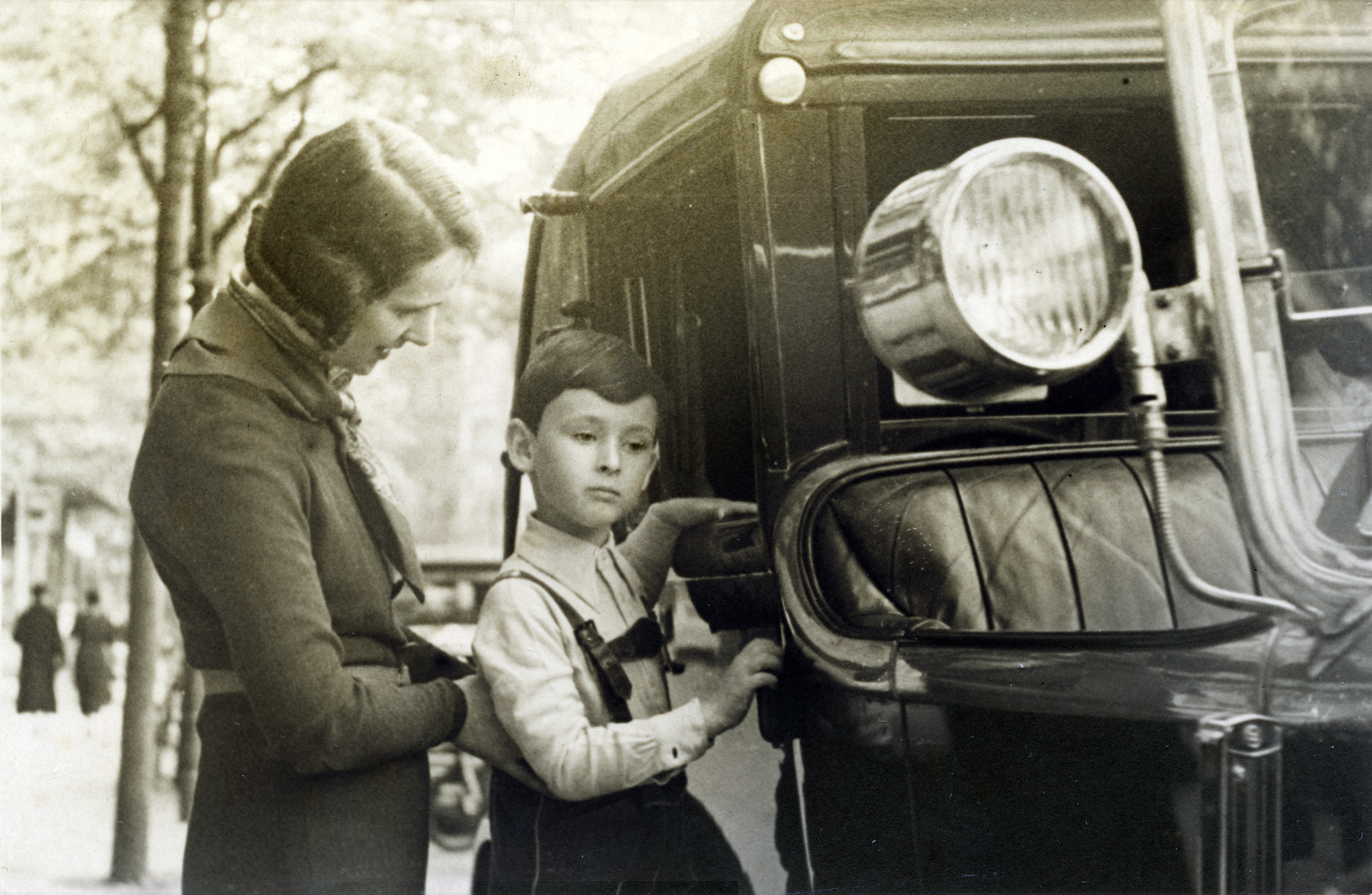
Mike Nichols and his mother. Photo courtesy of the Nichols family.

Mike Nichols with his mom. Photo courtesy of the Nichols family.

The film opens with a jarring newsreel clip of Adolph Hitler in full rant. This segues into Nichols’ tantalizing but much too brief recollection of his childhood transition from Nazi-occupied Berlin to the school yards of New York City. Obvious questions arise from this sequence, but are never explored. Safe choices seem to be the norm going forward, whether they be the slapdash use of hackneyed period music or an over-reliance on publicity stills, shots of theater marquees and Playbill covers in place of film clips and archival footage to illustrate Nichols’ extraordinary stage, TV and film projects.

Reminiscences from Nichols’ high profile friends and colleagues pop up periodically to illustrate his narrative. Anecdotes from Neil Simon, Jules Feiffer, Dustin Hoffman, Matthew Broderick, Alec Baldwin, Tony Kushner and Meryl Streep are fairly informative. Other notables, who no doubt have more to tell, provide little more than quips.  No family members appear here, nor does Nichols make mention of them.

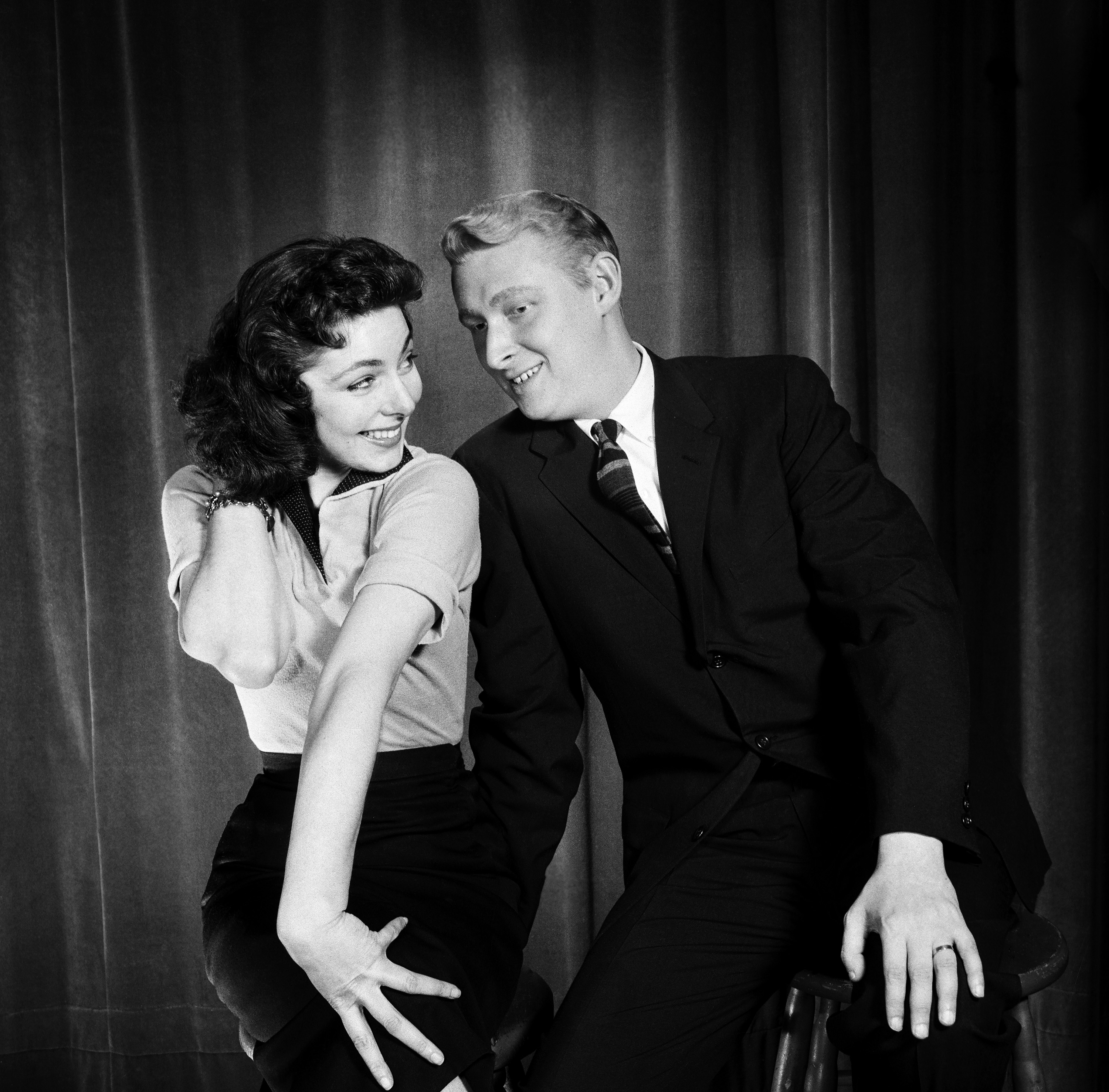
Elaine May and Mike Nichols on stage in 1958. Photo courtesy NBC/NBCU Photo Bank.

A match made in comedy heaven. Elaine May and Mike Nichols at work in 1958. Photo courtesy NBC/NBCU Photo Bank.

While there is one absolutely priceless black and white archival clip from a Nichols & May performance during the 1959 Emmy Awards telecast, there are minimal clips from the film, TV and theatrical work that won Nichols a boatload of Emmys and Tonys, an Oscar and a Grammy.  I would love to have seen a few clips of the Nichols & May gigs on “The Tonight Show…with Jack Paar” and other TV programs that are oddly introduced but never shown.

Elaine May, with whom Nichols was partnered for a pivotal portion of his life as a Compass Player, best friend and one-half of the legendary Nichols & May comedy team, is a big part of Nichols’ life story. And he recounts it well. But we only hear half of that story…his half.  Ms. May is the director of this film and concludes it in voice-over summing up Nichols’ impact as a prolific, under-rated genius. Unfortunately, she is never heard from or seen on-camera reflecting on their life together, which is a pity.

Director Mike Nichols on the set of CHARLIE WILSON'S WAR, 2007. Photo: ©Universal/courtesy Everett Collection.

Director Mike Nichols on the set of CHARLIE WILSON’S WAR in 2007. Photo: ©Universal/courtesy Everett Collection.

The strong suit of Mike Nichols: American Masters is Nichols himself…his responses to questions never posed on camera but edited into a running monologue that comprises the bulk of this film.  As with James Lipton’s “Inside the Actors Studio” interviews, the Mike Nichols footage provides an insightful, invaluable record of his creative and career trajectory.  And, as such, the film will be an asset in drama, film and performance studies in high school, college and university classes, theatrical venues, and library and museum programs.

You can catch Mike Nichols: American Masters on PBS tonight, January 29, 2016, 9:00 – 10:00 p.m. ET. (Check local listings for air times and repeat broadcasts in your region.)  Also check out http://pbs.org/americanmasters  for future DVD availability and streaming info.— Judith Trojan

Posted in Film, Theater, Theatre, TV | Tagged , , , , , , , , , , , , | 3 Comments

Bonnie and Clyde Revisited on American Experience

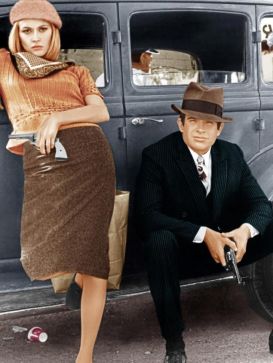
806x1075_bonnie-and-clyde film

Fashionable and faithful Bonnie (Faye Dunaway) and Clyde (Warren Beatty) take their best shot in the fictionalized 1967 bio-pic, BONNIE & CLYDE (Warner Bros.).

It’s been almost 50 years since actor/producer Warren Beatty revitalized his career with Bonnie & Clyde (1967). Directed by Arthur Penn, the film’s art-house take on the ill-fated Depression-era outlaw couple, Clyde Barrow and Bonnie Parker, turned true crime cinema on its ear and Faye Dunaway into an instant star and fashion icon.

Brutally violent and sexually explicit for its time, the film was also a game-changer in the fashion industry… glamorizing the clothing and accessories (the pencil skirt and beret, for instance) and boy toys (big cars and bigger guns) prevalent in the early 1930s. Aside from Dunaway, Beatty’s Bonnie & Clyde introduced the considerable talents of Gene Hackman and Estelle Parsons to the movie-going public. Not too shabby.  Not too realistic either.

The PBS series, American Experience, attempts to set the record straight with Bonnie & Clyde, an informative, well-researched documentary debunking the romantic myths surrounding the deadly duo. The hour-long film, written, produced and directed by John Maggio and narrated by actor Michael Murphy, debuts on PBS tonight, January 19, 2016, 9:00 -10:00 p.m. ET. (Check local listings for air times in your region and http://www.pbs.org/wgbh/americanexperience for DVD availability.)

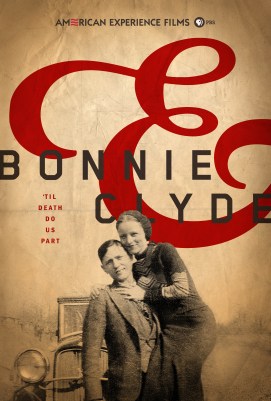
BONNIECLYDEFinal (1)

Poster art courtesy WGBH Educational Foundation.

Beatty’s opus saw the light of day half-a-century ago; but the media blitz surrounding Clyde Barrow and Bonnie Parker began in real time in the early 1930s, during their crime spree at the height of the Great Depression. This was decades before reality TV hit the airwaves and made media stars of similarly star-crossed lovers and tawdry fringe-dwellers.

Depression-era Americans were prime for escapist fare and entranced by underdog “heroes” to root for and against. It was a time when the media documented the exploits of ruthless, particularly “slippery” career criminals like “Pretty Boy” Floyd, “Baby Face” Nelson, John Dillinger and, eventually, Clyde Barrow and his female accomplice, Bonnie Parker.

Clyde Barrow and Bonnie Parker’s impoverished childhoods on the fringes of Dallas, Texas, seemed to drive their destiny.  At a young age, perhaps out of necessity, Clyde followed his older brother’s chosen profession, petty thievery.  But the boy soon passed on the penny ante and became an adept and notorious car thief.  He set his sights on snazzy new automobiles with powerful V-8 engines, adopting his them as his signature mode of transportation and escape.

Bonnie, a good student and lifelong poet, was smitten with movie star glamour. Raised in a single parent home, she longed for a life on the right side of the tracks. She apparently found her soul mate in Clyde shortly before his particularly brutal stint in prison…an ordeal that sealed his resolve never to be captured and incarcerated again.

While on a brazen 12-state crime spree–robbing banks, gas stations and grocery stores–Clyde, Bonnie and their gang of ex-cons were forced to kill or be killed.  The Barrow gang eventually included Clyde’s older brother, Buck, and sister-in-law, Blanche. Barely dodging capture in the spring of 1933, the Barrow gang left behind clothing, jewelry, weapons, Bonnie’s poetry and a stash of unprocessed film in their hide-out in Missouri.

Bonnie and Clyde2 (1)

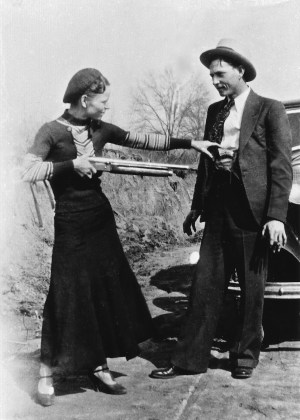
The notorious outlaw couple, Bonnie Parker and Clyde Barrow, assume a pose in 1933. Photo courtesy Jim Hounschell.

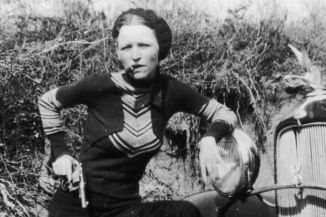
The photos, including shots of Bonnie and Clyde canoodling with each other and their firearms, were developed and first published in The Joplin (MO) Globe and then in newspapers across the country. Their identities and mythic criminal exploits as the first ever outlaw couple fueled the media mill, i.e., newspapers, magazines and newsreels, of the day. Bonnie and Clyde found their arch-nemesis in relentless Texas lawman Frank Hamer and met their maker after Hamer deftly orchestrated their ambush and slaughter in May 1934 amidst a hail of 150-plus bullets.

Award-winning filmmaker John Maggio tells the tale of these star-crossed lovers via a briskly edited, fascinating mix of personal photos, visual samples of Bonnie’s hand-written poetry, vintage newspaper clippings and newsreel footage, anecdotes from the couple’s surviving kin and period context from articulate regional historians. Black and white news photos and newsreel footage documenting Bonnie and Clyde’s gruesome slaughter, bullet-riddled bodies and subsequent “movie star” funerals stoked the public’s fascination with the couple at the time and are eye-opening additions to this film.

Real Bonnie with cigar

Gun moll Bonnie Parker circa 1933.  Photo courtesy Jim Hounschell.

Although American Experience: Bonnie & Clyde is much too brief to explore much of the couple’s personal motivation and back story, it should make for an interesting counterpoint to programs featuring Warren Beatty’s 1967 fictionalized bio-pic, Bonnie & Clyde. It will also serve as a discussion catalyst in schools, universities and libraries focusing on the dynamics of building and branding media stars who may be less than model citizens.

American Experience: Bonnie & Clyde, executive produced by Mark Samels for WGBH Boston, debuts on PBS tonight, January 19, 2016, 9:00 -10:00 p.m. ET. (Check local listings for air times in your region.)  You should also visit http://www.pbs.org/wgbh/americanexperience for updates on the film’s availability on DVD, as well as additional formats and further reading. –Judith Trojan

Posted in Film, TV | Tagged , , , , , , , , , , | 6 Comments

I Love Lucy Christmas Special Debuts Another Tasty Episode on CBS

Lucy Ricardo, the eternal show biz wannabe, tackles an especially tasty TV commercial gig in the newly colorized classic episode: "Lucy Does a TV Commercial." Photo ©2015 CBS Broadcasting, Inc.

It’s so tasty, too! Showbiz hopeful Lucy Ricardo (Lucille Ball) tackles a 23% proof TV commercial gig in the newly colorized classic episode: LUCY DOES A TV COMMERCIAL. Photo ©2015 CBS Broadcasting, Inc.

Do you poop out at parties? Are your Christmas lights in a tangle? Have your Christmas ornaments been pilfered by Fido or Fluffy? If you’re in dire need of some laughs right about now, I suggest you relax and tune in to CBS tonight, Wednesday, December 23, 2015 (8:00-9:00 p.m., ET/PT) for your annual I Love Lucy holiday fix. As in previous years, the I Love Lucy Christmas Special piggybacks as holiday fare two entertaining, colorized episodes from the beloved 1950s I Love Lucy CBS-TV series. This year, a newly colorized episode, Lucy Does a TV Commercial, debuts in tandem with the previously colorized and aired I Love Lucy Christmas Episode.

As every Lucy fan knows, Lucy Ricardo (Lucille Ball) was a relentless showbiz wannabe. Never one to sit idly by while her husband, singer/bandleader Ricky Ricardo (Desi Arnaz), got the gigs, Lucy relentlessly wangled her way onto his shows. Her schemes to sing, act or pirouette her way into Ricky’s spotlight (often aided and abetted by her best friend, Ethel Mertz) triggered memorable comedy shtick.

This is especially true in Lucy Does a TV Commercial, which originally debuted as “Vitameatavegamin” on CBS on May 5, 1952.  Once again, Lucy ignores Ricky’s orders to steer clear of his show; this time, however, it’s Ricky’s TV variety show debut and there’s an opening for a TV commercial pitch woman.  Multiple run-throughs forcing Lucy to swig a 23% proof tonic called “Vitameatavegamin” quickly turn her snappy sales spiel into riotous tongue-tied drivel. Inebriated and dishevelled, she manages to deep-six the commercial and Ricky’s opening number. Lucille Ball’s comic genius is truly in evidence in this classic “Lucy” episode.  It’s a comedy gem.

I Love Lucy Christmas Special

Lucy meets the real deal in the I LOVE LUCY CHRISTMAS EPISODE. Photo courtesy CBS Broadcasting, Inc.

Originally aired on CBS in December 1956 and thought to be “lost,” The Christmas Episode is a nostalgic Christmas eve visit to the Ricardos’ Manhattan apartment where Lucy and Ricky trim their tree and prep gifts to surprise Little Ricky, their Santa-obsessed five-year-old.

Fred and Ethel Mertz join the fun as Lucy and Ricky wistfully recall Lucy’s unexpected pregnancy announcement at Ricky’s club and Ricky, Fred and Ethel’s subsequent foiled effort, months later, to get Lucy to the delivery room on time.  Welcome flashbacks are intercut from these classic episodes.  The latter, still hilarious after all these years, continues to serve as the classic benchmark for all the derivative TV sit-com “birthing” episodes that followed.

Finally, in a musical interlude, Lucy’s attempt to sing “Jingle Bells” reminds Ricky and the Mertzes of the time tone-deaf Lucy crashed their barbershop quartet with disastrous results.  A flashback of their sabotaged performance is included.

Photo ©2013 CBS Broadcasting, Inc. All Rights Reserved

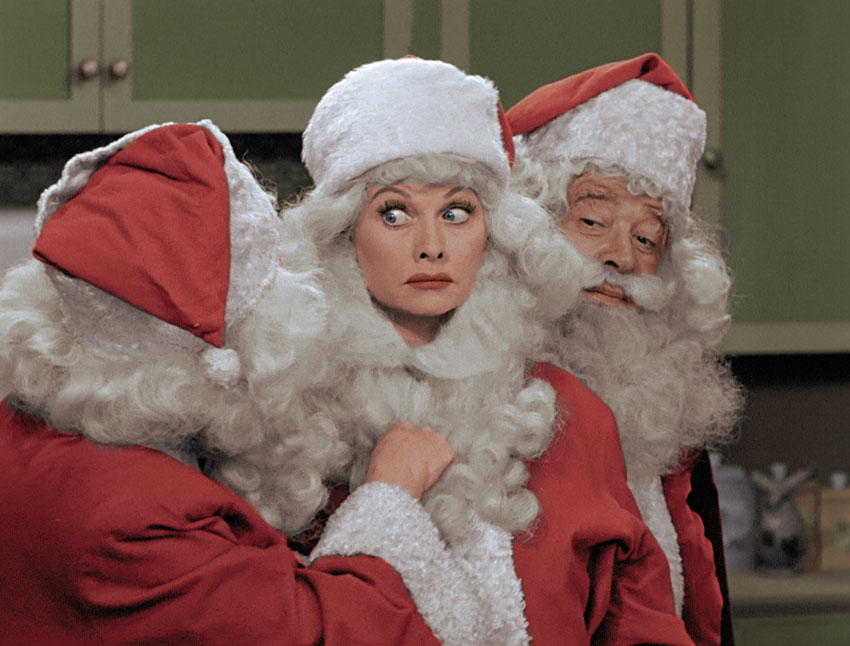
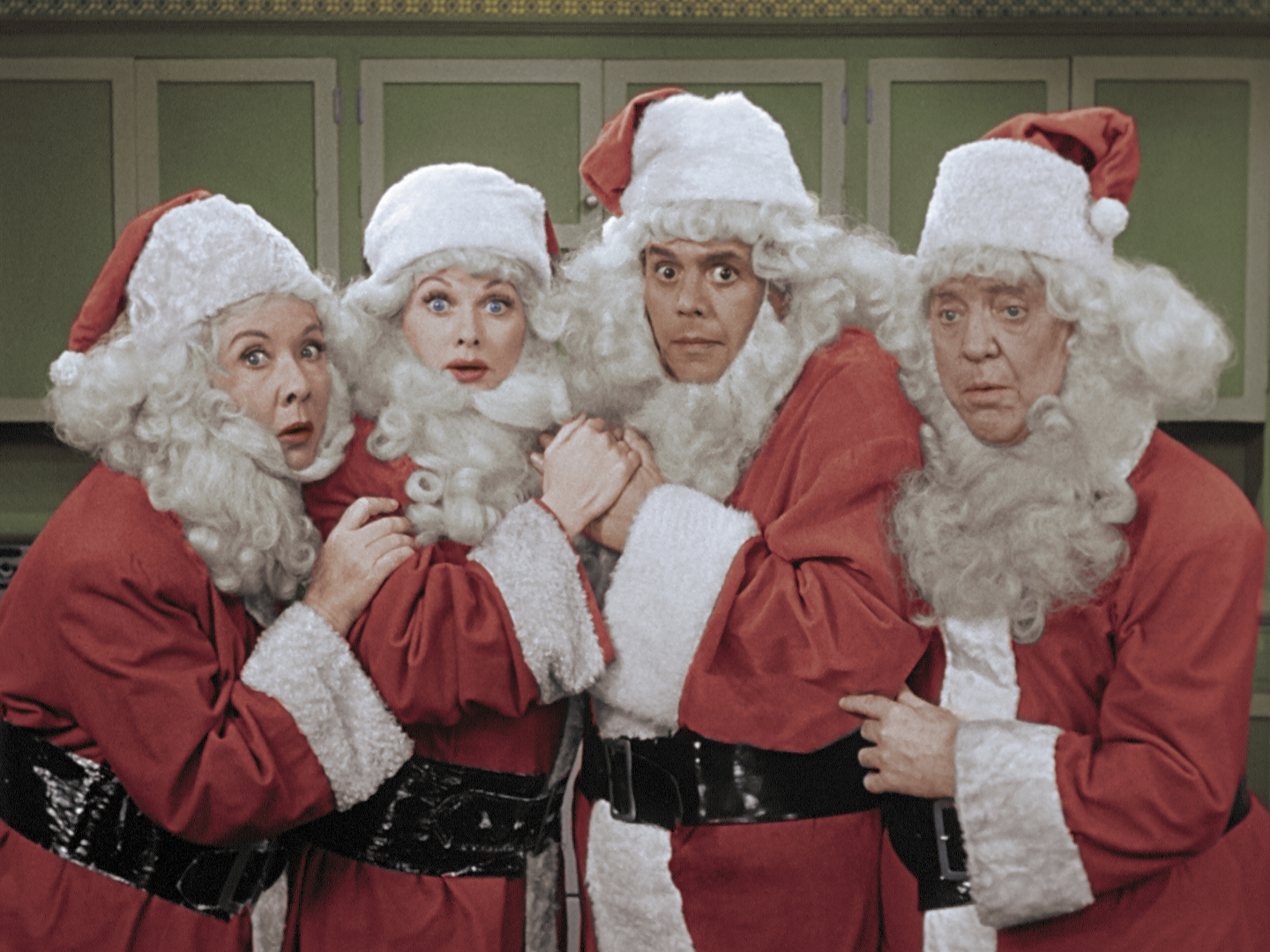
How many Santas are too many? Find out in the classic I LOVE LUCY CHRISTMAS EPISODE. Photo ©2013 CBS Broadcasting, Inc.

This year, the flashbacks in The Christmas Episode are now colorized as well.  Say what you will about colorization (and you can read my thoughts on this in previous I Love Lucy Christmas Special posts), I have since warmed to the process and the team who continue with the “Lucy” colorization project.  They’ve definitely managed to impart a fresh, timeless look to the I Love Lucy episodes by sticking with muted, natural tones and without overplaying their hand and resorting to garishness.

The I Love Lucy Christmas Special airs on CBS tonight, Wednesday, December 23, 2015, from 8:00-9:00 p.m., ET/PT. (DVD availability will follow.)  Remember, belly laughs are presents that keep on giving!   Enjoy some tonight, and have a Merry Christmas!–Judith Trojan

Posted in TV | Tagged , , , , , , , , , | 2 Comments

New Yorker Cartoonists on the HBO Drawing Board

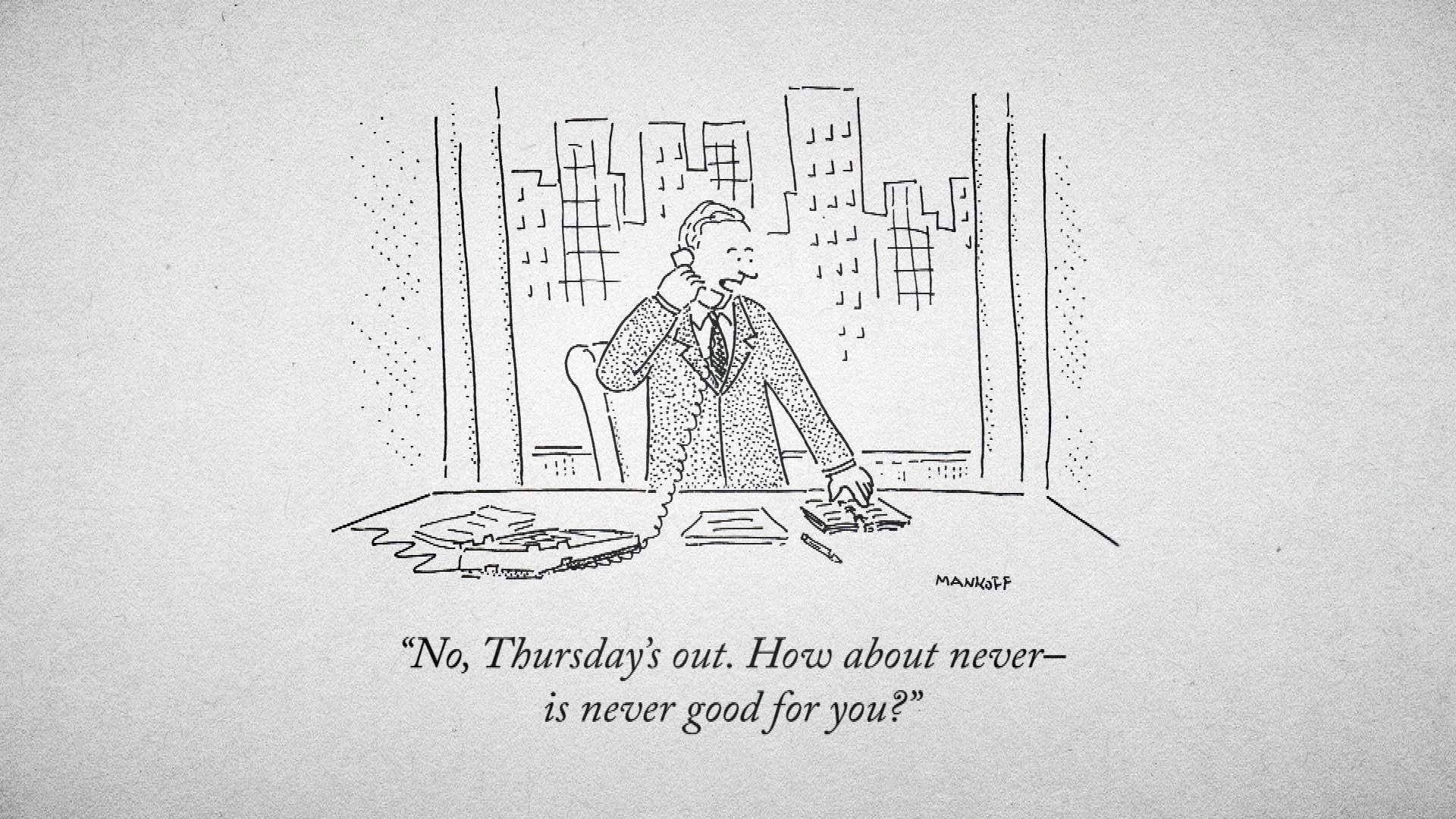
A Bob Mankoff New Yorker cartoon. Photo: Kristen Johnson. Courtesy HBO.

A Bob Mankoff NEW YORKER cartoon. Photo: Kristen Johnson. Courtesy HBO.

If you’ve got 90 minutes to spare and love The New Yorker, especially its iconic cartoons, you won’t want to miss Very Semi-Serious…A Partially Thorough Portrait of New Yorker Cartoonists.  The documentary, directed by Leah Wolchok and produced by Davina Pardo, debuts on HBO tonight, Monday, December 14, 2015, 9:00 – 10:30 p.m. ET/PT. (Check listings for additional HBO playdates in the weeks ahead and availability on HBO NOW, HBO GO and HBO On Demand.)

Yes, Very Semi-Serious is long and has an equally long-winded title…both of which (the length and the title) could use some tweaking.  But the film’s primary goal–to provide a “partially thorough portrait”of the cartoonists who continue to submit their work to the venerable 90-year-old magazine–is more than adequately realized.

Esteemed cartoonist and cartoon editor at THE NEW YORKER, Bob Mankoff, is featured in VERY SEMI-SERIOUS. Photo: Kristi Fitts. Courtesy HBO.

Esteemed cartoonist and cartoon editor at THE NEW YORKER, Bob Mankoff, is featured in VERY SEMI-SERIOUS. Photo: Kristi Fitts. Courtesy HBO.

The film zeroes in on the magazine’s weekly rigorous cartoon selection process–approximately 15 cartoons out of thousands of submissions are published in every issue.

Helmed by longtime cartoon editor Bob Mankoff, the Tuesday ritual plays out much like open auditions for stage and screen, humanized by Mankoff’s predilection to be both mentor and psychoanalyst as well.

Mankoff, a prolific cartoonist in his own right (more than 900 of his cartoons have been published in The New Yorker since the 1970s), meets one-on-one with hopeful veteran and newbie New Yorker cartoonists and sifts through and comments upon their latest submissions.  This process requires a thick skin, especially from newcomers, since Mankoff is not one to mince words…for better or worse.  On a positive note, he also is quick to chuckle or laugh out loud and offer sincere encouragement and solid direction where needed.

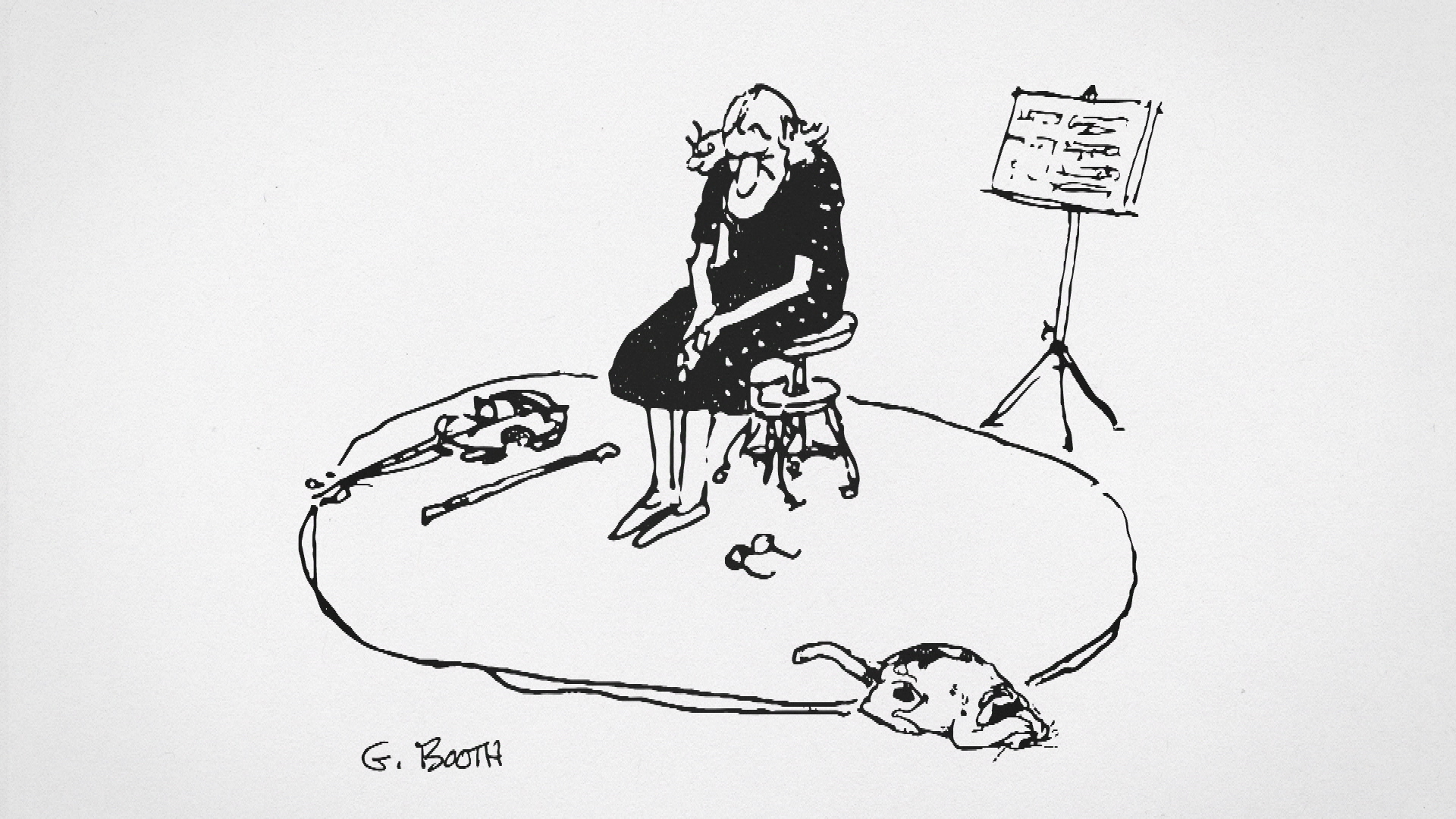
THE NEW YORKER published this George Booth cartoon immediately after 9/11. Courtesy HBO.

THE NEW YORKER published this George Booth cartoon immediately after 9/11. Courtesy HBO.

Veteran New Yorker cartoonists still in play have a quick shot in Very Semi-Serious to fill in their back stories, including 89-year-old George Booth, Mort Gerberg and Roz Chast. The latter recalls her unlikely evolution as a cartoonist and equally uncomfortable introduction to The New Yorker’s male inner circle.  There is a nod to the legendary talents of Charles Addams, William Steig, Peter Arno and James Thurber. And special focus is on the aspirations and psychological profiles of young people who show up week after week with new cartoons in hand and walk away with Bob Mankoff’s yea or nay.

Woven throughout Very Semi-Serious are personal vignettes profiling Mankoff himself. While these sequences would fit comfortably in a bio about Mankoff, they are off-point and distracting in this film.

Artists and illustrators, especially budding or established cartoonists, will find Very Semi-Serious to be especially informative and enlightening, as will avid fans of New Yorker cartoons in general.  For those new to the magazine’s editorial or those fascinated by its history, more needed to be said in this film or needs to be said in subsequent films about the legendary cartoons and cartoonists who have graced and continue to grace its pages.

Photo courtesy HBO.

Photo courtesy HBO.

Very Semi-Serious…A Partially Thorough Portrait of New Yorker Cartoonists debuts on HBO tonight, Monday, December 14, 2015, 9:00 – 10:30 p.m. ET/PT. (Check listings for additional HBO playdates in the weeks ahead and availability on HBO NOW, HBO GO and HBO On Demand.) –Judith Trojan

Posted in Art, Cable, Film, Magazines, Publishing | Tagged , , , , , , , , , , , , | 2 Comments

Sinatra Centennial Celebrated with Repeat Broadcast on HBO

Frank Sinatra at a Capitol Records recording session in Los Angeles, CA. 1954. Photo © 1978 Sid Avery.

Frank Sinatra at a Capitol Records recording session in Los Angeles, CA, circa 1954. Photo © 1978 Sid Avery. Courtesy HBO.

December 12, 2015 marks the centennial of Frank Sinatra’s birth. You’ll have an opportunity to celebrate the man and his music if you catch the encore presentation of Alex Gibney’s Emmy®-nominated documentary, Sinatra: All or Nothing at All, airing on HBO today, Saturday, December 12, 2015, from noon – 4:15 p.m. ET/PT; and on HBO2 from 7:00 – 11:15 p.m. ET/PT. The film is also available on HBO NOW and HBO GO.   

Sinatra: All or Nothing at All will lighten your mood appreciably, as the man and his music take center stage in this fascinating, fast-paced and supremely entertaining four-hour profile.  The film debuted on HBO on April 5, and April 6, 2015.  My original review appeared in FrontRowCenter on April 5, 2015, and is reprinted below (edited from the original).

Director Alex Gibney frames his celebratory biography with the music and memory of Frank Sinatra’s 1971 “Retirement” concert at the Ahmanson Theatre in Los Angeles. The extraordinary concert vignettes, rarely if ever seen except by the Hollywood elite who actually attended this concert, capture the performer at his seasoned best. Sinatra apparently chose 11 songs in particular to propel his audience through the evolution of his career. Gibney ran with that concept, using the 11 songs to introduce and serve as a backdrop to Sinatra’s personal and professional biography.

As a young man on the move, Frank Sinatra rose up through the ranks touring on the road, charming masses of adoring bobby soxers at the Paramount Theater in New York City and capturing the heart of the nation on records and the radio before he segued into feature films, TV and Las Vegas. Photo courtesy HBO.

As a young man on the move, Frank Sinatra rose up through the ranks touring on the road, charming masses of adoring bobby-soxers at the Paramount Theater in New York City and capturing the heart of the nation on records and the radio before he segued into feature films, TV and Las Vegas. Photo courtesy HBO.

Clips from various vintage TV interviews with Sinatra provide the film’s key running narrative, a ploy that effectively allows him to tell his own story and, most importantly, to set the record straight as he saw it.  He is the most visible (on-camera) narrator, which enhances the evergreen value of this film going forward. Other “witnesses” (including noted journalists, professional colleagues and collaborators, his children, ex-wives and friends) are only heard in voice over for the most part. No one is allowed to steal the spotlight from the Chairman of the Board.

Aside from its fabulous music track, Sinatra: All or Nothing at All takes no prisoners as it addresses and answers many previously unanswered questions about Sinatra’s childhood and parents, his progression from band singer to teen idol, movie star and Las Vegas entrepreneur, his career missteps, his courtship of and problematic association with his wives, lovers, the Kennedys and the mob. While the story of his son’s kidnapping turns out to be far less explosive than one would expect, more complex revelations cover his association with Sam Giancana, his scuffle with the HUAC and the extent of his condemnation of racism and his support for racial equality.

Frank Sinatra’s earliest period of success coincided with my parents’ youth (my dad was also born in 1915), so Sinatra was for them what the Beatles were to my generation. I was drawn into Sinatra’s story with the arrival of Mia Farrow, and I was hooked by the media frenzy they engendered during their inexplicable May-December romance and brief marriage.  Along with the rest of teenage America, I loved Farrow as the young anti-heroine in the hit TV drama, Peyton Place, and, subsequently, for her performance in one of my favorite films, Rosemary’s Baby.

Frank Sinatra, with his first wife, Nancy, and, from left, son Frank, Jr., daughters Tina and Nancy, Jr. Photo courtesy HBO.

Frank Sinatra, with his first wife, Nancy, and, from left: son Frank, Jr., daughters Tina and Nancy, Jr. Photo courtesy HBO.

I found Farrow’s commentary in this film to be especially informative and fair-minded. Other highlights include recollections from his son, Frank, Jr. (who refers to his dad as “Frank Sinatra” throughout the film); Sinatra’s daughters Nancy and Tina; his first wife, Nancy, Sr.; and, surprisingly, from Harry Belafonte and former friend and lover Lauren Bacall.

There are eye-opening revelations about the roles played by Joe, Jack and Bobby Kennedy, femme fatale Ava Gardner, close pal Sammy Davis, Jr., mobster Sam Giancana, and the Rat Pack in Sinatra’s life. His efforts to bite the bullet and remain current and competitive in the music industry, despite his disdain for Rock ‘n’ Rollers and the Hippie movement of the 1960s, are explored in entertaining vintage TV clips. The grainy footage of Sinatra trading barbs and swapping tunes with Elvis Presley is especially priceless.

From overture to final curtain, Sinatra: All or Nothing at All opens a fascinating window on Frank Sinatra’s extraordinary talent and mystique, with its rich and carefully edited blend of home movies, photos, film and TV clips and concert footage, all seasoned with a soundtrack that confirms Sinatra’s legacy for generations to come.

The encore presentation of Sinatra: All or Nothing at All airs on HBO today, Saturday, December 12, 2015, from noon – 4:15 p.m. ET/PT, and on HBO2 from 7:00 – 11:15 p.m. ET/PT. The film is also available on HBO NOW and HBO GO.   (Check HBO On Demand and listings in your region for additional playdates.)–Judith Trojan

Posted in Cable, Film, Music, Radio, TV | Tagged , , , , , , , , , , , | 2 Comments