The Invisible War Debuts Monday Night on PBS

Lieut. Elle Helmer, U.S. Marine Corps., visits the Vietnam War Memorial in THE INVISIBLE WAR, a Cinedigm/Docurama Films release.

Lieut. Elle Helmer, U.S. Marine Corps., visits the Vietnam War Memorial in THE INVISIBLE WAR, a Cinedigm/Docurama Films release.

Tomorrow night, the PBS series Independent Lens will host the broadcast premiere of a documentary I first covered during its theatrical release last summer (FrontRowCenter, July 2012).  

Given the horrifying jump in sexual assaults in the military (current statistics were released by the Pentagon last week and published on the front page of The New York Times, May 8, 2013), I feel compelled to rerun my review and encourage everyone to watch.  (PBS, Monday, May 13, at 10:00 p.m. EDT, Check local listings.)  The film was subsequently nominated for a 2012 Academy Award.

Filmmakers Kirby Dick and Amy Ziering give new meaning to the dictum, “don’t ask, don’t tell,” as they expose the epidemic of rape within the U.S. military in their new investigative documentary, The Invisible War.  The statistics put forth in this film are staggering:  “20% of all active-duty female soldiers are sexually assaulted. Female soldiers aged 18 to 21 accounted for more than half of the victims” in 2011. 

The young women and one man profiled in The Invisible War, representing all four branches of the armed forces, were sexually harassed prior to their brutal rapes while on the job in their chosen profession, by male colleagues and, in some cases, by their superiors.  With careers and lives forever derailed, as much from the ongoing military cover-ups as from their assaults, the soldiers struggle to regain their balance and dignity in the aftermath.  

Yet, despite the fact that their dreams to serve this country have been irrevocably shattered, they never let go of the idealism, patriotism and purpose that led them to pursue careers in the military in the first place.  This makes their current struggles for acknowledgement and restitution all the more painful and poignant. 

Their victimizers, meanwhile, continue to thrive and rise through the ranks.  It’s no surprise that, with prosecution rates for sexual predators in the U.S. military shockingly low, only 191 perpetrators were convicted at courts-martial out of the 3,192 assaults reported in 2011.  Department of Defense statistics also estimate that “in 2011 alone, over 19,000 sexual assaults occurred in the military” and that “less than 14%” were reported.  (Since this film was produced, the Pentagon now estimates “that 26,000 people in the armed forces were sexually assaulted” in 2012.)

The Invisible War is an eye-opener for those of us who believed that sexual harassment and assault in the workplace–and, specifically, in the U.S. military–are history. The dedicated soldiers who courageously agreed to come out of the shadows and tell their painful stories, after exhausting every avenue for justice through military channels, deserve our commendation and support.—Judith Trojan 

Posted in Film, TV | Tagged , , , , , , , | 2 Comments

The Central Park Five Debuts on PBS Tonight

Central Park Jogger Headline

The April 21, 1989 front page of the New York Daily News. Courtesy Daily News/Getty Images

Tonight, I encourage you to DVR the latest installment of Ready for Love, Dancing with the Stars or NCIS and turn your attention instead to The Central Park Five which debuts on PBS at 9:00 p.m. EDT (Check local listings).

The Central Park Five is a significant departure for filmmaker Ken Burns, who partnered with his daughter, Sarah Burns, and her husband, David McMahon, to explore the botched investigation and wrongful convictions of five young black and Hispanic youths for the brutal rape and beating of a 28-year-old Wall Street investment banker found near death in New York City’s Central Park in the early morning hours of April 20, 1989.

The film was directly inspired by Sarah Burns’ studies at Yale and her thesis that was later published in book form in 2011 as The Central Park Five: The Untold Story Behind One of New York City’s Most Infamous Crimes. When I spoke with her dad, Ken Burns, at that time during an interview about his upcoming film, Prohibition (PBS, Fall 2011), we also discussed the women who have directly impacted his life’s work and choice of film subjects.  He was eager then to discuss his first collaboration with his daughter, Sarah, and her filmmaker husband David, on a film that would transcend his signature historical focus to involve investigative reporting.  Here is a bit of that conversation with Ken Burns from 2011:

“The professional decisions are completely separate, but one ignores the role of women at one’s peril,” said Burns to me during a conversation in March 2011.  “And I’m sure that’s in some ways born from my experience living with lots and lots of women who helped me and influenced me in lots and lots of ways.  My daughter is publishing a book this spring (2011) on the Central Park jogger case, focusing on the five black and Hispanic boys who were convicted and sent to jail and served out their full terms without parole for a crime they didn’t commit.  And that’s the little-known side of it.  We were all, of course, holding our breaths witnessing the heroic survival of the victim herself.  But there were five other victims that night, and a kind of over-eager police justice and media that were very quick to convict these boys who were children.  One was 16, and he served the longest sentence; the rest were 14 or 15.

“My daughter was interested in this when she was at Yale in 2003,” Burns continued. “She graduated in 2004; and she put off transforming a thesis which a professor advised her was of book quality, and finally she did.  And we were so compelled by the story that she was struggling to tell in her book, which I think she’s told very well, that we agreed to do a film.  It is really wonderful to work with not only your son-in-law, as I have since the late 1990s, but also with one’s daughter.”

The Central Park Five opened theatrically in New York in November 2012, and tonight will debut on PBS.  As an examination of the deeply ingrained effects of racism in America, it stands hands above The House I Live In, the bloated film covered in my previous post (April 8, 2013) that lacked a strong narrative focus implicating racism in the failure of America’s war on drugs. The Central Park Five, in contrast, is a riveting and eye-opening look at how five Harlem teenagers who were in the wrong place at the wrong time lost their childhoods, their innocence and subsequent years of their lives when they were demonized in the press, humiliated in the cogs of the criminal justice system, and incarcerated with juvenile offenders (and, in one case, hard-core adult offenders) for a crime they didn’t commit.

Central Park Five courtroom proceedingsThe back story of this case of racial profiling and a failed criminal justice system, fueled at the time by what could only be called arrogance on the part of the media and detectives assigned to the case, follows Antron McCray, Kevin Richardson, Raymond Santana, Korey Wise, and Yusef Salaam from their arrests through their muddied confessions via relentless interrogation by seasoned homicide detectives. The boys’original videotaped confessions are included in the film and are shocking examples of how their words were literally orchestrated by detectives and a high-profile Assistant D.A.

Today, after they have managed to piece together their lives, the five young men quietly, articulately and without visible rancor relate their life stories before, during and after their convictions, incarcerations (six to 13 years) and exoneration.  Significant family members also remember the confusion, disbelief and shame that decimated their families at the time. Tears are shed on screen, and you will surely share the pain and relief that they felt after they recall the confession (replayed here) of serial rapist Matias Reyes to the crime and its support by DNA evidence from the scene.

The Central Park Five is a remarkable segue into investigative journalism by Ken Burns with Sarah Burns and David McMahon that underscores how prejudice, racial profiling, sloppy detective work and the miscarriage of justice destroyed many innocent lives. And how, through the perspective and example of these young men, we can learn, heal and grow from those mistakes.

You also have the opportunity to tap into a TimesTalks conversation with Ken and Sarah Burns and the Central Park Five tomorrow evening (Wednesday, April 17).  The New York Times will be hosting the TimesTalks conversation to be streamed live on the Web at 6:30 p.m. EDT at http://cityroom.blogs.nytimes.com/

To join in the continuing discussion, visit http://www.facebook.com/TheCentralParkFive and use #CP5 on Twitter.   You can read my interview with Ken Burns @  http://www.edgemagonline.com/interview_ken_burns.htm  —Judith Trojan  

Posted in Film, TV | Tagged , , , , , , , , , | 4 Comments

The House I Live In Needs Repair

house_i_live_in-01-press

The African-American community is particularly hard hit by the war on drugs as documented in THE HOUSE I LIVE IN (Independent Lens/PBS)

There are no easy answers to why America’s so-called “war on drugs” has been a failure, but filmmaker Eugene Jarecki’s new documentary, The House I Live In, raises enough pertinent questions and points enough fingers to fill half-a-dozen films. As a result, this bloated effort unfortunately compromises its mission and threatens to diffuse its impact on general audiences. The celebrity-endorsed Sundance Film Festival Grand Jury Prize winner may have better luck in university, political and judicial circles, where it hopefully will spur discussion and positive change. The film debuts on the PBS series Independent Lens tonight (Monday, April 8, @ 10:00 p.m. in NY). Check local listings.

Jarecki’s jumping off point is a good one:  his own back story. This singular focus could have been a powerful indictment of the racism inherent in the business of drug trafficking, addiction and incarceration if Jarecki had stuck with what he knows best. His extended family was all too familiar with oppression overseas; but in the States, his immediate family lived the American dream. Their beloved, long-time housekeeper, Nannie Jeter, opens the film as an articulate witness to the ravages of racism and drug abuse on her own African-American family.  

Employed by Jarecki’s family since his birth, Nannie maintained close ties with her employer throughout the years. Unlike the polarized depictions in The Help, the Jeter and Jarecki families apparently socialized together and their youngsters bonded. Nannie subsequently lost a son to AIDS, an all-too-common consequence of heroin addiction. Jarecki uses this tragedy to explore the history of America’s “war on drugs” (first “declared” by President Richard M. Nixon) and, most especially, the role of racism in fueling its corruption and collateral damage. 

Jarecki makes a valiant effort to interview those on the front lines of the drug war throughout the country—from investigative reporters, criminal justice professors and judges to local law enforcers, drug dealers, prison guards and inmates—and underscores the self–perpetuating cycle that renders progress a joke. In short, the message here is that the war on drugs is essentially “a holocaust in slow motion” as it continues to target, incarcerate and/or kill African-Americans by virtue of their race, broken families and position on the lowest rung of the inner city pecking order.

Despite its good intentions, award-winning filmmaker and roster of celebrity producers, The House I Live In would be more on track to effect change had it skipped its endless catalog of woe and finger-pointing and scattershot history of racism in America and zeroed in on one individual, inner city community or family (e.g., Nannie Jeter) impacted by drug use, trafficking and judicial inequities.

I encourage readers to check out my recent profile of Award-winning documentarian Bill Jerseyhttp://www.edgemagonline.com/home15.htm for an up close and personal look at the legendary filmmaker who effectively addressed issues of class, racism and crime and punishment in America throughout his career in such films as A Time for Burning, The Rise and Fall of Jim Crow and Children of Violence.  

The House I Live In premieres on Independent Lens on PBS tonight, Monday, April 8, at 10 p.m. (Check local listings.)—Judith Trojan

Posted in Film, TV | Tagged , , , , , , , , , , | 1 Comment

The Following Takes the Low Road

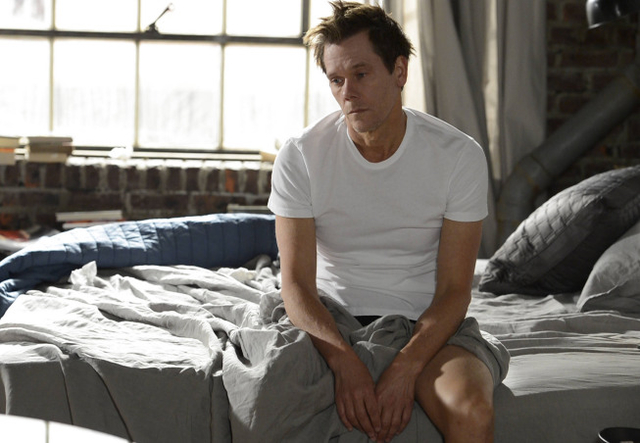
Former F.B.I. agent Ryan Hardy (Kevin Bacon) has a cult on his hands.  (FOX)

Former FBI agent Ryan Hardy (Kevin Bacon) has a cult on his hands. (Fox)

Call me crazy, but in light of the “dialogue on mental illness” that is supposedly sweeping the country incited by the Newtown school shootings and the fractured family depicted in Silver Linings Playbook, how can FOX justify its new serial killer-cum-cult drama, The Following?  Do the producers deserve a pass for this ill-timed, graphically violent show if they bookend every commercial with “Viewer discretion is advised”?  I think not. 

The Following is a virtual “playbook” for any social misfit, sociopath or psychopath looking for validation, a niche or empowerment. 

Why did I tune in to begin with?  I’m a Kevin Bacon fan and jump at the chance to see him perform in anything.  And I’m no prude.  If you’ve followed my blog, you won’t be surprised to learn that I’m eagerly awaiting Season 3 of The Killing.  I miss the creepy 666 Park Avenue, and never miss my nightly fix of The Sopranos, currently re-airing weeknights on HBO.  For me, the latter still stands as the most outstanding series ever conceived, cast, written, directed, scored and acted in cable or broadcast TV history.  Its exploration of dysfunctional family life, marriage, women’s roles, mental illness, drug and alcohol abuse, and, of course, crime and punishment transcends its professed focus on Jersey Goodfellas.  If you think The Sopranos is passé, try following an episode of The Sopranos with an hour of RevengeElementary or Deception, and see what that gets you.  Pass the Pepto.

But back to The Following.  Unlike The Sopranos, where violence and revenge played out (i.e., conflict resolution?) within the mob subculture, and The Killing explored the psychological fall-out from one young woman’s murder, The Following knows no such bounds. Its psychology is sophomoric and its violence is inspired by the life and work of Edgar Allen Poe, at least that’s the line espoused by charismatic lit professor/serial killer Joe Carroll (James Purefoy) to the cult building up around him.  Professor Carroll not only talks the talk but also continues to walk the walk from his prison cell via the Internet by encouraging his “followers” to slaughter innocent victims (i.e., especially beautiful young women) as a pathway to artistic nirvana. 

Knives are their weapons of choice and victims’ eyes are favorite targets, again with a nod to Poe.  Unfortunately for humankind, Joe’s brief escape from prison—he was incarcerated for the brutal killing and evisceration of campus coeds—simply fanned the fires in the bellies of his acolytes.  It should come as no surprise that Joe attracts young, disenfranchised loners marginalized by their families, society and mental illness. 

Add to this mix former FBI agent Ryan Hardy (Kevin Bacon) who was instrumental in capturing Joe eight years before the dawn of this series.  In the process, Ryan fell for Joe’s wife and probably fathered the son Joe believed to be his own.  After the collar, Ryan spun into a tailspin with booze and a pacemaker to patch his wounded (Tell-Tale?) heart.  He’s a train wreck whom Joe targets and casts within a Poe and revenge-fueled drama orchestrated from prison.   

Aside from dragging Edgar Allen Poe’s good name and work into the gutter, this series is especially irresponsible coming so soon after the carnage in Newtown and Aurora, Colorado, and the numerous other mass shootings by young, psychopathic loners.  So far, The Following has explicitly showcased a particularly gruesome array of murders that include torture, evisceration, eye-gouging and, unfortunately for Ryan’s pacemaker, stun-gunning.

Despite healing her physical and psychic wounds, Joe’s only surviving victim eventually meets a gory end as do the stolen pet dogs that are cut up alive for practice by an ardent follower.  Isolated and confused, Joe’s young son is encouraged to smother a mouse in an airtight jar.  And another young acolyte is bullied and humiliated by fellow followers into tackling his first knifing.  Luckily for the victim—who has been kidnapped, beaten and held hostage for sport in the basement of their hide-out—the first-timer chickens out.

This faux Edgar Allen Poe has a secret weapon and it's a shocker.  (FOX)

This faux Poe has a secret weapon and it’s a shocker. (Fox)

One of Joe’s most disturbed followers dons an Edgar Allen Poe costume and entertains passersby as a street poet. He ends his “act” by dousing an unsuspecting book critic (he panned Joe’s book!) with a large can of flammable liquid, setting him ablaze in front of a horrified crowd of onlookers. The victim was simply waiting in line to buy a hot dog from a street vendor.  And if you failed to catch this disgusting act the first time around, fear not… this bone-chilling sequence has been repeated (a visual feast for potential copycats?) from several angles in flashbacks and episode updates.  

In short, “the brains” behind The Following have shown incredibly poor judgment and timing.  Aside from lacking any discernible empathy for the cult’s victims, the producers seem oblivious to the show’s real-time parallels and potential appeal to copycats. While evidence pinpointing the actual effect of violent media on troubled youth is inconclusive, wouldn’t common sense dictate that The Following, such as it is, has no place on broadcast TV during primetime now or forever more

It’s one thing to pay to get your periodic slice-and-dice film fix in a movie theatre, on DVD or Netflix; but to find it so uncomfortably accessible week in and week out at a disturbingly early hour?  Shame on you, FOX!  Kevin Bacon and his “followers” deserve better.  

The Following unfortunately airs on Monday nights at 9:00 p.m. on FOX.  It is definitely not child friendly; nor is it animal friendly, family friendly, coed friendly or Edgar Allen Poe friendly.—Judith Trojan

Posted in TV | Tagged , , , , , , , , , | 3 Comments

Perry Miller Adato Remembers Paris The Luminous Years

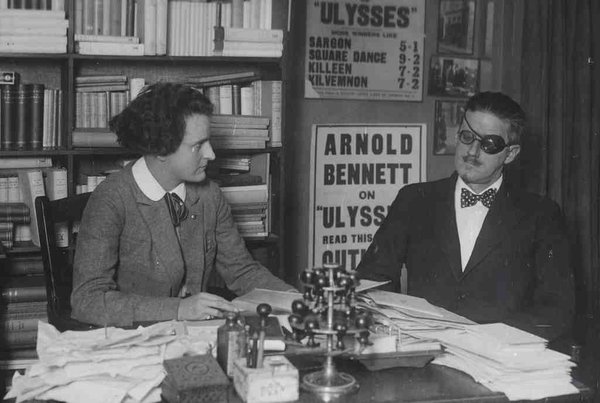
James Joyce and Sylvia Beach

Literary giants Sylvia Beach and James Joyce ponder the fate of Joyce’s controversial oeuvre in Beach’s iconic Parisian bookstore, Shakespeare and Company, circa 1922. From PARIS THE LUMINOUS YEARS (PBS/Princeton University Library)

Back in the day when I was a young graduate film student at New York University, I by chance caught Gertrude Stein: When This You See, Remember Me (1970) on NET/Channel 13.  To say that the film changed my life is an understatement.  More than anything I had yet to learn at NYU, Gertrude Stein instantaneously toppled my perception of what a documentary film could, should and would be going forward into the final decades of the 20th century.  It had nothing in common with the tired, formulaic “educational films” that I was raised on—those snooze-inducing films that held audiences captive in schools and libraries and on public TV.

For me as a budding film and art historian and journalist and for a whole generation of my peers—the young social issue filmmakers about to jump start their careers—that film opened a door to a whole new way of presenting and preserving artistic vision and visionaries.   Through the skillful weaving together of rare interviews, archival clips, photographs and letters—the fruits of dogged research—with exquisite rendering of artwork and text, the filmmaker, Perry Miller Adato, succeeded in bringing to life, in riveting fashion, a community of artists and writers who many of us could only hope to “meet” on the printed page, on museum walls or in concert halls.

it-perrymilleradato

Perry Miller Adato

Adato went on to produce and direct many award-winning films on individual artists throughout the years and, in the process, influenced the evolution of such young filmmakers as Ken Burns and a host of women filmmakers who gained courage by following her lead.   Adato’s life’s work came full circle with her most brilliant, beautifully conceived and thoughtfully researched film of all, Paris the Luminous Years: Toward the Making of the Modern, a welcome rebroadcast on PBS at the start of the new year.

Of all the new and classic films I’ve seen in recent months, this encore airdate triggered my first epiphany of 2013… it was a happy reminder of why and how my love affair with documentaries and their makers came to be.  If you care about the arts (fine art, music, dance, theatre, literature and documentary filmmaking at its best), I urge you not to miss this film (it’s currently available from PBS, Amazon, Netflix et al).

In the context of Adato’s previous work, this film makes perfect sense.  It seamlessly pulls together all the distinctive elements in her toolbox into a film that is nothing short of a masterpiece   One not only gains an overall sense of the historical period within which her subjects, the trailblazing European and American expatriates, lived and worked.  But we are also privy to their position in the artistic subculture and hierarchy of the time, as well as the cultural and social influences on their work and the groundbreaking artistic, literary and musical movements that germinated in this very special place and time.

In short, Paris the Luminous Years not only stands as an epic achievement in documentary filmmaking, but also serves as an evergreen educational resource that should be mandatory viewing for all serious students of the history of 20th century art, literature, music and dance.

There are no false or irrelevant moments in this film.  Especially invaluable are the crisp, spot-on shots of the artwork, one of  Adato’s specialties, as well as her liberal use of fascinating and undoubtedly rare archival film footage, particularly the glorious period film clips of Parisian street life and café society and the content-rich clips of noted artists, writers and musicians who share personal anecdotes.  Adato’s intelligent script manages to integrate, in novelistic fashion, a massive amount of research without seeming pedantic or compromising the integrity of the material.

Paris may represent the Shangri-La of romance and fantasy for many viewers today (e.g., Woody Allen’s wistful romantic comedy, Midnight in Paris), but the City of Light best be remembered for the more important role it played in the lives of artistic visionaries (circa 1900-30) who needed Paris to create a body of work that ultimately reshaped the landscape of the arts forever.   Perry Miller Adato delivers that message loud and clear in Paris the Luminous Years, and with her rich and incomparable body of work secures her place in the cinematic pantheon.  Bravo, Perry! —Judith Trojan

Posted in Art, Film, TV | Tagged , , , , , , , , , | Leave a comment

Solar Mamas Light the Way on Independent Lens

Women from impoverished rural communities around the world are featured in SOLAR MAMAS as they travel to India to study solar engineering at Barefoot College. (Independent Lens/PBS)

As we approach the pivotal outcome of a Presidential election that could dramatically alter the future of women’s rights in this country, especially with regard to abortion, contraception and general health care, please take the time to revisit the candidates’ platforms on these issues, as well as their stance on empowerment through education and the importance of utilizing new technologies and energy resources. 

It’s of vital importance to understand the damaging effect of curtailing educational initiatives in low income and inner city communities and impeding the rights of women (healthcare and otherwise). If you think these issues do not and will not seriously impact the lives and rights of women and men, of all ages, on all levels of the socio-economic spectrum, think again. 

Solar Mamas, a timely new film directed by Jehane Noujaim and Mona Eldaief debuting tonight on Independent Lens, follows 30-year-old Rafea, a Jordanian mother of four, who is recruited by India’s Barefoot College to train to be a solar engineer. To accomplish her goals, she and another local recruit must leave their families and village for the first time and study how to use technology to harness solar energy to make themselves self-reliant and their communities sustainable. 

Since their culture forbids the education of girls beyond the age of 10, women in Rafea’s village have no other purpose than to bear and raise children, cook and clean (Rafea and her children live in a tent and barely survive) and serve their husbands who apparently are allowed to procreate at will with more than one woman. Rafea’s husband lives with his first wife and family and rarely stops by. He’s unemployed, aimless and balks at her ambition to better herself and their community by attending college. He ignores their four children for the most part which forces her to return home from India prematurely to care for an ailing child.

Angry and unfulfilled, Rafea argues her case in front of village elders and her parents (her mom advises her to stay home with her children, while her dad seems to support her desire to travel and learn new things). With the intervention of a supportive local environmental Minister, she concedes “control” to her husband by accepting his threats to leave her and take their children. Although she remains fearful that he will do so, she returns to India and Barefoot College where she is warmly welcomed and reintegrated with fellow classmates from Guatemala, Kenya, Burkina Faso and Colombia.  

When their six-month training ends, Rafea returns home again, this time revitalized with the skills and passion to develop a solar power training program in her village. Her beaming face quickly darkens as male villagers attempt to marginalize her and run the program themselves. But she prevails; and in the end, despite a new pregnancy, she is employed, empowered and living with her children in their very first house.

Solar Mamas is part of the international WHY POVERTY? Project, a cross media event reaching more than 500 million people around the world via more than 60 international TV broadcasters, as well as radio, internet and live events in November 2012. To learn more about Solar Mamas, visit the companion Website at http://www.pbs.org/independentlens/solar-mamas 

Solar Mamas is scheduled to premiere on Independent Lens tonight, Monday, November 5, on PBS at 10:00 p.m. EST (Check local listings.)—Judith Trojan

Posted in Film, TV | Tagged , , , , , , , , , | 2 Comments

Don’t Throw PBS Under the Bus

I almost died last month.  Had I gone home from the hospital (as directed) hours after an outpatient diagnostic procedure, I would have bled to death.  It’s as simple as that.  The chronically late and, as it turns out, careless surgeon apparently “compromised” an artery, blaming the severe knots of pain that I experienced minutes after the procedure (early evening) on my “low threshold for pain.”  I found out weeks later from my new physician that the pain was an immediate indication that I was in trouble.  A conscientious nurse’s persistence won me an overnight stay in the hospital.  She saved my life.  At 4:30 a.m., when I tried to get up to use the hospital bathroom, the artery’s newly minted pseudo-aneurysm ruptured.

I was literally twisted in excruciating pain as ½ my blood drained into my body cavity. I didn’t quite see a white light (everything did begin to break up into blue dots), but the chaos that built up around me at 5 in the morning filled me with a terror that I hope never to experience again.  I began praying and I lived.  I tell you this because as I come to grips with the reality and consequences of this nightmare, I find myself questioning how and why this happened to me and what it means to be given a second chance to live.  What are my new responsibilities? 

In a few hours, we will experience the 3rd and final Presidential Debate.  I’m well aware of all the hoopla surrounding Debate #1, but I’m still unable to shake the off-handed, almost snarky way Gov. Mitt Romney flatlined Big Bird and federal funding for PBS.  It showed a side of Romney that frankly scared me, not only for revealing the man behind the mask, but also for the cavalier way he threw PBS under the bus…negating any and all of his high-minded vague remarks about salvaging our educational system and his concern for the future of young people. 

To put Romney’s proposed cutbacks into perspective, I share with you a rebuttal first published in The Nation and then, as below, in The Bergen (NJ) Record, co-written by public broadcasting pioneer William F. Baker, the distinguished longtime head of the Educational Broadcasting Corp. and former president of PBS-TV’s WNET and WLIW.  I have personally met, interviewed and honored Dr. Baker, our Christopher Leadership Award winner in 2007.  Dr. Baker was only the fourth Leadership Award honoree in the (then 58-year) history of the Christopher Awards.—Judith Trojan

PBS Isn’t the Place to Start Making Budget Cuts

by William F. Baker and Evan Leatherwood

The Nation, October 11, 2012; The Bergen Record, October 16, 2012

When Mitt Romney said he’d reduce the federal budget deficit in the recent debate, PBS was one of only two programs he mentioned cutting by name. Romney has gone after PBS before, touting its elimination as a “major” potential savings for the American people.

There’s an annual $445 million congressional subsidy to public broadcasting that might seem to support Romney’s claim—until you realize that it represents approximately one hundredth of one percent of the entire federal budget.

To put it in perspective: $445 million is only 50 percent more than what the military spends on marching bands. It is less than half of what the U.S. Senate spends each year to administer itself. For the cost of just the AIG portion of the bailout, America could have subsidized PBS at current levels without allocating another cent until the year 2164. The sum of $445 million is a lot to ordinary people, but in the world of deficit reduction, which is what Romney was being asked about, it is an afterthought.

So why does Romney speak as if Big Bird were one of the top two obstacles to national solvency? The reason is simple: He hopes to score a few easy political points.

By eliminating funding to PBS, Romney and the Republicans could indeed win some support from many conservatives, but tens of millions of Americans will lose out, especially poor children struggling to get access to a good education. PBS isn’t just NewsHour and Antiques RoadShow. Ninety-five percent of PBS stations across America provide educational programming to their communities.

The local PBS station in Rochester, N.Y., produces Homework Hotline, which provides direct help to a million struggling students every week. Zeroing out federal PBS money would take Homework Hotline and other locally created educational shows off the air. Denying educational help to millions of kids, many in areas too remote or too poor to have adequate schools, is too great a price to pay for a few election season partisan gains.

Not Important Enough

Romney’s argument is that he is eliminating federal budget expenses that aren’t important enough to justify “borrowing money from China to pay for.” Even by such an alarmist standard, using the already built and paid-for public broadcasting network to help ensure that the next generation will be educated enough to compete with China and other global rivals is an excellent, efficient use of public funds. And if Romney doesn’t agree, the American people overwhelmingly do.

PBS is one of the most widely used and highly valued services the government provides. More than 170 million Americans connect with public broadcasting every single month. For years, the Roper poll has ranked PBS as the most trusted institution in America, more trusted than Congress, the military, and even the criminal justice system. It has been repeatedly ranked second only to military spending as the “best possible use of tax dollars.”

In 2011, the independent polling firm Hart Research/American Viewpoint found that 69 percent of Americans were against cutting federal money for PBS.

And for decades, Americans have been voting for PBS with their wallets, by giving billions of their own dollars in small, individual donations.

PBS may be less important to families like the Romneys, who are wealthy enough to secure their own access to culture and education. But for millions of middle and low-income, often minority families, PBS’s small price tag provides priceless returns. In rural and poor areas, PBS is often the only place where viewers can find arts and culture programming, or see shows that give voice to local or regional issues.

A Bad Deal for Americans

Taking away one of America’s most economically efficient and widely used educational and cultural resources is a bad deal for the American people. And using America’s most trusted institution as a political football at a time when the nation is faced with many actual threats to its economic and social well-being is deeply irresponsible. The choice is not between Big Bird and economic ruin, but between a political conversation that focuses on real issues and one that seeks to divide and mislead.

Dr. William F. Baker currently directs the Bernard L. Schwartz Center for Media, Public Policy and Education at Fordham University and is the former president of WNET, New York’s PBS station.

Evan Leatherwood directs communications for the Bernard L. Schwartz Center.

Posted in TV | Tagged , , , , , , , , | Leave a comment

Nora Ephron and The Invisible War

Nora Ephron poses with her 2011 Directors Guild Award and her star, Meryl Streep (aka “Julia Child,” “Rachel Samstat” and “Karen Silkwood” ).

While I’ve been dragging my feet about how to frame my coverage of yet another powerful documentary about the U.S. military, I was shocked like many others to hear of Nora Ephron’s untimely death at 71.  No connection, you say?  Well, perhaps; but the career and life trajectory of writer/director Ephron, one of the few women who managed to successfully crack Hollywood’s old boys’ club, make fascinating counterpoints to the career challenges faced by the female soldiers profiled in The Invisible War.

Filmmakers Kirby Dick and Amy Ziering give new meaning to the dictum, “don’t ask, don’t tell,” as they expose the epidemic of rape within the U.S. military in their new investigative documentary, The Invisible War.  The statistics put forth in this film are staggering:  “20% of all active-duty female soldiers are sexually assaulted. Female soldiers aged 18 to 21 accounted for more than half of the victims” in 2011. 

Lieut. Elle Helmer, U.S. Marine Corps., visits the Vietnam War Memorial in THE INVISIBLE WAR, a Cinedigm/Docurama Films release.

The young women and one man profiled in The Invisible War, representing all four branches of the armed forces, were sexually harassed prior to their brutal rapes while on the job in their chosen profession, by male colleagues and, in some cases, by their superiors.  With careers and lives forever derailed, as much from the ongoing military cover-ups as from their assaults, the soldiers struggle to regain their balance and dignity in the aftermath.  

Yet, despite the fact that their dreams to serve this country have been irrevocably shattered, they never let go of the idealism, patriotism and purpose that led them to pursue careers in the military in the first place.  This makes their current struggles for acknowledgement and restitution all the more painful and poignant. 

Their victimizers, meanwhile, continue to thrive and rise through the ranks.  It’s no surprise that, with prosecution rates for sexual predators in the U.S. military shockingly low, only 191 perpetrators were convicted at courts-martial out of the 3,192 assaults reported in 2011.  Department of Defense statistics also estimate that “in 2011 alone, over 19,000 sexual assaults occurred in the military” and that “less than 14%” were reported.

The Invisible War is an eye-opener for those of us who believed that sexual harassment and assault in the workplace–and, specifically, in the U.S. military–are history.  Which leads me to Nora Ephron’s legacy. 

Much has been written about the universally beloved writer/director/feminist Nora Ephron whose body of work will live on to give us a much-needed boost during challenging times of our lives.  Her female characters, most memorably embodied by Meryl Streep and Meg Ryan, tackle many of the issues we face as women as we attempt to forge healthy, loving communicative relationships with men (When Harry Met Sally, Sleepless in Seattle), reinvent ourselves (Julie & Julia, You’ve Got Mail) and navigate the minefields of infidelity (Heartburn), toxic environments (Silkwood) and aging (I Feel Bad about My Neck). 

In real life, Ephron dodged two bullets until she made a good match with husband #3, author Nicholas Pileggi.  In an industry run by men, she conceived, wrote and directed a string of box office hits featuring memorable female protagonists.  Few women, then and now, have such a track record.  She fought in the Hollywood trenches and came out with a good marriage, kids and a fine body of work that encourages women to challenge the status quo.   

While Ephron’s New York sensibility and sense of humor permeate her work, her films give all women–Blue state, Red state and those in-between–a voice and a happy ending.  For Ephron, obstacles were meant to be surmounted, a point she made clear in her commencement speech to 1996 grads, all women, at her alma mater, Wellesley College (MA):

“My class went to college in the era when you got a master’s degree in teaching because it was ‘something to fall back on’ in the worst case scenario, the worst case scenario being that no one married you and you actually had to go to work. … We weren’t meant to have futures, we were meant to marry them.  We weren’t meant to have politics or careers that mattered, or opinions, we were meant to marry them. … Be the heroine of your life, not the victim. … Whatever you choose, however many roads you travel, I hope you will find some way to break the rules and make a little trouble out there.  And I also hope that you will choose to make some of that trouble on behalf of women.” 

The dedicated female soldiers who courageously agreed to come out of the shadows and tell their painful stories in The Invisible War, after exhausting every avenue for justice through military channels, are doing just that.—Judith Trojan

Screening updates and additional info on The Invisible War (written & directed by Kirby Dick; and produced by Amy Ziering & Tanner King Barklow) can be found at http://invisiblewarmovie.com/  


Posted in Film | Tagged , , , , , , , , , , , , | Leave a comment

The Killing Cracks the Case

Will intrepid Seattle detectives Sarah Linden and Stephen Holder finally nab Rosie Larsen’s killer in the 2-part finale of AMC’s THE KILLING?

With just two more episodes to go (tonight, June 10, at 9/8c, and next Sunday, June 17, on AMC, check local listings), Season 2 of The Killing is just about to wrap and Rosie Larsen’s killer will be revealed. While I’m absolutely absorbed by this gripping crime series, the finale can’t come soon enough, apparently, for the naysayers who whipped up a storm of protest when Season 1’s finale failed to shut the door on the case.  There were complaints about the rain, the pace, the red herrings, ad nauseam.

This crankiness shocked me given the mindless, predictable stuff one typically finds on broadcast TV these days.  Are attention spans getting so short (a plague of ADD or 140-character-itis?) that viewers can’t sit still long enough to appreciate the richness of a character-driven drama framed by outstanding direction, cinematography, editing and plot twists that actually twist, in this case, through the criminal underbelly of Seattle?

There are no handsome or beautiful detectives here who flirt and banter with their partners and solve crimes in 60 minutes or less.  Detectives Sarah Linden (Mireille Enos) and Stephen Holder (Joel Kinnaman) are flawed, complicated and relentless. Both have dark pasts that haunt the present.  Holder is an ex-addict and loose cannon and Linden is a vagabond single mom whose troubled childhood in foster care drives her obsession to right the wrongs of murdered children.  Linden and Holder are mavericks and, as their prickly partnership settles into a comfort zone, their heads are prime targets for the corrupters within their precinct.  And in TV land, they’re heads above the cookie cutter cops one finds on run of the mill cop shows.

The casting is inspired and the scripts are superb.  I find myself riveted every week as tightly-wound Linden and fire-cracker Holder maneuver through the corrupt landscape that surrounds the Rosie Larsen murder case.  Recent episodes have smacked Linden and Holder into incredibly damning places and have actually given me chills they’re so brilliantly evoked.

Aside from the dynamics of the Linden-Holden “partnership,” there are other fractured “families” to consider as well.  There’s councilman and Mayoral candidate Darren Richmond (Billy Campbell) and his driven, potentially shady young advisors Gwen (Kristen Lehman) and Jamie (Eric Ladin).  And there’s Rosie Larsen’s family:  her ex-mobster dad Stan, vaguely detached mom Mitch (Michelle Forbes), Rosie’s bewildered younger brothers and their suspiciously evasive aunt Terry (Jamie Anne Allman).  Lesser but no less important characters (and potential suspects) are also all sliding in and out of this scenario saddled with secrets galore.

Stan’s vigilantism and parenting skills (brilliantly played by actor Brent Sexton) have been especially shocking and brutal.  But, to the scripter and actor’s credit, I don’t think I’ve seen, in recent memory, a more moving portrayal of a grieving dad dealing with the conflicting emotions that come with the loss of a child.  Stan’s clumsy attempts to make amends to his victims and to parent his young sons during a period of unimaginable grief are actually touching.  I have less understanding of Rosie’s mom Mitch, who ditches her family to grieve on her own in seedy motels and bars.

The Killing initially reminded me of Twin Peaks…same opening premise…a lovely teenage girl is found gruesomely murdered, floating in water, inciting a similar sense of ominous dread.  A diehard Twin Peaks fan, I’ll never forget screening the opening two-hour episode prior to its premiere with a handful of fellow critics in a small screening room at ABC.  We all sat silently mesmerized as we watched that groundbreaking David Lynch drama unfold.  I stuck with the Twin Peaks series and never-ending Laura Palmer murder investigation, despite the fact that other directors and scripters steered its original promise into Crazy Town, USA.

The Killing thankfully played out differently.  At the end of Season 1, I was comfortable with its unsettling denouement and excited by the promise of more to come with the Rosie Larsen case.  I wasn’t finished with it.

Season 2 has travelled to dark places that no one could have predicted.  Red herrings are the backbone of the very best murder mysteries, not their downfall, and those planted in Season 1 cleverly made sense.  If I can guess a murderer or figure out a mystery in the first 10 minutes, I’ll be folding laundry or reading the newspaper while watching the rest of the show out of the corner of my eye.  Not so with The Killing. Each episode has kept me glued to my seat and, frankly, goose bumps have been generated by the sheer mastery of the medium and genre.

Two of my guilty pleasures, Revenge and Smash, while fun to watch, don’t progress very much from week to week and can be reduced to a few minutes of dialogue bookended by endless commercials.  I get caught up with my laundry and newspapers without missing a plot twist or a downbeat.  Since it’s rare to find a good character-driven series on TV these days, contemporary viewers have little or no experience with the slower pace that such a drama demands.  Sadly, The Killers’ naysayers have missed the point…they’re perhaps a tad impatient and distracted and can’t forgo their tweeting, texting or talking long enough to pay attention.  I’m transfixed by The Killing and can’t guess how the finale will play out.  This is refreshing in my book and the mark of an outstanding crime drama. —Judith Trojan

[Ed. Note:  You can catch up with previous episodes of The Killing on DVD, et al.  Look for updates on the AMC Website @ www.amctv.com ]


Posted in Cable, TV | Tagged , , , , , , , , , , | 2 Comments

Independent Lens Premieres Powerful Doc on Memorial Day

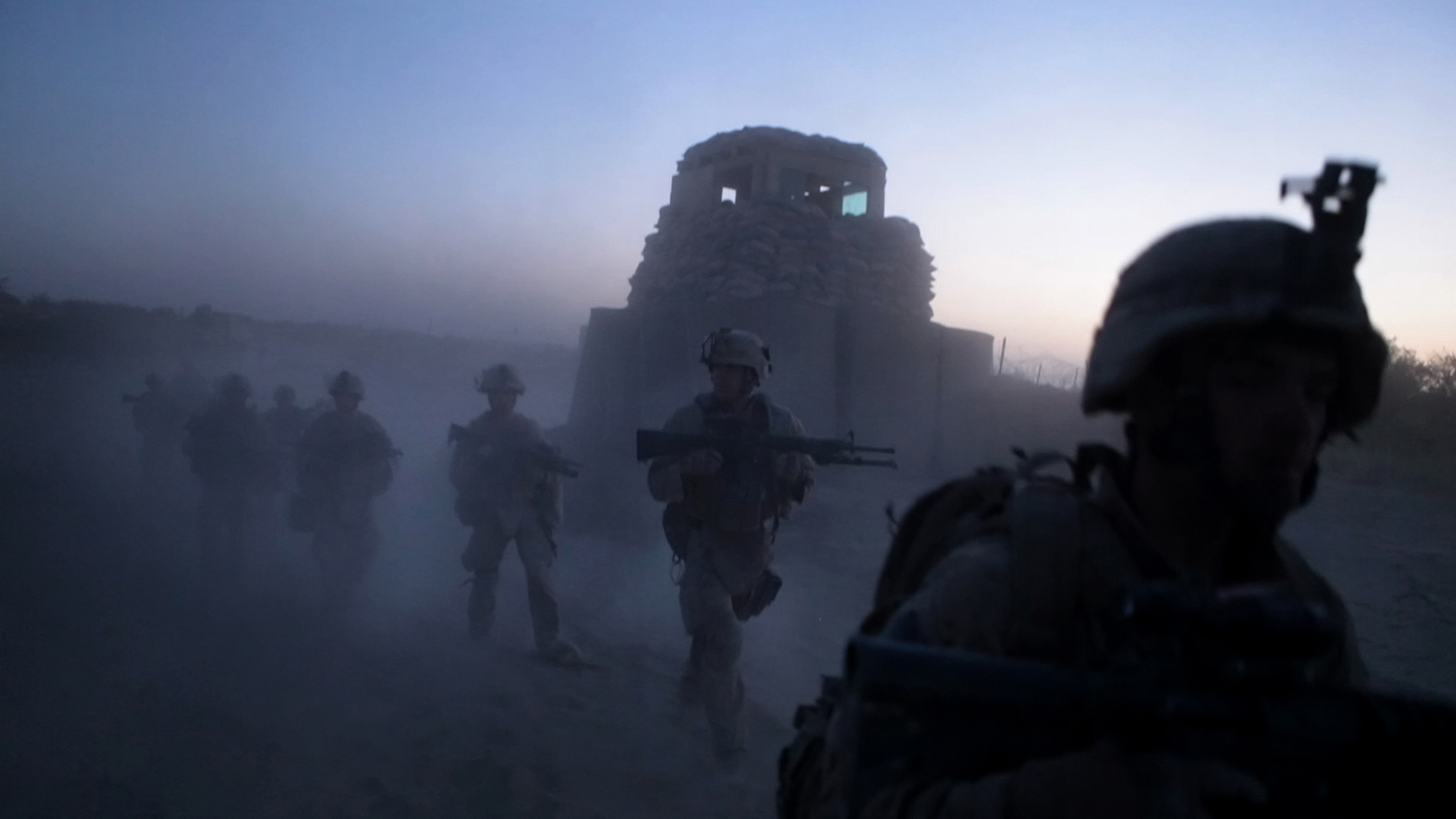
U.S. Marines Echo Company, 2nd Battalion, 8th Marine Regiment fight a ghostlike enemy in southern Afghanistan in HELL AND BACK AGAIN
Independent Lens/PBS

In light of the drastic funding cuts recently announced by the National Endowment for the Arts, it’s more important than ever to support such hard hit PBS series as Independent Lens, P.O.V. and American MastersIndependent Lens, produced by ITVS in San Francisco, for example, was socked with a massive $120,000 NEA funding cut for 2012. 

Without these national indie film showcases, we would lose our primary exposure to important documentaries and the talented filmmakers who often drain their bank accounts and sometimes risk their lives to produce films about hot button social issues, maverick trailblazers and exotic cultures.  An upcoming Independent Lens broadcast premiere, well-timed for Memorial Day (on PBS, check local listings), is a case in point. 

Hell and Back Again was fortunate to receive a much-deserved Academy Award nomination this past year for Best Feature Documentary; but, if not for Independent Lens, the film would have had little hope for widespread distribution outside of the film festival circuit given its intense subject matter.  Filmed and directed by Danfung Dennis, a seasoned photojournalist who has covered the wars in Iraq and Afghanistan since 2006, Hell and Back Again tracks the harrowing mission of U.S. Marines Echo Company, 2nd Battalion, 8th Marine Regiment, as they launch a major assault on a Taliban stronghold in southern Afghanistan. 

Within hours of being helicoptered behind enemy lines, Sergeant Nathan Harris and his unit must do whatever it takes to extend an olive branch to local Afghan elders who want nothing to do with the Marines and their professed good intentions.  Building trust with these uprooted natives is clearly a futile endeavor as is the troops’ attempt to eradicate their shared elusive enemy, the Taliban. 

Dennis’s on-location, in-your-face footage pulls no punches.  The language is raw and so are everyone’s nerves.  The mission ultimately almost kills 25-year-old Sergeant Harris, whose recovery is followed back in the States as he undergoes physical therapy and mends his mangled leg with his supportive wife, Ashley, by his side.  Dennis parallels Harris’s highly competent command on the front lines with his aimless days at home in North Carolina as he yearns to be healed and back in Afghanistan for yet another round of warfare.  His transition is fraught with crippling anxiety attacks and physical pain.

The cross-cutting between Harris, cool in command, with Harris, on-the-edge while on-the-mend, powerfully underscores the conflicted emotions that are never far from the surface in war and peace for this dedicated Marine.  On the home front, Harris negotiates Wal-Mart, his marriage and his living room without ever losing sight of his gun collection, his pill bottles and his memories of fallen comrades.  Hell and Back Again stands with the very best wartime documentaries as a potent reminder to celebrate the daily sacrifices of our troops and their families…whether we agree with their marching orders or not.   

Hell and Back Again is scheduled to premiere on Independent Lens on PBS on Memorial Day, Monday, May 28, with encore presentations throughout the week. (Check local listings.)—Judith Trojan

Posted in Film, TV | Tagged , , , , , , , , | 2 Comments