Transgender Teen Speaks Out as a Real Boy on PBS

Transgender teen Bennett explores his transition in REAL BOY debuting on the PBS series, INDEPENDENT LENS. Photo courtesy Shaleece Haas.

Transgender teen Bennett explores his transition in REAL BOY debuting on the PBS series, INDEPENDENT LENS. Photo courtesy Shaleece Haas.

“I am literally a boy with the wrong body parts,” remarks 19-year-old Bennett in the hour-long documentary, Real Boy. Feeling comfortable in one’s skin is never easy, especially during adolescence. But for someone like Bennett aka Ben aka Rachael, the roadblocks are especially daunting… and lonely.

In Real Boy, filmmaker Shaleece Haas gives transgender teen Bennett the space to reflect on the obstacles he’s faced as he affirms his rightful gender. We also meet his mom, Suzy, whose journey to accept her former daughter’s gender reorientation surgery and young adult male identity is equally challenging… and lonely. Real Boy debuts on the PBS series Independent Lens tonight, Monday, June 19, 2017, 10:00 – 11:00 p.m. ET. (Check local listings to confirm air times and repeat broadcasts in your region, and see below for online streaming info.)

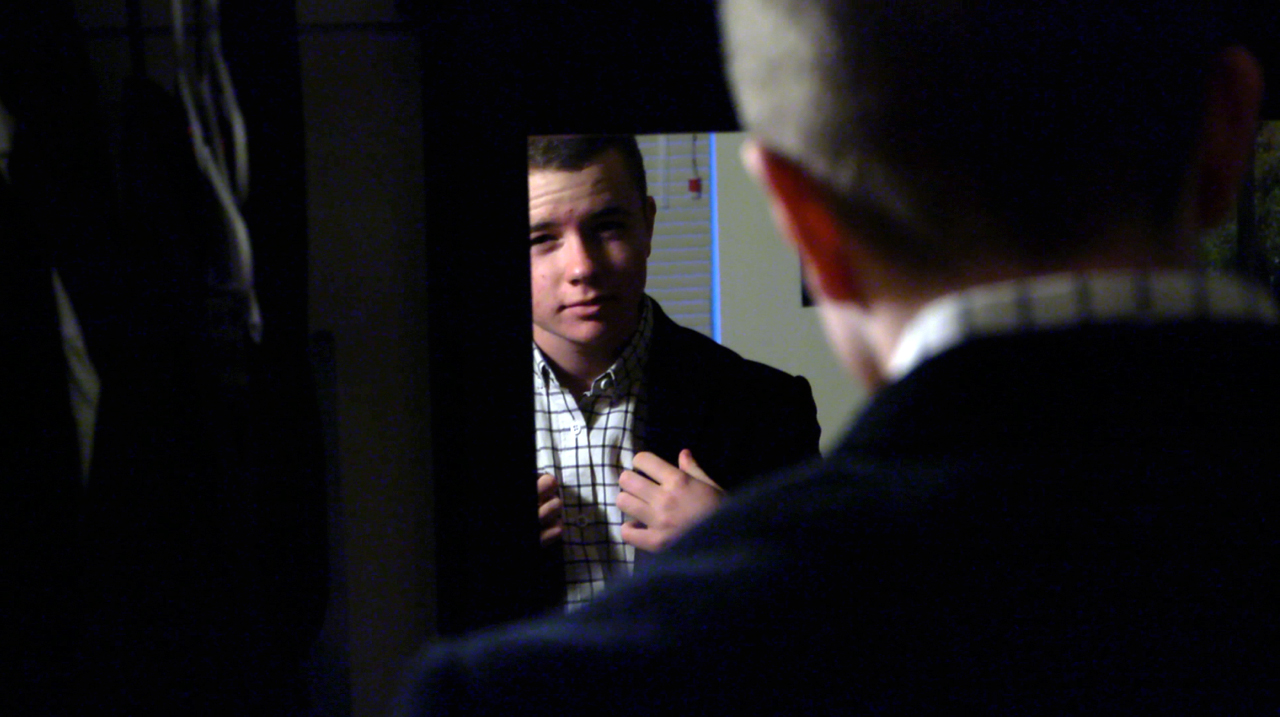
Real Boy is framed by the family’s home movies, circa 1999, when sweet little Rachael appears on camera cheerfully enjoying playful antics with her mom, dad and sister. In footage shot by Ms. Haas over a four-year period, Rachael–the daughter, sister and tomboy who was applauded for her childhood eccentricities–has morphed into Bennett, who at age 19, is self-injecting testosterone shots and struggling to find his voice as a musician, a son, a brother and, most especially, as a young man.
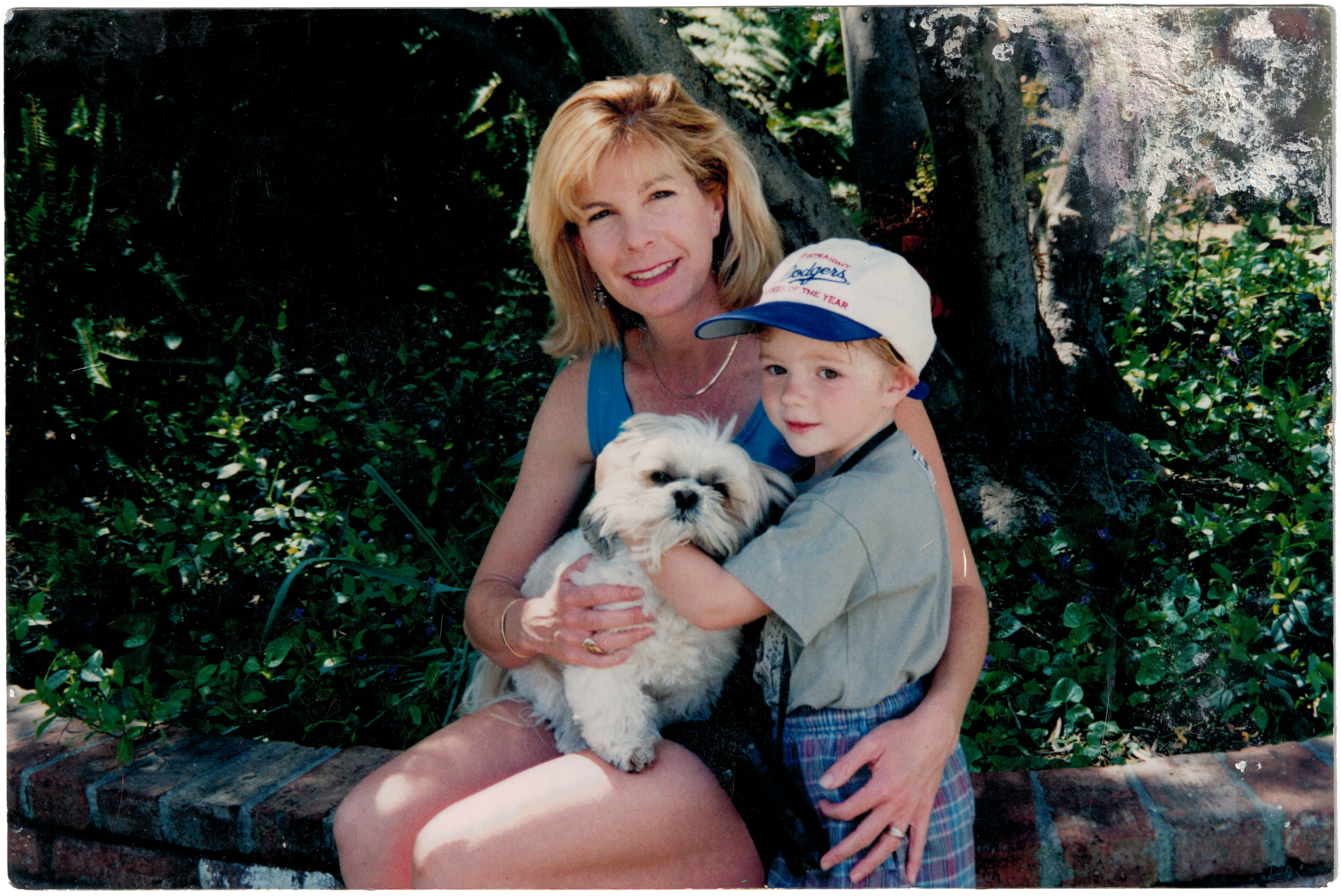
Bennett, then Rachael, with his mom, Suzy. Photo courtesy Shaleece Haas.

As he navigates this rocky road, his mother strives to understand the intricacies of her child’s transition and provide the unconditional love and support that he needs. It’s not easy for her to contemplate the bodily changes that will result from his surgery, which is made clear when she muses that she too would rather have a new body… so she can look like Charlize Theron.

Bennett recalls how his incompatibility with all things female reached a breaking point at puberty, leading him to experiment with substance abuse, theft and a life-threatening pattern of cutting. Facing disbelief and rejection at home, he connected with other trans teens on the Internet and forged a supportive relationship with transgender musician Joe Stevens. Although he’s acknowledged as a loving, life-saving presence in Bennett’s life, Joe faces dramatic substance abuse problems of his own which are introduced and abruptly glossed over.

Bennett Skypes with his best friend, Dylan, as they anticipate their surgeries, as seen in REAL BOY on INDEPENDENT LENS. Photo courtesy Shaleece Haas.

Bennett Skypes with his best friend, Dylan, as they anticipate their surgeries, as seen in REAL BOY on INDEPENDENT LENS. Photo courtesy Shaleece Haas.

As Bennett and his best friend, Dylan, also transgender, move to their new apartment, begin college life and face their first surgeries together out-of-state, their moms bond. Dylan’s mother encourages Suzy to accept and embrace Bennett’s transition.

Happily for her son, Suzy shows up at his hospital bedside and fulfills her care-giving responsibilities as his mom. However, his dad and sister fail to make an appearance, and their continuing rejection is given little more than a painful nod: “I just want to be loved by my family… it’s complicated for them,” says Bennett. Regretfully so; but as he yearns for their love and acceptance, he never seems to grasp, and the film fails to acknowledge, how the complex process of grief and grieving for Rachael has upended his mom, dad, sister, extended family and childhood friends.
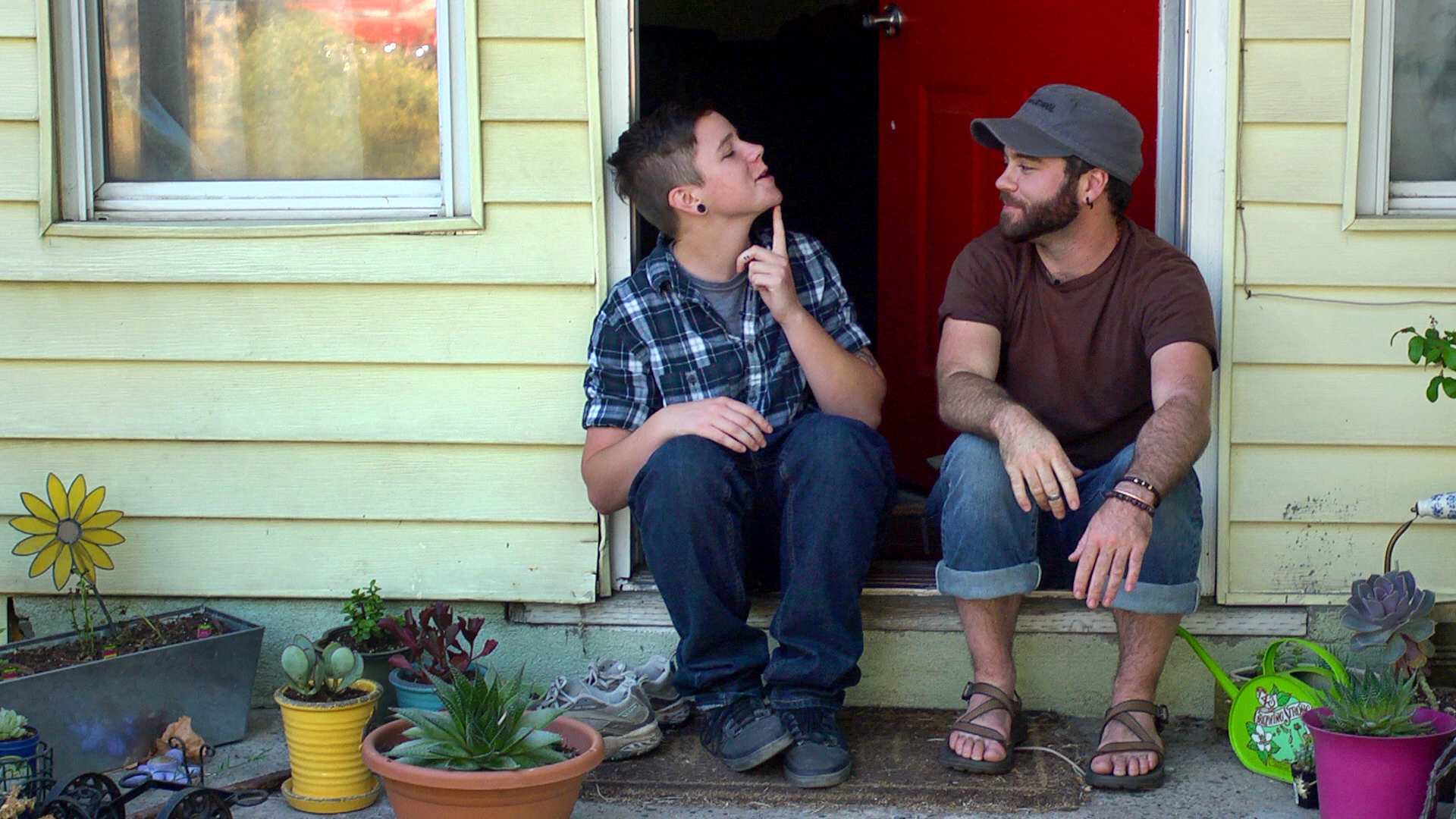
In REAL BOY, trans teen Bennett shows his first chin hair to his friend, Joe Stevens, a celebrated transgender musician. Photo courtesy Shaleece Haas.

There are other missed opportunities here as well. How did Rachael/Bennett fare in school, and when did it become apparent to her family and peers that Rachael was not simply a tomboy. And what about dating? There is passing mention of a dangerous cutting incident that sounds like it might have served as a transformative epiphany. The healing aspects of Bennett’s obvious talent as a singer/guitarist/songwriter are underplayed, and the relevent back stories of his mom and dad and Bennett’s mentor, musician Joe Stevens, are unfortunately never fully explored.

Those quibbles aside, Real Boy honors and respects Bennett’s voice and, for that, it should be a welcome and comforting addition to programs for other adolescents in the process of questioning their own gender identities and transitioning, as well as for family members and the friends who love them.

Real Boy debuts on the PBS series, Independent Lens tonight, Monday, June 19, 2017, 10:00 – 11:00 p.m. ET. (Check local listings to confirm air times and repeat broadcasts in your region.) The film will also be available for online streaming beginning June 20, 2017, at http://pbs.org/independentlens  –Judith Trojan
Posted in Film, Music, TV | Tagged , , , , , , , , | 4 Comments

If You’re Not in the Obit, Eat Breakfast Debuts on HBO

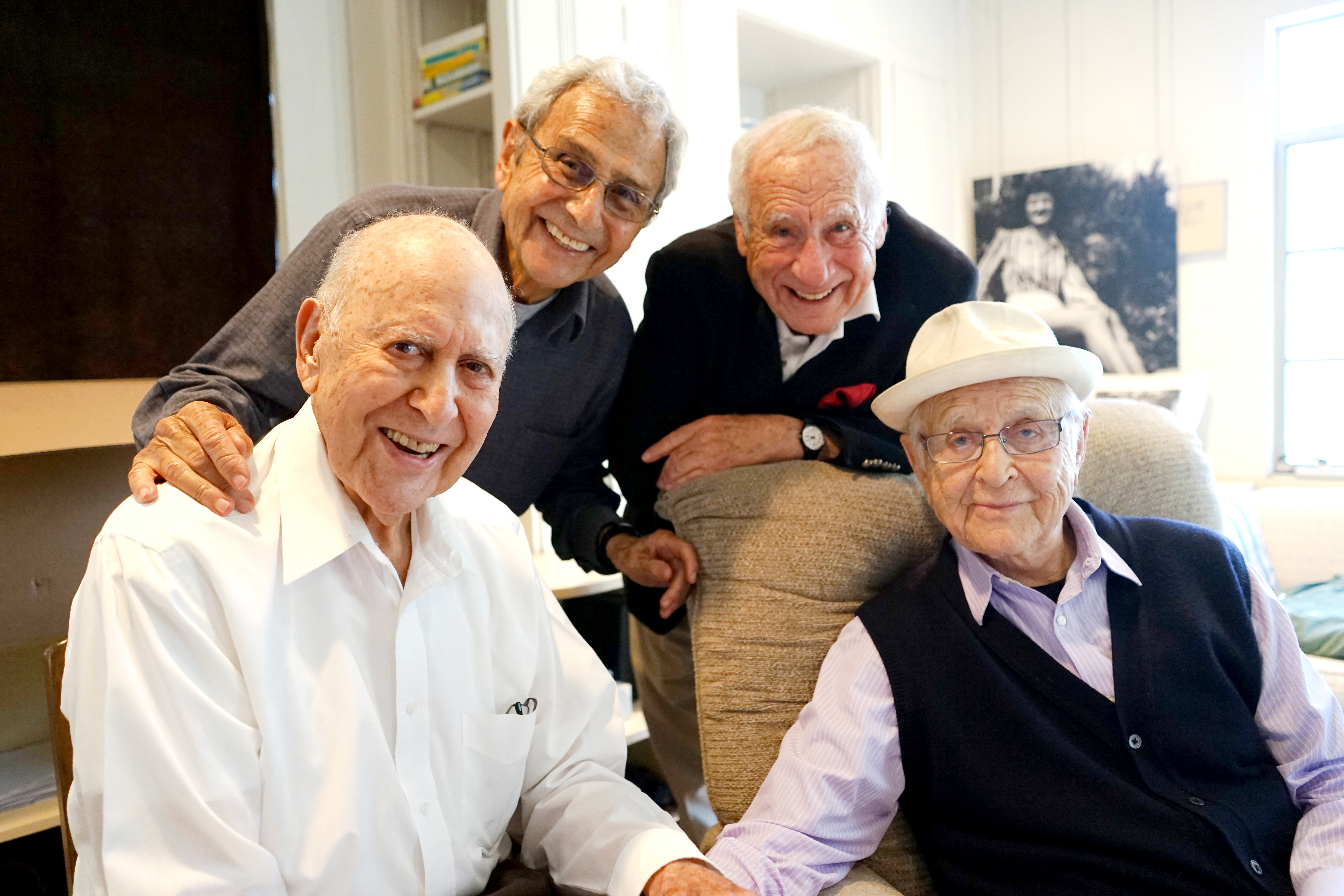
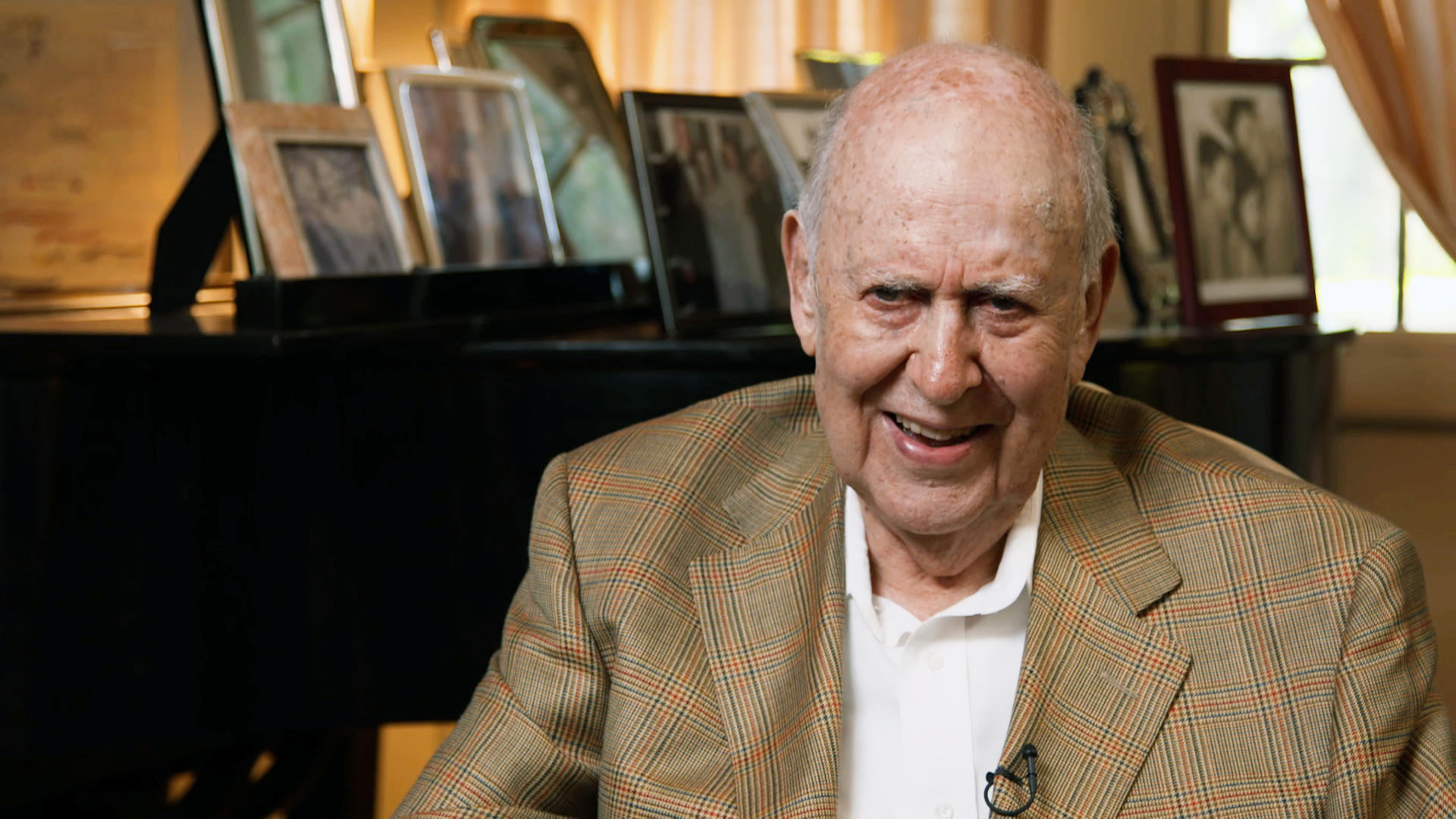
Ninety-five-year-old Carl Reiner celebrates his peers as host and prime subject of IF YOU'RE NOT IN THE OBIT, EAT BREAKFAST debuting on HBO. Photo courtesy HBO.

Ninety-five-year-old Carl Reiner celebrates his peers as host and prime subject of IF YOU’RE NOT IN THE OBIT, EAT BREAKFAST debuting on HBO. Photo courtesy HBO.

Ninety-five-year-old comedy legend Carl Reiner has a lot more shtick to share before he calls it quits. “Every morning before having breakfast,” he says, “I pick up my newspaper, get the obituary section and see if I’m listed. If not, I have my breakfast.” Never one to let a good idea go south, Reiner parlayed that humorous A.M. confession into an engaging film project.

If you only see one film this week… or next week… or the week after that, do yourself a favor and make sure it’s If You’re Not in the Obit, Eat Breakfast. You’ll laugh, you’ll cry, you’ll thank Carl Reiner for good timing and me for pointing you in the right direction. The documentary debuts on HBO tonight, Monday, June 5, 2017, 8:00 – 9:30 p.m. ET/PT. (Check listings for additional HBO playdates in the weeks ahead and availability on HBO NOW, HBO GO and HBO On Demand and affiliate portals.)

Three of these talented guys are living well into their nineties. From left: Carl Reiner, George Shapiro, Mel Brooks and Norman Lear. Photo courtesy HBO.

Directed by Danny Gold and produced by Carl Reiner’s nephew and agent, George Shapiro, who also appears in the film, If You’re Not in the Obit proves what fellow humorist Mark Twain asserted more than 100 years ago, that “Age is an issue of mind over matter. If you don’t mind, it doesn’t matter.”

Carl Reiner, who remains actively engaged as a comedy writer, director, actor, author, raconteur and dad of film director Rob “Meathead” Reiner, researched and introduces a thriving bunch of nonagenarians and a few centenarians who defy negative American ageist stereotypes and encourage the rest of us by their example.

Reiner didn’t have to venture too far afield for his subjects.  Some of his closest pals and colleagues–Mel Brooks (90), Norman Lear (94), Dick Van Dyke (91) and Betty White (95)–were more than willing and able to participate. Mel Brooks’ repartee with Reiner on-camera and in vintage animated “2000 Year Old Man” clips is priceless. But even more important is Brooks’ role as Reiner’s nearest and dearest old friend. Lifelong friendships are key to healthy longevity.

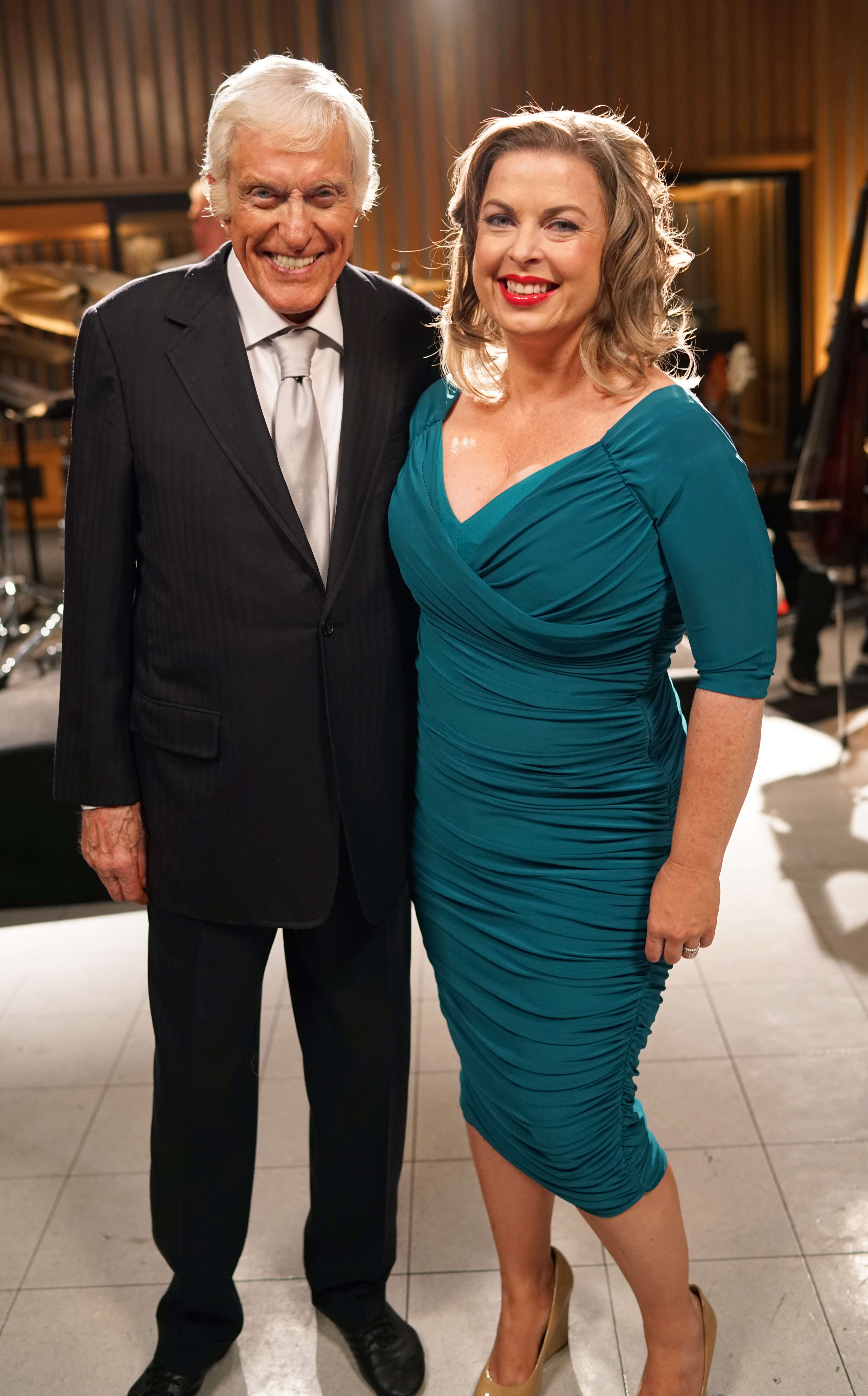
Dick Van Dyke and his wife, Arlene Silver, enjoy the their successful May-December marriage in IF YOU'RE NOT IN THE OBIT. Photo courtesy HBO.

Dick Van Dyke and his wife, Arlene Silver, enjoy the their successful May-December marriage in IF YOU’RE NOT IN THE OBIT. Photo courtesy HBO.

Carl Reiner and Dick Van Dyke’s lives initially intersected on “The Dick Van Dyke Show” (1961-66). Vintage clips from that sitcom and shared memories recap highlights from their early comedy careers and showcase Van Dyke’s ongoing effervescence and agility and the touching rationale behind his late-in-life marriage to a much younger woman.

In contrast to bubbly Dick Van Dyke, Marvel Comics legend Stan Lee (94) is all business as he recounts unapologetically the trajectory of his transition to comic book writer, publisher, media mogul, actor and nonretirement.

Since my early twenties and throughout my career, I’ve been drawn to and have written extensively about individuals and films about individuals who in advanced age continue to engage, excel and inspire.  If You’re Not in the Obit is by far one of the best and most refreshing examples of that genre. It doesn’t hurt that my favorite singer, 90-year-old Tony Bennett, opens the show with a wonderful performance of “The Best Is Yet to Come.”

The film blends no-nonsense life lessons from a fascinating mix of nonagenarians and centenarians who’ve surmounted family losses, debilitating illnesses and depression and continue to dance; practice and teach yoga; sky dive; sing; perform as classical pianists and instrumentalists; act; run marathons; author books; paint; and serve as fashion icons.

At 101, Ida Keeling works out an hour every day. In IF YOU'RE NOT IN THE OBIT, she and her daughter recall her transition at age 67 from a depressed mom mourning the murder of her sons to a healthy marathon runner. Photo courtesy HBO.

At 101, Ida Keeling works out an hour every day. In IF YOU’RE NOT IN THE OBIT, she and her daughter recall her transition at age 67 from a depressed mom mourning the murder of her sons to a healthy marathon runner. Photo courtesy HBO.

Aside from the inspiration and insights garnered from Carl Reiner and his remarkable peer group, there are some younger voices here as well. Longevity expert Dan Buettner sheds light on why some people flourish in advanced age and how the rest of us can do the same. And comedian Jerry Seinfeld caught me, a fellow Baby Boomer, by surprise with his sensitive take on the subject and some serious personal revelations.

“You know you’re getting old when you stoop to tie your shoelaces and wonder what else you could do while you’re down there.”–George Burns

I laughed out loud when I read that quote from one of Seinfeld’s role models, George Burns.  I also winced a little…because I can relate to it. Burns was in his nineties and sharp as a tack when I was lucky to catch his stand-up routine at the Garden State Arts Center in Holmdel, New Jersey. He had long ago booked, but eventually was unable to perform, a gig at Caesars Palace in Las Vegas on his 100th birthday.  He died a month after turning 100 on March 9, 1996.

Laughter is the best medicine according to Carl Reiner and Betty White, who share the secrets of their longevity in IF YOU'RE NOT IN THE OBIT, EAT BREAKFAST. Photo courtesy HBO.

Laughter is the best medicine according to Carl Reiner and Betty White, who share the secrets of their longevity in IF YOU’RE NOT IN THE OBIT, EAT BREAKFAST. Photo courtesy HBO.

If You’re Not in the Obit, Eat Breakfast debuts on HBO tonight, Monday, June 5, 2017, 8:00 – 9:30 p.m. ET/PT. (Check listings for additional HBO playdates in the weeks ahead and availability on HBO NOW, HBO GO and HBO On Demand and affiliate portals.)

No access to HBO?  Then you owe it to yourself to find another way to watch and even own a copy of this entertaining, inspiring and timely film.  It’s an evergreen reminder, as per feature film director Luis Buñuel, that “Age is something that doesn’t matter, unless you are a cheese.” –Judith Trojan

Posted in Cable, Film, TV | Tagged , , , , , , , , , , , , , , , , | 4 Comments

De Niro and Pfeiffer Debut on HBO in The Wizard of Lies

Robert De Niro not only looks the part of Bernie Madoff in HBO's THE WIZARD OF LIES, but he also believably talks the talk of the bloodless family man and Ponzi schemer. Photo: Craig Blankenhorn. Courtesy HBO.

Robert De Niro not only looks the part of Bernie Madoff in HBO’s THE WIZARD OF LIES, but he also believably talks the talk of the bloodless family man and Ponzi schemer. Photo: Craig Blankenhorn. Courtesy HBO.

In today’s divisive political climate where the line between “alt facts” and actual facts has been obliterated, it’s not surprising that Robert De Niro, an outspoken critic of the “alt fact” administration, has made his HBO debut as executive producer and star of a film entitled The Wizard of Lies. The film’s infamous protagonist, Bernie Madoff, now serving a 150-year sentence in prison, was a highly respected mover and shaker in the world of finance who built his reputation on a massive web of lies fueled by his bloodless and, many would agree, sociopathic personality disorder.

The Wizard of Lies, directed by Academy Award® winner Barry Levinson, makes a strong case for the moral of the story:  nothing good comes from lies and those who disseminate them.  The film debuts on HBO tonight, Saturday, May 20, 2017, 8:00 – 10:15 p.m. ET/PT. (Check listings for additional HBO playdates in the weeks ahead and availability on HBO NOW, HBO GO and HBO On Demand and affiliate portals.)

The Wizard of Lies follows the downward spiral of Ponzi schemer Bernie Madoff during the days leading up to the crash of his bogus $50 billion empire and the detritus he left behind for his victims: his investors and those guilty by association…his staffers and most especially his wife and sons. The screenplay, primarily adapted from New York Times reporter Diana B. Henriques’ book of the same name, smartly frames the Madoff debacle with re-creations of Henriques’ jail house interviews with Madoff.  The interviews were hard-won by Henriques, who effectively plays herself in the film. Her professional, no-nonsense face-to-face offs with Madoff add documentary flavor to the film.

Without delving into the complex how-tos of Madoff’s swindle, the film lays the groundwork for his endgame, his high-profile arrest and the collateral damage that ensued, especially as it impacted his family. As the stock market tumbled in 2008 and his nervous investors began draining his faux coffers, he scrambled to pay them off with money he charmed out of new high rollers who were flattered by his 11th hour invitation to join his rarefied stable of investors in what he promised would be a rebounding market.

“People would think it was an honor for him to take your money,” said De Niro.  “That’s a classic con situation… he was in that position and he used it.”

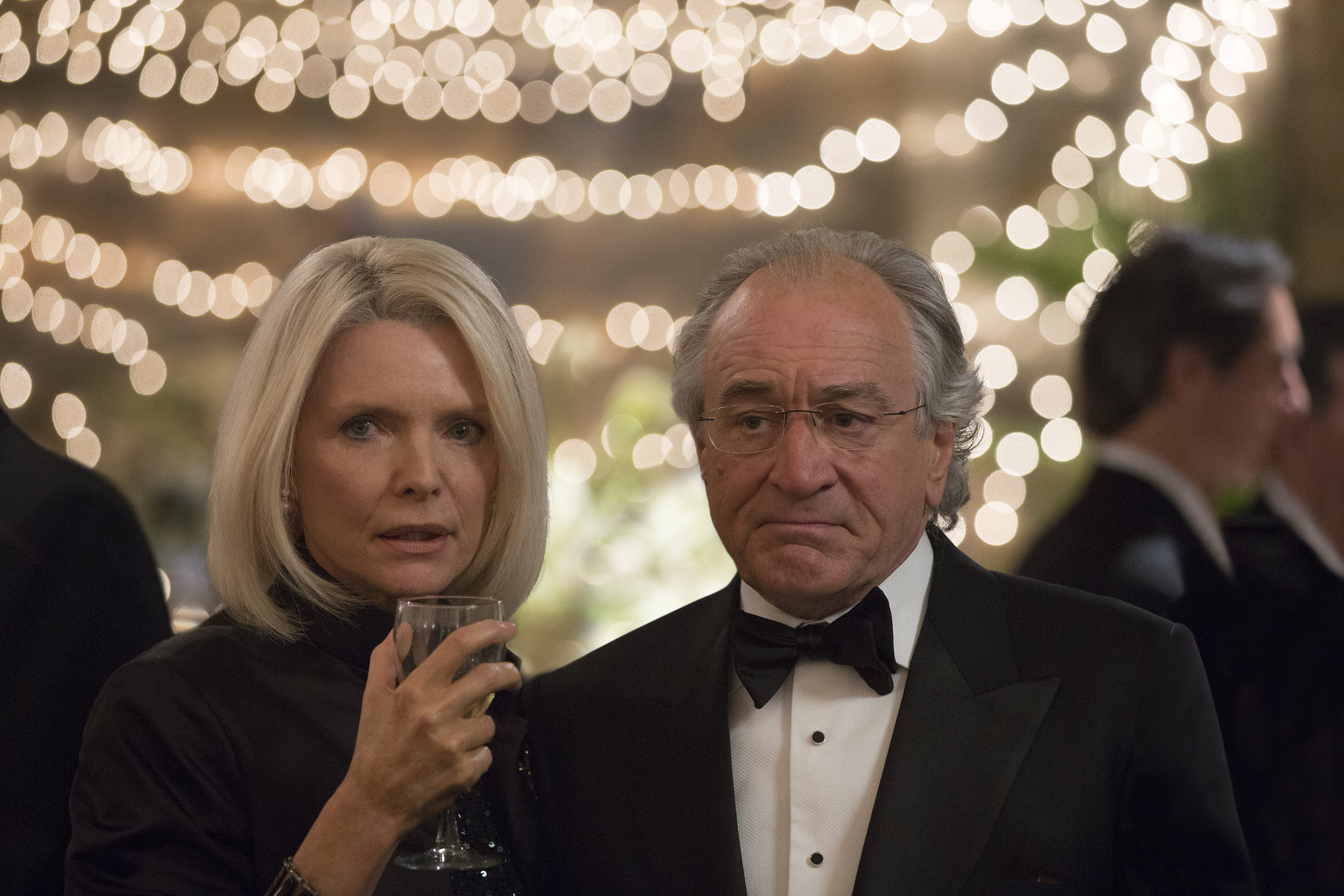
Michelle Pfeiffer and Robert De Niro as star-crossed husband and wife Bernie and Ruth Madoff in THE WIZARD OF LIES. Photo: Craig Blankenhorn. Courtesy HBO.

Fine performances by Robert De Niro as Bernie Madoff and especially Michelle Pfeiffer, as Madoff’s loyal spouse Ruth, drive this film exploration of the scandal that played out like a Shakespearean tragedy. His arrest in 2008 for perpetuating what has been called “the largest financial fraud in U.S. history” was followed by a fire-storm of incriminations from his desperate investors. A media circus culminated with Bernie’s trial and incarceration.

As Bernie Madoff’s house of cards came tumbling down, so did his family. Shown here to have been deliberately sheltered from Bernie’s longtime con, Ruth and their sons, Mark (Alessandro Nivola) and Andrew (Nathan Darrow), and their young families were demoralized by the accusations swirling around them in the media and their ostracism by longtime friends and family members. Shocked and bewildered by her husband’s betrayal, Ruth questioned her own possible unwitting role in the scam and struggled to maintain equilibrium as her elitist lifestyle and family disintegrated. Michelle Pfeiffer’s outstanding performance taps into Ruth’s vulnerability as a dutiful wife and mother of a certain age, whose definitions of love and trust were determined when, as a young teenager, she met and fell under the spell of lifeguard Bernie Madoff.

Con man Bernie Madoff (Robert De Niro) claimed to have kept his sons, Andrew Madoff ( Nathan Darrow) and Mark Madoff (Alessandro Nivola), in the dark in THE WIZARD OF LIES. Photo: Craig Blankenhorn. Courtesy HBO.

Con man Bernie Madoff (Robert De Niro) claimed to have kept his sons, Andrew Madoff (Nathan Darrow) and Mark Madoff (Alessandro Nivola), in the dark in THE WIZARD OF LIES. Photo: Craig Blankenhorn. Courtesy HBO.

“Bernie’s con never sounded too good to be true, ”recalled journalist Diana Henriques. “One of my favorite lines is ‘if it sounds too good to be true, you’re dealing with an amateur.’ Bernie never did that. What you need to understand is how plausible con men like this are, how utterly they can seize your trust and your imagination and make you believe.”

The Wizard of Lies is not only a well-acted and directed reenactment of the Bernie Madoff scandal, but a timely reminder that we would do well to learn from Bernie Madoff’s tragic example… that the endgame for those who promote and accept lies as fact is never a good one.

The Wizard of Lies debuts on HBO tonight, Saturday, May 20, 2017, 8:00 – 10:15 p.m. ET/PT. (Check listings for additional HBO playdates in the weeks ahead and availability on HBO NOW, HBO GO and HBO On Demand and affiliate portals.) –Judith Trojan 

Posted in Cable, Film, Journalism | Tagged , , , , , , , , , , , , , , | 3 Comments

Oprah Owns The Immortal Life of Henrietta Lacks

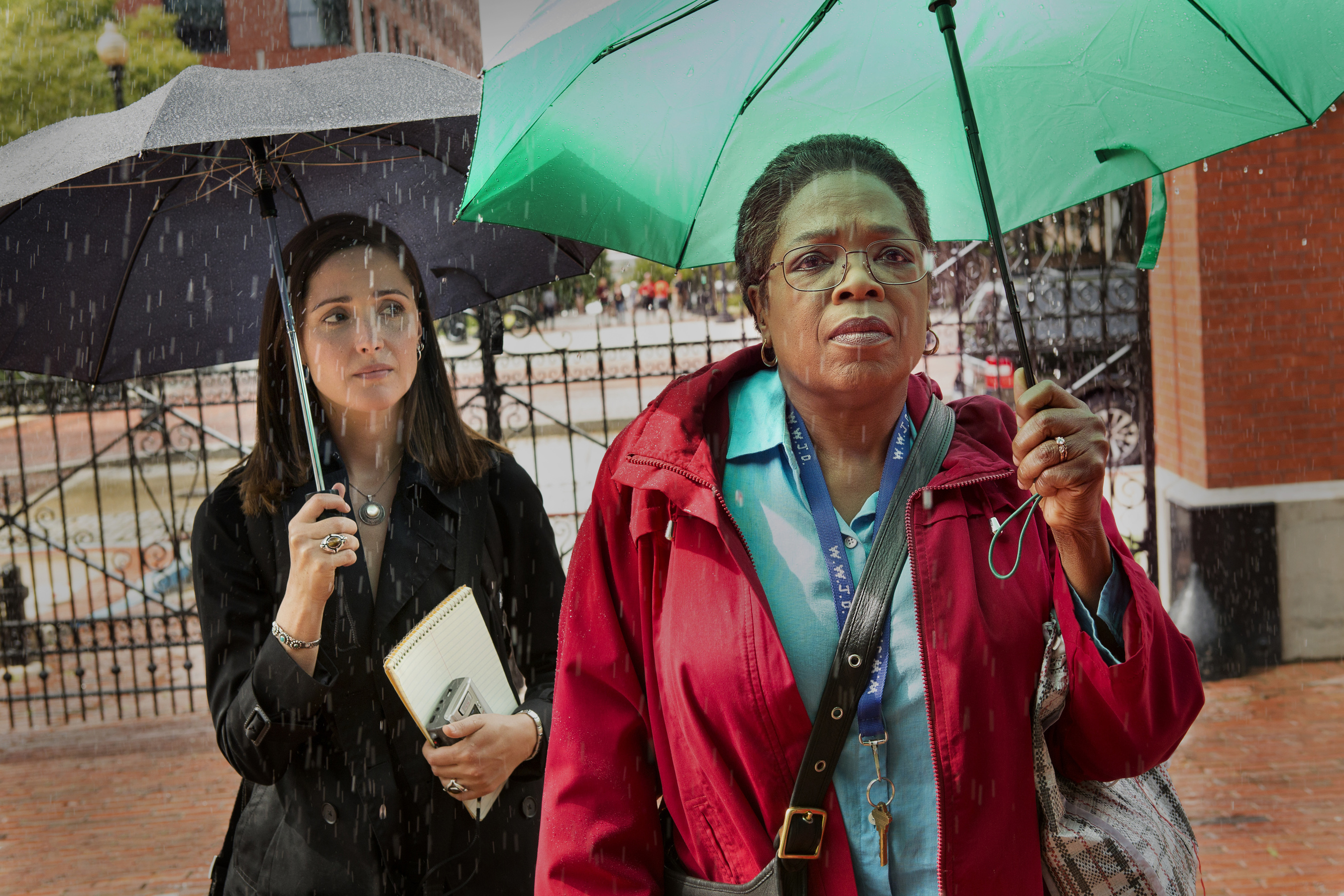
HBO Films’ THE IMMORTAL LIFE OF HENRIETTA LACKS centers on a daughter’s search for her mother’s truth. The best seller’s adaptation stars Rose Byrne as author Rebecca Skloot and Oprah Winfrey as Deborah Lacks. Photo: Quantrell Colbert. Courtesy HBO.

“The story is about loss and identity, the power of knowing your own story and how it manifests itself inside of you,” says George C. Wolfe.  “It’s about the desire to know so that you can be a more complete human being.” Wolfe, the mega-Award-winning film, theater and TV writer/director, is referring to his film adaptation of The New York Times  nonfiction best seller, The Immortal Life of Henrietta Lacks, by science journalist Rebecca Skloot. The film, directed and co-adapted for the screen by Wolfe, debuts on HBO tonight, April 22, 2017, 8:00 – 10:00 p.m. ET/PT. (Check listings for additional HBO playdates in the weeks ahead and availability on HBO NOW, HBO GO and HBO On Demand and affiliate portals.)

Henrietta Lacks died of cervical cancer in 1951 at age 31. The poor African-American wife and mother from rural Clover, Virginia, not only left behind five young children, but also her remarkable “immortal cell line” that changed the face of medical research forever and became one of the medical profession’s best kept secrets.

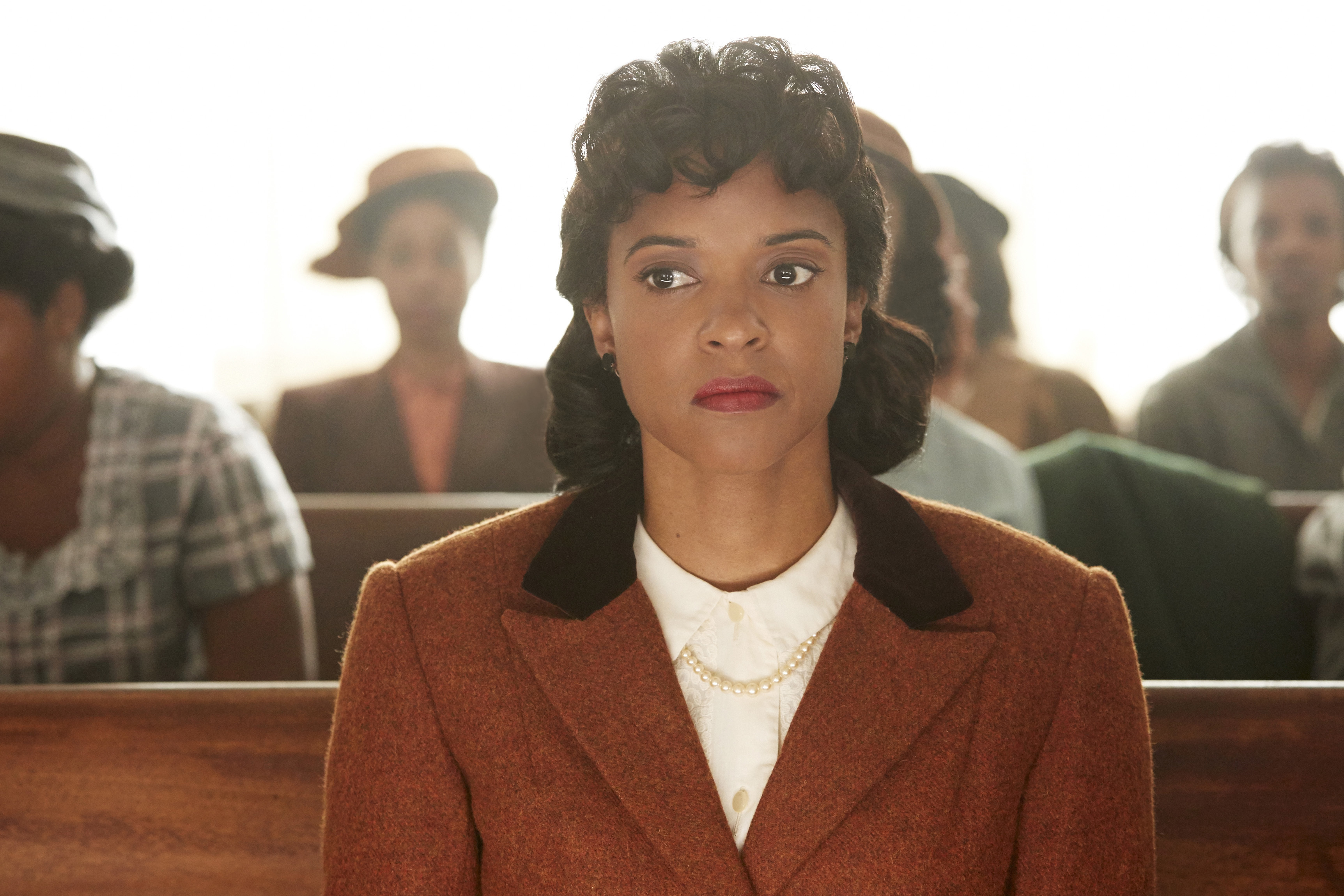
Renée Elise Goldsberry stars as Henrietta Lacks in THE IMMORTAL LIFE OF HENRIETTA LACKS. Photo: Quantrell Colbert. Courtesy HBO.

During her treatment at Johns Hopkins Hospital in Baltimore, tissue from Henrietta’s malignant tumor was harvested for cellular research, without her or her family’s knowledge or consent. This ethically suspect activity was apparently standard practice at the time. Henrietta’s cancer cells not only tragically multiplied rapidly in her body, ultimately killing her, but unexpectedly broke precedent and continued to multiply in the lab and unbelievably still do in medical research labs around the world. They’ve also been used in studies conducted in outer space. And Dr. Oz even whipped out a test tube of her cells on a recent segment of his TV show promoting the film.

While Henrietta’s name and provenance were seemingly of no consequence to those in the biomedical field, her so-named “HeLa cells” retooled the industry and quietly led to breakthroughs in cloning, in vitro fertilization and gene mapping, as well as the development of drugs and vaccines for, among other things, polio, leukemia, influenza and Parkinson’s disease.

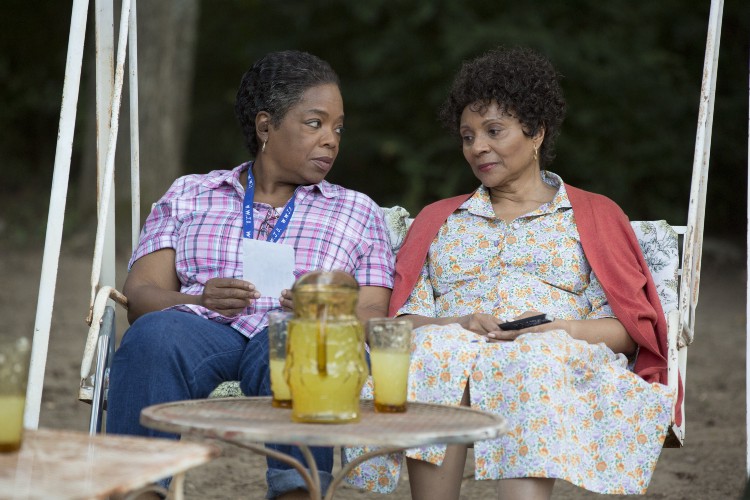
Dorothy Lacks (Oprah Winfrey) and her mother’s cousin, Sadie (Leslie Uggams), share memories of the past. Photo: Quantrell Colbert. Courtesy HBO.

Then along came freelance science journalist Rebecca Skloot. Her obsession with the ethically challenged origins of HeLa cells led her on a 10-year odyssey to research a book that would honor the life and legacy of the human being whose cells continue to be the lifeblood of millions. Rebecca’s efforts to gain the cooperation of Henrietta’s family serve as the linchpin for the screen adaptation and call to mind Emma Stone’s pivotal role in The Help. As played by actress Rose Byrne, Rebecca comes across as a caring, patient and ultimately restorative friend to Dorothy Lacks.

George Wolfe’s expressionistic vision celebrates Henrietta’s immortality through her family’s reflections and fragmented memories, especially those of Henrietta’s middle-aged, emotionally fragile daughter, Dorothy (played by Oprah Winfrey). Winfrey’s manic-depressive Dorothy is the center of the film’s universe, as she comes to terms with her mother’s medical legacy, her sister’s horrific death in a state asylum and a childhood scarred by emotional and sexual abuse and the grieving hole in her heart for the mother she never really knew.

Winfrey wasn’t initially keen on tackling the role of Dorothy.  “It wasn’t until I saw George’s breakdown of the script that I understood it was actually about a daughter in search of her mother,” explains Winfrey. “It’s about a daughter who is, really, in search of her mother’s love and connection in order to validate, verify and affirm for herself that she was loved. Knowing that part of the story is what allowed me to take it on.”

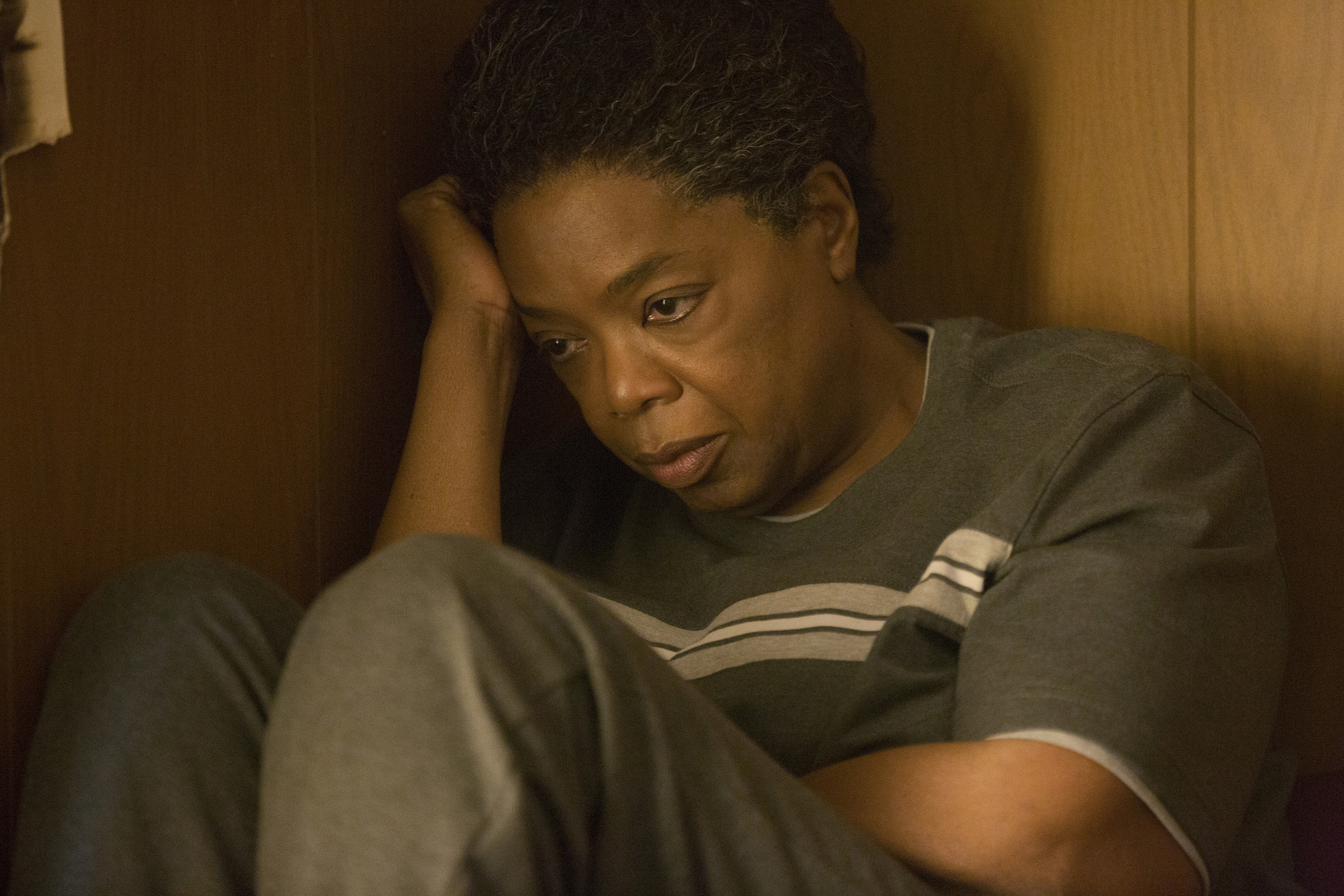
Dorothy Lacks (Oprah Winfrey) struggled with emotional demons stemming from the loss of her mother at an early age. From THE IMMORTAL LIFE OF HENRIETTA LACKS. Photo: Quantrell Colbert. Courtesy HBO.

Oprah Winfrey’s performance as Dorothy Lacks is truly heartfelt and award-worthy but, at times, just too much for the story Wolfe is trying to tell. The same goes for the profuse roots and jazz-inspired score by Branford Marsalis. However, special kudos to Renée Elise Goldsberry and Leslie Uggams in lovely, much too brief performances as Henrietta Lacks and her cousin, Sadie, respectively.

Although the film introduces the woman from whom millions of life-enabling cells have come, it pretty much glosses over the back story of the 1950’s medical, racist and sexist culture that propelled Henrietta’s life and cancer treatment to its tragic end. For a better understanding of America’s mid-century medical and cultural mindset and Henrietta Lacks’ biography, you would do well to read the book, The Immortal Life of Henrietta Lacks, now available as a movie tie-in edition; or check out Rebecca Skloot’s website @ http://rebeccaskloot.com

The film will be an evergreen supplement to the book in classes and discussions focusing on biomedical research, medical marvels, women’s issues, grief and African-American studies in schools, libraries and universities. You can watch the Harpo Films/Your Face Goes Here Entertainment/Cine Mosaic production of The Immortal Life of Henrietta Lacks tonight, April 22, 2017, on HBO at 8:00 – 10:00 p.m. ET/PT, or during additional HBO playdates in the weeks ahead. Also look for it on HBO NOW, HBO GO and HBO On Demand and affiliate portals. –Judith Trojan

Posted in Cable, Film | Tagged , , , , , , , , , , , , | 2 Comments

Endangered Wildlife Makes a Comeback in Viva Puerto Rico

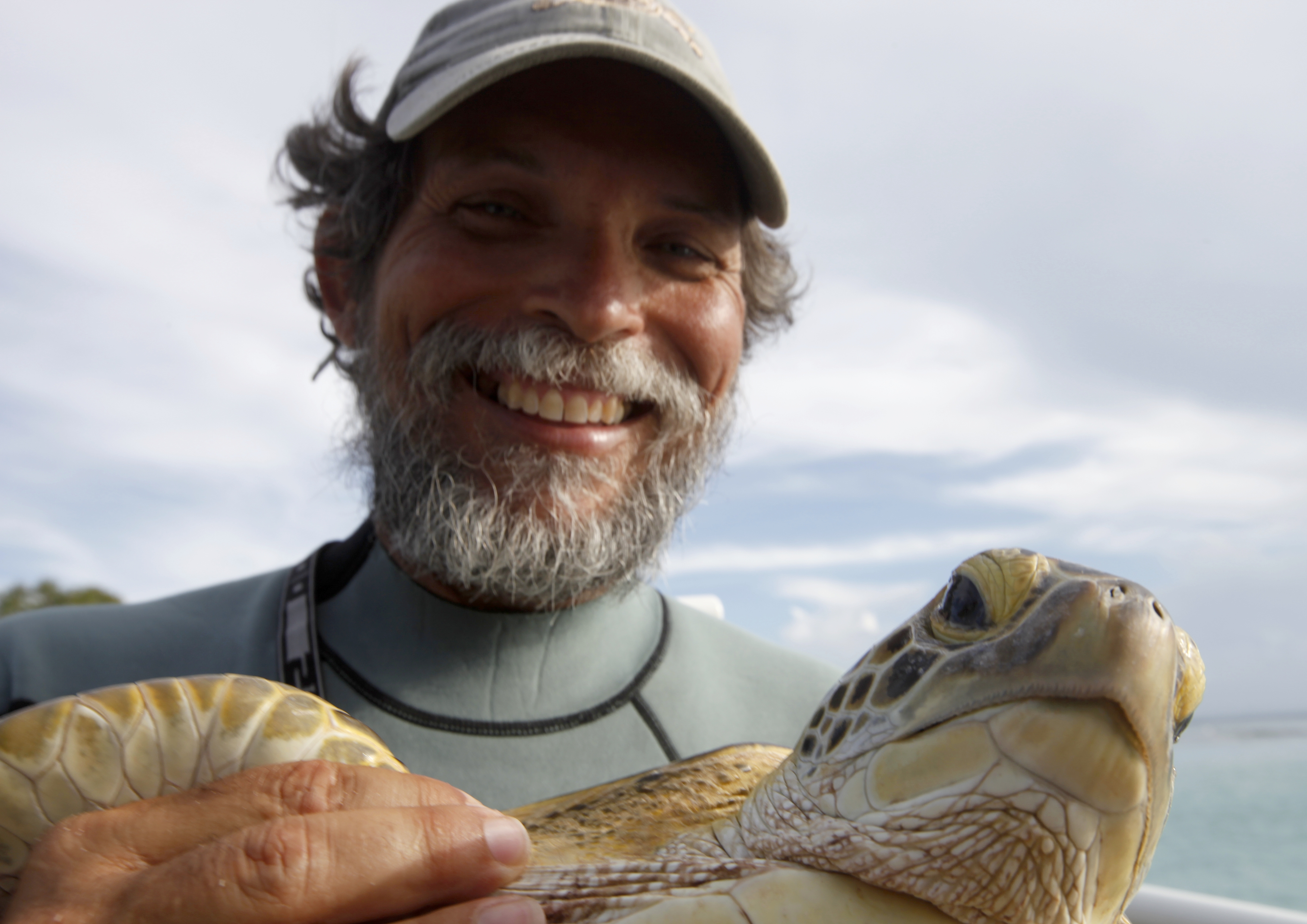
Wildlife biologist Jafet Vélez-Valentín has devoted his entire career to saving the dwindling population of Puerto Rican Amazon parrots. His work is featured in NATURE: VIVA PUERTO RICO. Photo courtesy George Woodcock/©BBC/ Windfall Films.

“It’s not a job…you do it with passion because it’s important to do.”

That mantra drives Jafet Vélez-Valentín, Carlos Diez and Dr. Antonio (“Tony”) Mignucci, three conservationists who dedicate their lives to ensuring the survival of endangered wildlife in Puerto Rico. Their work with Puerto Rican Amazon parrots, Leatherback and Hawksbill turtles, and Puerto Rican manatees is the prime focus of Viva Puerto Rico, the latest episode of NATURE debuting on PBS tonight, April 12, 2017, 8:00 – 9:00 p.m. ET/9:00 – 10:00 p.m. Central. (Check local listings for air times and repeat broadcasts in your region and http://www.pbs.org/nature for future limited online streaming and DVD availability.)

It’s obvious that wildlife biologist Jafet Vélez-Valentín loves his birds. With a smile from ear to ear, he recaps his life’s work at the helm of the remotely situated Puerto Rican Parrot Recovery Program and oversees the release of the latest and largest flock of healthy Puerto Rican Amazon parrots into El Yunque National Forest. Carefully mated, born and raised in captivity under Vélez-Valentín’s watchful eye until they are deemed able to survive and breed in the wild, the flock of 24 is an important addition to the Puerto Rican Amazon population that had dwindled in recent years to 13 individuals.

Carlos Diez catches a critically endangered Hawksbill turtle to gather data for its conservation in NATURE: VIVA PUERTO RICO. Photo courtesy George Woodcock/©BBC/ Windfall Films.

World-renowned turtle conservationist Carlos Diez focuses his firepower on efforts to save endangered Hawksbill turtles from being poached for their shells and the breeding habitats of Leatherback turtles from annihilation by developers. Beautiful close-up footage of nesting and hatchling rituals underscores the potential threat to the species if commercial development at sites like Dorado Beach is approved. Diez and his professional team are aided in their mission by locals, including school children, who testify to preserve the pristine beach for the turtles.

Dr. Antonio “Tony” Mignucci and a veterinarian inspect a rescued manatee in NATURE: VIVA PUERTO RICO on PBS. Photo courtesy George Woodcock/©BBC/Windfall Films.

The film also takes a fascinating look behind-the-scenes at the Manatee Conservation Center where injured and orphaned members of the manatee population unique to Puerto Rican waterways are rehabilitated and eventually returned to the wild. The backstories of several manatee residents are recalled and, under the nurturing care of Dr. Antonio (“Tony”) Mignucci, his staff and a team of dedicated volunteers, two rescues–a male and female–are prepped for release after their carefully monitored and restorative rehab.

Viva Puerto Rico is a refreshing and timely introduction to three articulate environmental champions, their dedicated colleagues and volunteers who not only talk the talk but walk the walk in their efforts to rebuild endangered wildlife colonies of parrots, turtles, frogs, birds and manatees native to Puerto Rico and protect and restore the viability of their home turf.

The film, narrated by actor Jimmy Smits, shows by example that the combined efforts of professional and citizen involvement can turn the tide and block commercial over-development that not only threatens harm to wildlife via pollution and pleasure craft, e.g., jet skis, but also, in the long-term, decimates the breeding grounds and food supplies of dwindling wildlife populations.

Who can resist the face of this baby Puerto Rican manatee, orphaned and recovering in its rehabilitation pool at the Manatee Conservation Center. Photo courtesy George Woodcock/©BBC/Windfall Films.

As Earth Day (Saturday, April 22, 2017) approaches in the wake of our new administration’s mindless plans to unravel environmental protections that have taken decades to implement, it is imperative to celebrate the work of conservationists like Jafet Vélez-Valentín, Carlos Diez and Dr. Tony Mignucci, and to follow their lead.

A production of THIRTEEN PRODUCTIONS LLC for WNET, NATURE: Viva Puerto Rico debuts on PBS tonight, April 12, 2017, 8:00 – 9:00 p.m. ET/9:00 – 10:00 p.m. Central. (Check local listings for air times and repeat broadcasts in your region and http://www.pbs.org/nature for future limited online streaming and DVD availability.) –Judith Trojan

Posted in TV | Tagged , , , , , , , , , , | Leave a comment

School Shooting in Newtown Recalled on Independent Lens

Twenty-six funerals consumed the Newtown, CT, community with shock and grief after the massacre at Sandy Hook Elementary School on December 14, 2012. Photo courtesy Jennifer Cox.

“Of the 26 dead, most are children,” reported NBC Nightly News anchor Lester Holt to a nation stunned by the shooting at Sandy Hook Elementary School in Newtown, Connecticut, on December 14, 2012. Six educators and 20 six- and seven-year-old students were murdered that day in their classrooms by an emotionally disturbed young man armed with sophisticated handguns and a semi-automatic AR-15 assault rifle snatched from his mother’s exotic gun collection. His mother was also a casualty of her son’s rampage.

The aftermath of this horrific crime and its continuing legacy are the engines that drive producer/director Kim A. Snyder and producer Maria Cuomo Cole’s feature-length documentary, Newtown, premiering on the PBS series Independent Lens tonight, Monday, April 3, 2017, 9:00-11:00 p.m. ET/PT; 8:00-10:00 p.m.CT/MT. (Check local listings to confirm air times and repeat broadcasts in your region and see below for additional screening ops.)

Newtown joins the small and growing list of recent outstanding films,  Tower and Marathon (see my reviews on February 14, 2017 and November 21, 2016, respectively), that focus on mass murders perpetrated on American soil by disenfranchised young men. Unlike the former two films, however, Newtown features no interviews with physically wounded survivors because once shot, the shooter’s tiny victims had no chance of survival.

Connecticut State Police led a line of children from the Sandy Hook Elementary School in Newtown, Connecticut, after the shooting at the school. Photo: © Newtown Bee/AP.

The film replays the traumatic timeline of that chilling day, from the frantic 911 calls and EMT and police reports to the gathering at the local firehouse, where anxious parents awaited news of their children’s well-being.

This is not an easy film to watch.  Your tears will fall as parents; adolescent siblings; neighbors; a teacher and a local priest; and medical and law enforcement professionals recall their own and their community’s losses in deeply personal terms. You might even suffer a sudden wave of nausea, as I did, during a medical director’s painful recount of the number of bullets that shattered each child’s body.

Three parents–Mark Barden, David Wheeler and Nicole Hockley–are especially articulate witnesses to the many stages of grief that they and their families have endured. They openly acknowledge their inability to forgive and forget. They cherish baby teeth and locks of hair, and are incapable of disposing of boxes of toys and clothing. They have become vocal social activists in the fight for stricter gun control laws and background checks.

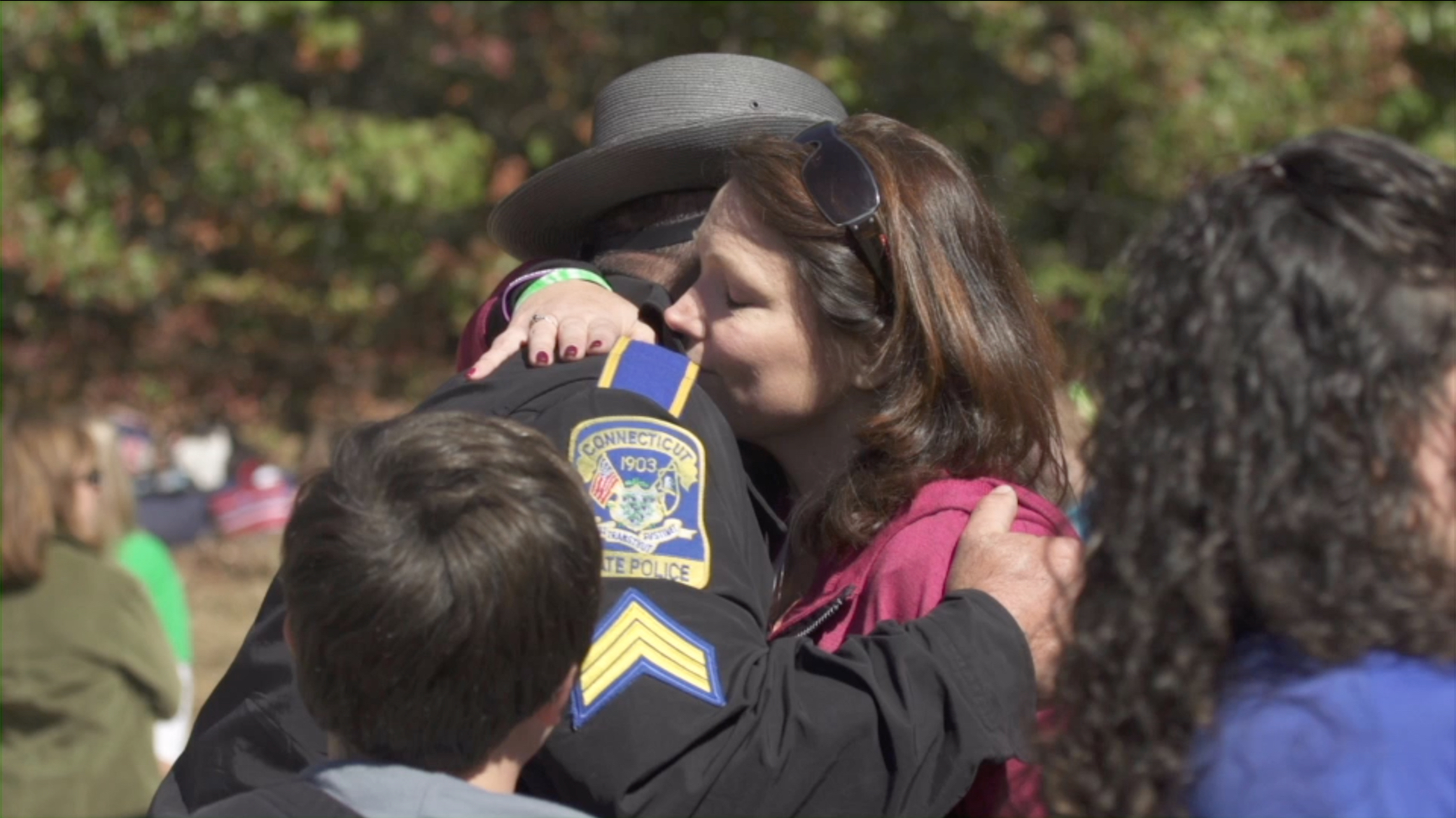
Nicole Hockley, mother of Sandy Hook victim Dylan Hockley, with first responder Sgt. William Cario. Photo courtesy of Derek Weisehahn.

Nicole Hockley remembers the grief that she and her husband overcame when their son, Dylan, was diagnosed with autism only to face his incomprehensible death in what was supposed to be a safe and nurturing environment.  Her only measure of comfort: Dylan died with his teacher’s arm around him, so he wasn’t alone. She is determined that his memory not be forgotten: “He has a legacy that I will fulfill for him,” she says.

Grieving dad David Wheeler explains the difficult decision to have another child, for the sake of his surviving son. Musician dad Mark Barden, who continues to compensate for the storms of grief that envelop him, was compelled to revisit the school one last time before it was razed, so he could experience the site where his son, Daniel, lived his last moments.

Daniel Barden used to love racing his school bus. When he was 7, he was killed at his Sandy Hook Elementary School. His dad, Mark Barden, is featured in NEWTOWN, airing on INDEPENDENT LENS. Photo courtesy Mark Barden.

The senselessness of this crime, in a picture perfect community where schools were thought to be safe havens, is a timely reminder that guns in the hands of unstable individuals remain the major killer of Americans on U.S. soil. According to statistics compiled by Sandy Hook Promise, the national non-profit founded and led by several family members who lost loved ones on December 14, 2012, “Most criminal gun violence is committed by individuals who lack mental wellness (coping skills, anger management and other social-emotional skills).”

Despite the fact that the toll of gun violence in urban and suburban communities across the country continues to rise, the debate surrounding gun control legislation remains more divisive than ever. Hopefully, this film will encourage viewers to press their state Senators and Congressmen and women to do what they were elected to do…pass legislation that will keep their constituents safe.

I urge you not to miss the PBS premiere of Newtown on Independent Lens tonight, Monday, April 3, 2017, 9:00-11:00 p.m. ET/PT; 8:00-10:00 p.m.CT/MT. (Check local listings to confirm air times and repeat broadcasts in your region.) The film would best be watched in the company of family or friends, followed by hugs and quiet discussion. It might be one of the most important documentaries you’ll share this year.

Newtown is also currently available on DVD at shopPBS.org  and, as of April 4, 2017, via online streaming at http://www.pbs.org/independentlens  Join the conversation at http://www.facebook.com/independentlens  and on Twitter @IndependentLens. For more information on how you can show your support to the Sandy Hook community and join them to lobby for stricter gun control laws and background checks, visit the Sandy Hook Promise website at http://www.sandyhookpromise.org –Judith Trojan

Posted in Film, TV | Tagged , , , , , , , , , , , | 2 Comments

Yosemite and Climate Change Converge on PBS Nature

Yosemite National Park, California, as shown in NATURE: YOSEMITE on PBS. After suffering through years of drought, the region experienced a blanket of snow. Photo courtesy Joseph Pontecorvo/©THIRTEEN Productions LLC.

“Yosemite is natural beauty on a grand scale.” That statement is hard to dispute if you’ve ever visited the National Parks (Sequoia, Kings Canyon and Yosemite) in the Sierra Nevada mountains stretching some 400 miles through eastern California into Nevada.  In Yosemite, a timely episode of NATURE debuting tonight on PBS, we are not only reminded of the region’s extraordinary beauty but the challenges faced by its complex ancient ecosystem due to climate change. This hour-long exploration will open your eyes to the impact of global warming on the Sierra Nevada, and it may also fill your eyes with tears at the thought of what we and future generations stand to lose.

Documenting four seasons in the region and the environmental champions who are determined to preserve it, Yosemite premieres on the PBS series, NATURE, tonight, Wednesday, March 29, 2017, 8:00 – 9:00 p.m. ET. (Check local listings for air times and repeat broadcasts in your region and  http://www.pbs.org/nature for future limited online streaming and DVD availability.)

We are immediately introduced to various geologists, ecologists, researchers and wilderness explorers who study the region via hang gliders, kayaks, mountain climbing gear and snowshoes. As these scientists examine the collateral damage of continuing warming trends on the Sierra Nevada, they confirm that dramatic shifts in weather define the “new normal.”  The insidious impact of climate change hovers over the fragile ecosystem currently blighted by drought and rising temperatures.

Sequoia National Park, California, is home to the largest trees on Earth. Their dependence on water from the Sierra's snowpack is key to their survival. Photo courtesy Nimmida Pontecorvo/©THIRTEEN Productions LLC.

Sequoia National Park, California, is home to the largest trees on Earth. Their dependence on water from the Sierra’s snowpack is key to their survival. Photo courtesy Nimmida Pontecorvo/©THIRTEEN Productions LLC.

Beautifully shot in 4K by filmmaker Joseph Pontecorvo and his team, the film zeroes in on the region’s giant sequoias. With documented lifespans of some 3,000 years and heights surpassing those of skyscrapers like the Empire State Building, sequoias continue to marshall on against climate change and global warming. But despite their history of resilience, they are experiencing and exhibiting the signs of unprecedented stress levels, triggered by high temps that pull moisture from their foliage. The importance of sufficient water (via the region’s annual snowpack) is key to their ongoing survival.

Since “more than 30 percent of California’s fresh water comes from the area’s snowfall” (the Sierra Nevada is credited as “California’s largest reservoir”), members of the California Cooperative Snow Survey Program are tasked to measure the amount of water in the year’s snowpack. They warn that with rising temperatures the snowpack will continue to shrink by as much as “80% by the end of the century.”

The second element crucial to the giant sequoias’ stability and ability to reproduce is fire. The delicate balance of water and fire is clarified in Yosemite, as fire is a surprising and important player “vital” to the continued co-existence of the trees and wildlife that call the Sierra Nevada home.

Featured in NATURE: YOSEMITE, Pikas are poor thermal regulators and are considered the “canary” of climate change. Photo courtesy Joseph Pontecorvo/©THIRTEEN Productions LLC.

The wildlife denizens of the region are precariously perched on the abyss incited by climate change as well…from the tiny, frenetic Pikas and wily coyotes, to the Peregrine Falcons and Sierra Nevada Bighorn Sheep. While the numbers of Peregrine Falcons and Bighorn Sheep are currently on the rise due to the admirable work of recovery programs, they now face seasonal changes that threaten to upset the balance in their home turf and decimate their food supply.

The film crew also visits the valley’s glorious glacier-shaped granite landmarks, El Capitan, Half Dome and Sentinel Rock, as well as Bridalveil Fall, Horsetail Fall and the iconic Yosemite Falls, one of the tallest waterfalls in North America and fifth highest in the world.

Yosemite, framed by a compelling narrative read by actor Kevin Kline, ends with the annual convergence of determined photographers on a riverbank psyched to capture the instant in February when sufficient snowmelt and the setting sun converge to turn Horsetail Fall into a glowing ribbon of fire cascading down El Capitan. It’s a heart-stopping moment that reminds us of what glorious gifts Mother Nature has to offer and how important it is to protect and cherish them for future generations. Bravo to the National Park Service and all of the regional environmentalists committed to that endeavor and to Joseph Pontecorvo, his team and NATURE for this timely film.

Researchers Wendy Baxter and Anthony Ambrose (center and lower right) measure a giant sequoia to gage its health and monitor the impact of climate change in NATURE: YOSEMITE. Photo courtesy Nimmida Pontecorvo/©THIRTEEN Productions LLC.

Researchers Wendy Baxter and Anthony Ambrose (center and lower right) measure a giant sequoia to gage its health and monitor the impact of climate change. Photo courtesy Nimmida Pontecorvo/©THIRTEEN Productions LLC.

A production of THIRTEEN PRODUCTIONS LLC for WNET, NATURE:  Yosemite debuts on PBS tonight, Wednesday, March 29, 2017, 8:00 – 9:00 p.m. ET. (Check local listings for air times and repeat broadcasts in your region and  http://www.pbs.org/nature  for future limited online streaming and DVD availability.) –Judith Trojan
Posted in TV | Tagged , , , , , , , , , , , , | Leave a comment

Dorothea Lange: Grab a Hunk of Lightning Rebroadcast on PBS

As we nervously anticipate the Federal cuts in funding for women’s and low-income services, health care, the arts, public TV production and programming, I salute tonight’s timely PBS rebroadcast of Dorothea Lange: Grab a Hunk of Lightning.  This powerful documentary debuted on American Masters on August 29, 2014.  I have updated and reprinted my original review below to encourage you to watch the film again…or for the first time…not only as a reminder of the fine work being produced and funded for and by public television, respectively; but also as a cautionary tale of what poverty and racial profiling in America looked like not so long ago, as well as how far we’ve come as women, mothers and artists.

Dorothea Lange circa 1937. Photo courtesy Rondal Partridge Archives.

If you’ve ever doubted the important role played by artists as catalysts for social change, I suggest you tune in to American Masters on PBS tonight, Tuesday, March 21, 2017, 8:00 – 10:00 p.m. ET, and catch the rebroadcast of Dorothea Lange: Grab a Hunk of Lightning. (Check local listings for air times and repeat broadcasts in your region.)

This powerful and intimate look back at the life’s work of legendary documentary photographer Dorothea Lange will, by turns, enlighten you and break your heart.  Directed and narrated by Dyanna Taylor, the granddaughter of Dorothea Lange and social scientist/economist Paul Schuster Taylor, Grab a Hunk of Lightning is the realization of Dyanna’s extensive research and lifelong dream to tell her grandparents’ story.

Dorothea Lange’s haunting portrait of a Depression-era “Migrant Mother,” is just one of many Lange photographs that powerfully capture the desperation of poverty in America. Photo: Dorothea Lange © 1936.

Many of us are familiar with Dorothea Lange’s iconic photos documenting the bread lines and weary unemployed during the Great Depression and the migration of destitute farm families fleeing the Dust Bowl. Yet, there are other photos of consequence to take into account, including her beautifully serene early Bay Area society portraiture, her Hopi Indian studies in the Southwest, and her heart-wrenching post-Pearl Harbor photos of Japanese-Americans stoically facing relocation to internment camps on the West Coast.

To see Lange’s photos reproduced beautifully in the telling of her life story will certainly be a revelation for students of her oeuvre.  But, for the rest of us, her work serves as a reminder of the struggles, resilience and hope that drove Americans to survive the worst of times and the Federal programs that helped turn the tide. It puts many of our current Recession-era woes and ongoing economic challenges into perspective and will hopefully incite viewers to fight to save and preserve the hard-won rights, programs and services that our current, ill-informed administration seeks to obliterate.

Born in 1895, Dorothea Lange grew up in Hoboken, NJ; but she found her destiny on the West Coast. Abandoned by her father and crippled by polio at age seven, she nevertheless dreamt of a career as a photographer even before she owned a camera.  A resourceful young woman, she eventually turned a trip to San Francisco that left her penniless thanks to a pickpocket into a mission to build her own business in the Bay Area as a portrait photographer.

Through the influence of the two men she subsequently married–the noted painter/illustrator of  Native Americans and cowboys of the Southwest, Maynard Dixon, and social scientist/economist Paul Taylor–she realized her best focus as a photographer.  While her journey to this end was fulfilling, her children and step-children often became collateral damage as she juggled the responsibilities of motherhood with her gruelling photographic journeys with her husbands and assignments for F.D.R.’s Farm Security Administration (FSA).

Dorothea Lange's granddaughter, Dyanna, grew up to become an award-winning cinematographer and the chronicler of her grandmother's life story. Photo: Dorothea Lange © 1961.

Dorothea Lange’s granddaughter, Dyanna, grew up to become an award-winning cinematographer and the chronicler of her grandmother’s life story. Photo: Dorothea Lange © 1961.

Filmmaker and granddaughter Dyanna Taylor brings a lifetime of never-before-seen family footage and audio to this project, as well as the exquisite reproduction and incorporation of Lange’s photos and accompanying journal entries.

A highlight here is the wonderfully intimate black-and-white footage of Lange as she prepared for her groundbreaking, 1966 one-woman show at the Museum of Modern Art in New York City. Despite suffering with a debilitating illness that would soon take her life, she meticulously sifted through her massive stash of negatives and conferred with her young assistant and with MoMA Photography Curator John Szarkowski. Her anecdotes and analysis of her work during that process are priceless and will insure the film’s evergreen status in all future studies of Lange’s photographs.

Japanese-Americans were tagged en route to internment camps in 1942. Photo: Dorothea Lange © 1942.

Japanese-Americans were uprooted and shamefully tagged en route to internment camps after Pearl Harbor. Photo: Dorothea Lange © 1942.

Additional commentary comes throughout from that young (now white-haired) assistant, Richard Conrad, as well as former colleagues and friends, historians, her middle-aged children and step-children and, most especially, from Dyanna, who remembers how her grandmother challenged and changed her childhood perception of the world around her. That Dyanna grew up to be a Peabody and five-time Emmy Award-winning cinematographer is no accident.

This is a long film; but it is rich with images and recollections of life in early and mid-20th century America that, thanks to the resilience and talent of Dorothea Lange, we will never be allowed to forget.

Relevant also are her challenges as a woman plying her craft in a man’s world, as an artist whose childhood bout with polio made her adept at becoming an invisible and sensitive chronicler of the down-and-out, and as a working mother who so lost herself in her work that she alienated her children, yet won them back in the end.

While her catalytic first marriage to Maynard Dixon pointed her photography in a new direction, it was her longtime marriage to Paul Taylor that gave purpose to her artistic vision.  Dorothea Lange was of her time (May 26, 1895-October 11, 1965), yet her drive, her images and her values remain relevant today.

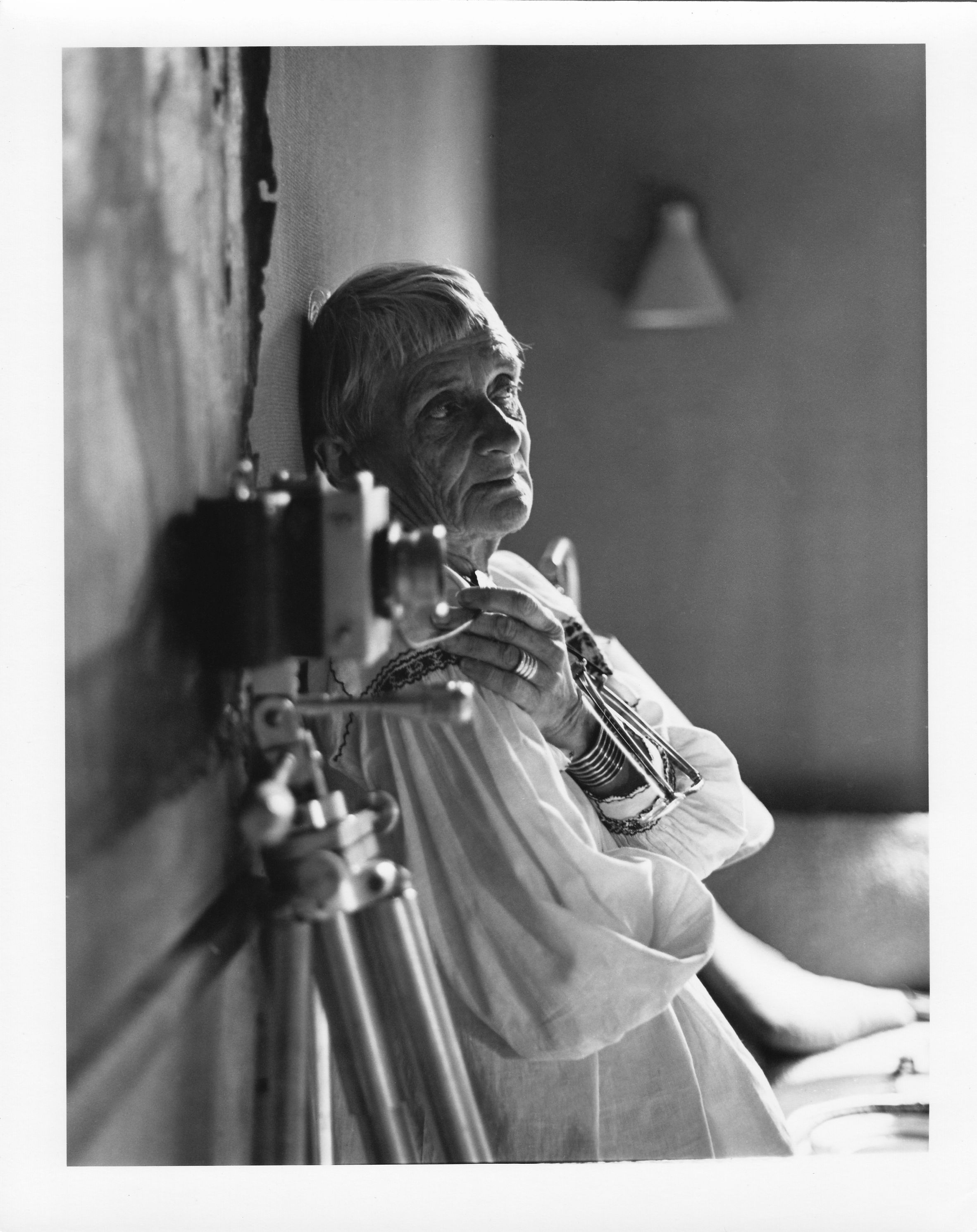
Dorothea Lange in her San Francisco Bay area home studio in 1964. Photo courtesy Rondal Partridge Archives.

Dorothea Lange in her San Francisco Bay area home studio in 1964. Photo courtesy Rondal Partridge Archives.

In celebration of Women’s History Month, American Masters rebroadcasts Dorothea Lange: Grab a Hunk of Lightning tonight, Tuesday, March 21, 2017, on PBS (8:00 – 10:00 p.m. ET). Check local listings for air times and repeat broadcasts in your area and for DVD availability. Its companion book, Dorothea Lange: Grab a Hunk of Lightning (Chronicle Books) by Elizabeth Partridge, is currently available.  –Judith Trojan


Posted in Film, Photography, TV | Tagged , , , , , , , , , , , | 2 Comments

The Music of Strangers: Yo-Yo Ma and the Silk Road Ensemble Debuts on HBO

Cellist Yo-Yo Ma as seen in THE MUSIC OF STRANGERS: YO-YO MA AND THE SILK ROAD ENSEMBLE. Photo courtesy HBO.

Cellist Yo-Yo Ma reminds us of the universal ties that bind us in THE MUSIC OF STRANGERS: YO-YO MA AND THE SILK ROAD ENSEMBLE. Photo courtesy HBO.

“We don’t speak perfect English, but we speak perfect music.” That refrain drives Morgan Neville’s powerful feature-length documentary, The Music of Strangers: Yo-Yo Ma and the Silk Road Ensemble, debuting on HBO tonight, Monday, March 6, 2017, 8:00 – 9:35 p.m. ET/PT.  (Check listings for additional HBO playdates in the weeks ahead and availability on HBO NOW, HBO GO and HBO On Demand and affiliate portals.)

It’s refreshing to find a documentary filmmaker these days who’s capable of nudging the boundaries of nonfiction storytelling into the emotional terrain of dramatic fiction without compromising credibility. Neville has that gift, as previously witnessed in his 2013 Academy Award-winning documentary, 20 Feet from Stardom, where he explores the craft and solo aspirations of successful back-up singers. You can read my review at  https://judithtrojan.com/2014/04/04

Neville shines a light on another unheralded corner of the music industry in The Music of Strangers: Yo-Yo Ma and the Silk Road Ensemble. Yo-Yo Ma has been showered with praise ever since he shared the stage as a child prodigy with the likes of Leonard Bernstein. But, in The Music of Strangers, the renowned cellist admits to struggling as an adult with his relevance as a musician. “I never committed to being a musician, I just fell into it, ” he says.

Iranian kamancheh player and composer Kayhan Kalhor (on left) is featured in THE MUSIC OF STRANGERS. Photo courtesy HBO.

Why did he gravitate to the cello in the first place and stick with it? Was he actually making a positive difference in the lives of his audience, and where would the next chapter of his storied life take him and why? Those questions seem to have been exacerbated by his unrelenting travel schedule and coincided with the arrival of the new millennium.

Yo-Yo Ma’s search for purpose led him to pilot the Silk Road Ensemble project in the summer of 2000. He invited a “family” of musicians, singers, composers, storytellers and artists from around the world to meet and meld their talents and unique instruments at Tanglewood in the bucolic Berkshires.  There they would introduce both a collective and individual repertoire, incorporating new and traditional music rooted in their unique cultures.

“We started as a group of musicians getting together and seeing what might happen when strangers meet,” recalls Ma.

Despite their language and cultural barriers, they clicked. Like the ancient traders who once traversed the “silk road” connecting  Asia, Africa and Europe to sell their wares, members of the Silk Road Ensemble would soon travel the world together, revisiting and sharing their traditional musical and cultural roots. To date, their “bridge building” has not only positively impacted the lives of their fellow musicians and artists, but audiences totaling some two million people in 33 countries.  The Silk Road Ensemble has also celebrated the universal power of music on six albums, one of which…this film’s companion album, Sing Me Home…won a Grammy in 2017 for Best World Music Album.

A023_C001_09064M

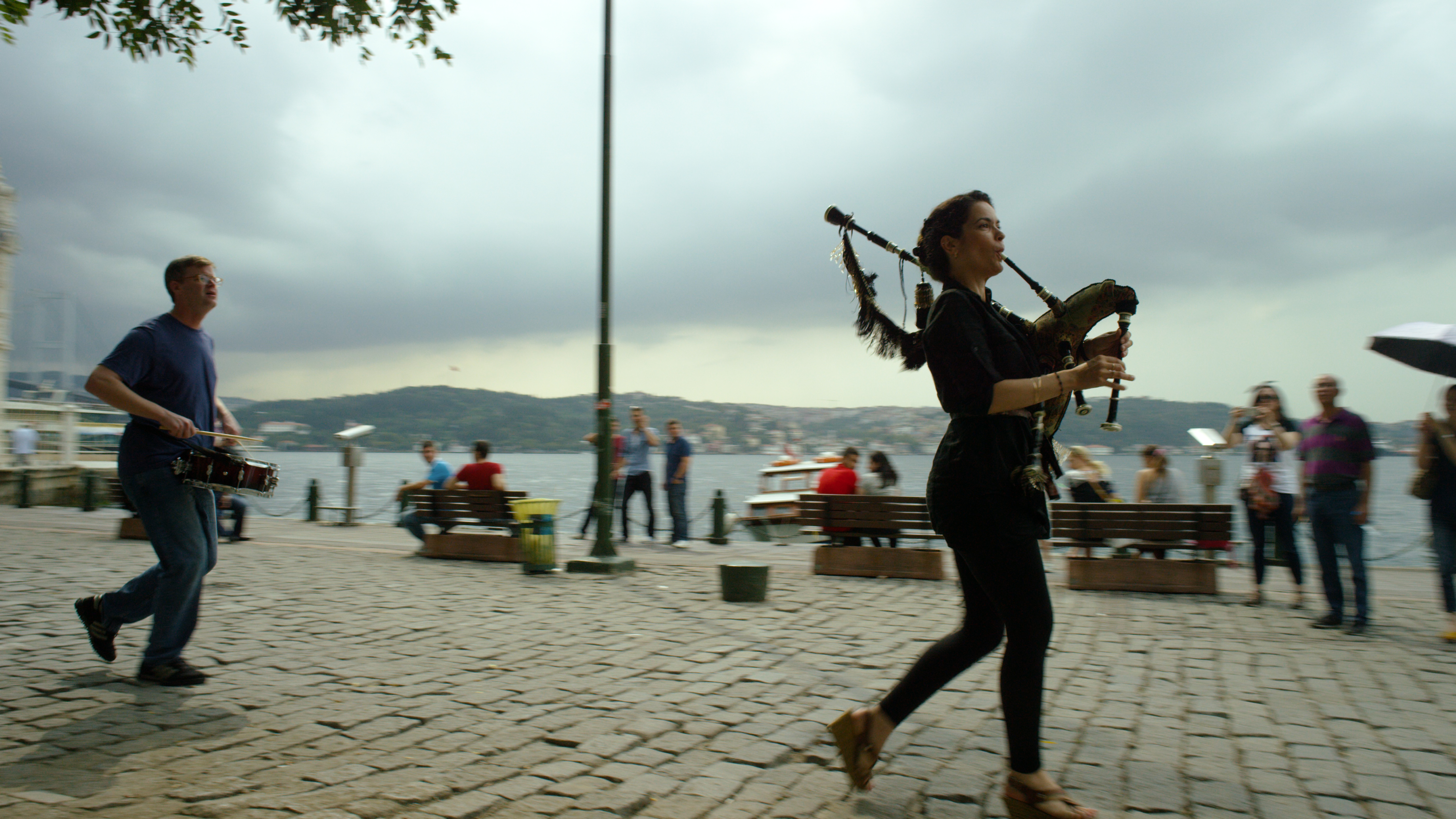
Spanish bagpiper Cristina Pato is a lively member of the Silk Road Ensemble. Photo courtesy HBO.

Although Yo-Yo Ma plays a central role in The Music of Strangers, he shares the spotlight with several key members of the Ensemble: Syrian clarinet player and composer Kinan Azmeh; Chinese pipa player and composer Wu Man; Iranian kamancheh player and composer Kayhan Kalhor; and Spanish bagpiper, pianist and composer Cristina Pato.

Their back stories, as musicians and artists born and raised in countries and regions upended by war, poverty, political revolution and cultural repression, are painful reminders of the dangers many individuals face on a daily basis as they lose loved ones in senseless bombing raids; dodge threats of being silenced, jailed or worse; and leave loved ones behind to seek asylum and assimilate in the U.S. and elsewhere.

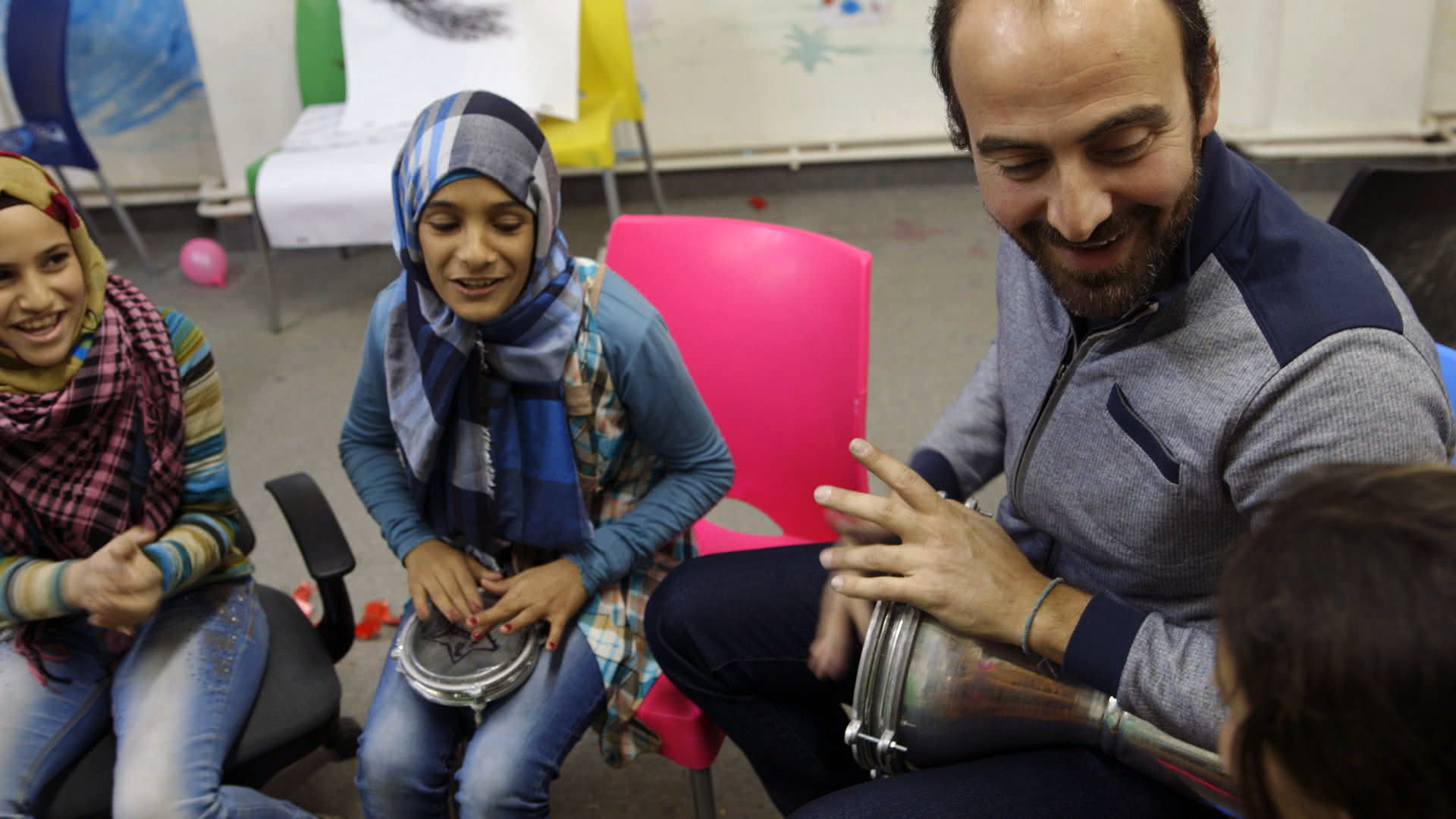
Syrian clarinet player and composer Kinan Azmeh visited Jordan to teach music to Syrian children in a refugee camp. Photo courtesy HBO.

Evocative archival and recent film footage tracks Yo-Yo Ma and his collective colleagues from youthful promise through middle age in performance with the Ensemble. We are also privy to their return to homelands, in some cases warm and welcoming, and others decimated and dotted with grim refugee camps.

The remarkable healing power of music is especially underscored for me in a vintage clip from Mister Rogers Neighborhood in which Fred Rogers asked a young Yo-Yo Ma if music brought him joy. Ma began playing a refrain from “Swan Lake,” as a broad smile stretched across Fred’s face.  The film then cuts to a breathtaking contemporary performance of the same piece, featuring Ma and a dancer who has a soulful new take on the classic ballet.

I urge you not to miss The Music of Strangers: Yo-Yo Ma and the Silk Road Ensemble. I guarantee that the fascinating, culturally diverse performers and their unique musical instruments will not only entertain and enrich you, but will remind you to cherish diversity and inclusion and the rich cultural heritage we often take for granted in the States.

“This is not just a story about what each of the musicians has done,” stresses Yo-Yo Ma. “It’s also about the meaning behind what they do. It’s about our responsibility to one another.”

The Music of Strangers: Yo-Yo Ma and the Silk Road Ensemble debuts on HBO tonight, Monday, March 6, 2017, 8:00 – 9:35 p.m. ET/PT.  (Check listings for additional HBO playdates in the weeks ahead and availability on HBO NOW, HBO GO and HBO On Demand and affiliate portals.) –Judith Trojan

Posted in Cable, Film, Music | Tagged , , , , , , , , , , , | Leave a comment

Maya Angelou: And Still I Rise Debuts on PBS

Dr. Maya Angelou on the set of OPRAH'S MASTER CLASS, circa January 2011. Photo courtesy OWN.

Dr. Maya Angelou on the set of OPRAH’S MASTER CLASS, in January 2011. Photo courtesy OWN.

I think it would be virtually impossible to make a lackluster film about writer, singer, dancer, actress, poet, director and social activist Maya Angelou. An electrifying presence in every medium she mastered, Dr. Angelou passed away in 2014. She was revered especially in age not only for her eclectic body of work in the arts, but for her ability to reach the most hardened of hearts. Dr. Angelou’s voice of inclusion, resilience and rebirth was a source of conscience and inspiration throughout her lifetime and is sorely needed in America right now. Thankfully that voice can still be heard via her work on the page and in films and via clips from various TV and cable shows and lectures.

These are the tools that filmmakers Bob Hercules and Rita Coburn Whack use to marvelous effect in their ambitious feature-length documentary, Maya Angelou: And Still I Rise. Following its theatrical run and clean sweep of film festivals nationwide in 2016, the film makes its U.S. broadcast debut on the PBS series, American Masters tonight, Tuesday, February 21, 2017, 8:00 – 10:00 p.m. (Check local listings for air times and repeat broadcasts in your region.) It’s a welcome centerpiece on the PBS Black History Month roster.

I can still remember listening intently to Dr. Angelou as she read her poem, On the Pulse of Morning, at President Bill Clinton’s inauguration in January 1993.  I was mesmerized by her mellifluous voice and impressed with President-Elect Clinton’s decision to invite her participation. I had no idea that President Clinton and Dr. Angelou were bonded by their shared Arkansas roots. In 2010, President Barack Obama would similarly single her out with our nation’s highest civilian honor, The Presidential Medal of Freedom.

Dr. Maya Angelou with the film crew at her home in Winston-Salem, N.C., January 2014. From left, standing: co-directors and producers Bob Hercules and Rita Coburn Whack with D.P. Keith Walker. Photo: The People's Media Group, LLC.

Dr. Maya Angelou with the film crew at her home in Winston-Salem, N.C., January 2014. From left, standing: co-directors and producers Bob Hercules and Rita Coburn Whack with D.P. Keith Walker. Photo: The People’s Media Group, LLC.

Heartfelt and revelatory reminiscences from Bill and Hillary Clinton, Dr. Angelou’s son, Guy Johnson, and such friends and colleagues as Random House editor Bob Loomis, and actors and performers Cicely Tyson, Oprah Winfrey, Lou Gossett, Jr., Alfre Woodard and Valerie Simpson thread throughout Maya Angelou: And Still I Rise. The filmmakers also incorporate profuse archival clips and photos highlighting Dr. Angelou’s various film, TV and stage performances as a dancer, singer, actress and director, as well as her talk show appearances, lectures and readings. Interviews with Dr. Angelou culled from various stages in her life are a special treat, especially those recorded by the filmmakers just prior to her death.

“It was a unique privilege to be the first filmmakers to tell Dr. Angelou’s full story and exciting to uncover stories that most people hadn’t heard,” said co-director and co-producer Bob Hercules.

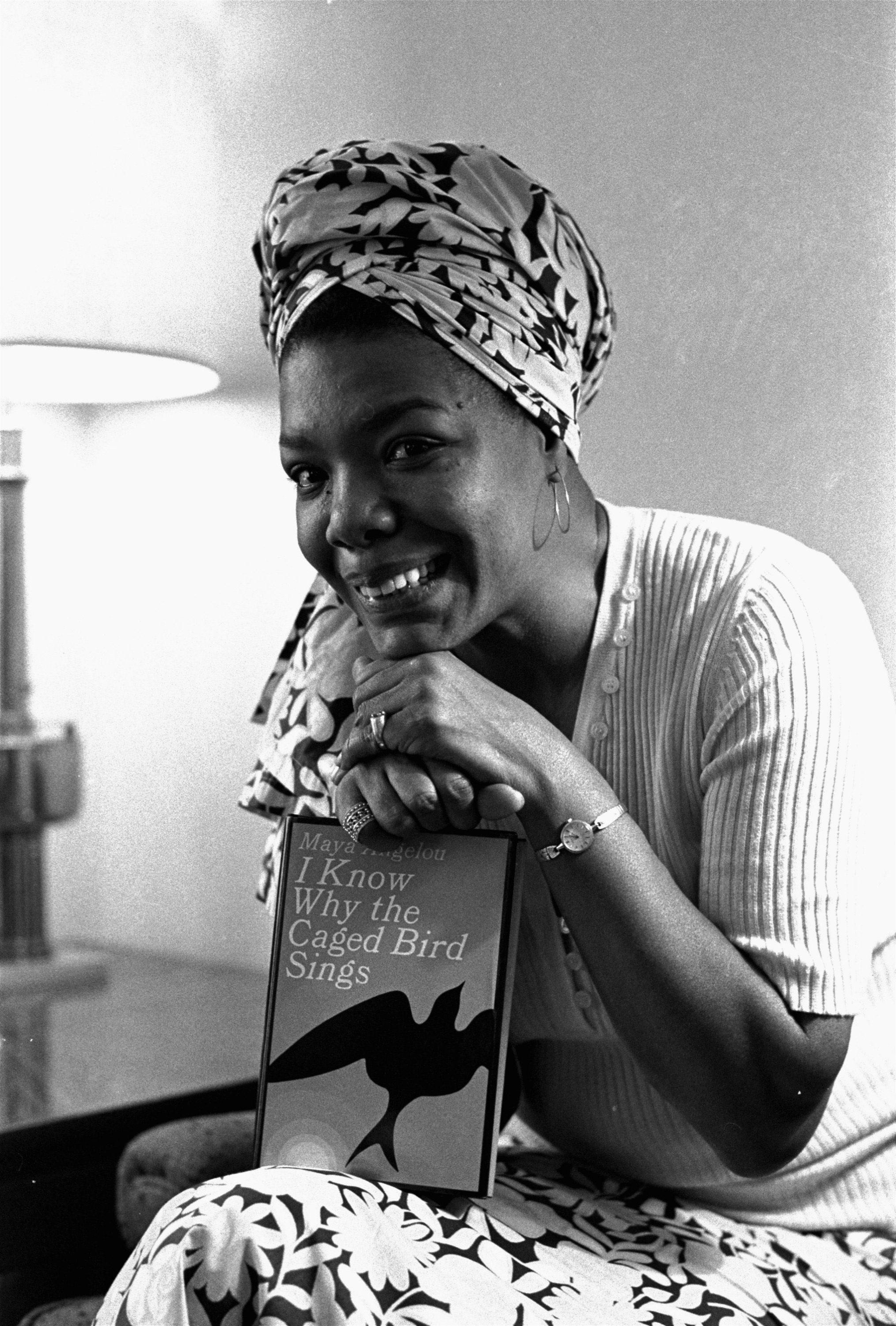
As evidenced in her poetry and books, especially her autobiography I Know Why the Caged Bird Sings (Random House, 1969), which she linked to the “slave diaries” of the past, Dr. Angelou was her own best biographer.  Her words shed light on her psyche, roots and the resilience that enabled her to survive constant upheaval, abandonment and prejudice in her formative years as a child in Depression-era America and her life as a young performer on the road as a single mom.

Maya Angelou, circa 1971, was hired to write the script and music, as well as direct the film version of her best-selling 1969 autobiography, I KNOW WHY THE CAGED BIRD SINGS. Photo: © WF/AP/Corbis

Maya Angelou, circa 1971, was hired to write the script and music, as well as direct the film version of her best-selling 1969 autobiography, I KNOW WHY THE CAGED BIRD SINGS. Photo: © WF/AP/Corbis.

Her parents, grandparents, protective older brother Bailey, writer James Baldwin and Dr. Martin Luther King, Jr., were formative players in her creative journey and inclusive worldview. Despite five years of self-imposed silence as a child (following her rape at seven), she used that time productively to read, digest and memorize great books of literature and poetry. And when she “decided to speak,” she recalled emphatically, “I had a lot to say.”

Dr. Angelou’s life story, from start to finish, is a powerful one. Her death in 2014 was a loss for us all, but thankfully her voice can still be heard at a time when hard-won Constitutional rights and freedoms are being threatened. In Maya Angelou: And Still I Rise, Dr. Angelou’s son, Guy Johnson, recalls the challenges and re-locations they faced during his road-weary, single mom’s early performance career. But he singles out her poem, written for President Bill Clinton’s inauguration in 1993, as his mother’s most “monumental achievement.” A powerful reflection of American inclusiveness, the poem became, acknowledges President Clinton, her “eternal gift to America.” 

In addition to its importance as a tribute to Dr. Angelou’s life and legacy, the film and its title (taken from her poem of the same name) are welcome reminders of the reverence once accorded U.S. Presidential inaugurations in the past and how far we had come–as a nation celebrating its diversity–circa 1993. “We may encounter many defeats, but we must not be defeated,” cautions Dr. Angelou during the opening moments of the film. These are empowering words for us to remember in 2017.

Dr. Maya Angelou at home in Sonoma, Calif., in the late 1970s/early '80s. Photo: Magnum.

Dr. Maya Angelou at home in Sonoma, Calif., in the late 1970s/early ’80s. Photo: Magnum.

Maya Angelou: And Still I Rise premieres on the PBS series, American Masters, tonight, Tuesday, February 21, 2017, 8:00 – 10:00 p.m. (Check local listings for air times and repeat broadcasts in your region.) The DVD with additional bonus features is available now from PBS Distribution at  http://shopPBS.org  and on Digital HD as of February 22, 2017.–Judith Trojan
Posted in Film, Publishing, TV | Tagged , , , , , , , , , , , | Leave a comment