

Musical prodigies Wolfgang Amadeus Mozart (left) and his older sister Maria Anna (right) were devoted to each other and possibly co-writers of Wolfgang’s earliest work. Photo: ©Media Stockade.
“My little girl, although she is only 12 years old, is one of the most skillful players in Europe.” –Leopold Mozart.
Musical prodigies Wolfgang Amadeus Mozart and his older sister, Maria Anna, astounded the music world with their skill as harpsichordists and their ability to read and write music. The siblings, a mere 4-1/2 years apart in age, blossomed as seasoned musicians under the tutelage of their dad, Leopold, a highly respected court musician, lecturer and composer in 18th century Salzburg, Austria.
“The extraordinary musical talent which merciful God has blessed my two children in full measure…a story as appears but once in a century,” boasted Leopold Mozart in 1760.
Leopold clearly took great pride in both Wolfgang and Maria Anna and made every effort to promote their talent to a wider audience. But things changed when Maria Anna approached her mid-teens, an age when performing in public for paying audiences was verboten for young women. She would be expected to marry and have children and, according to 18th century mores, her husband would become her priority and she, his property. Maria Anna’s extraordinary musical talent and early promise would be forsaken in deference to her husband and her brother Wolfgang’s rising career.
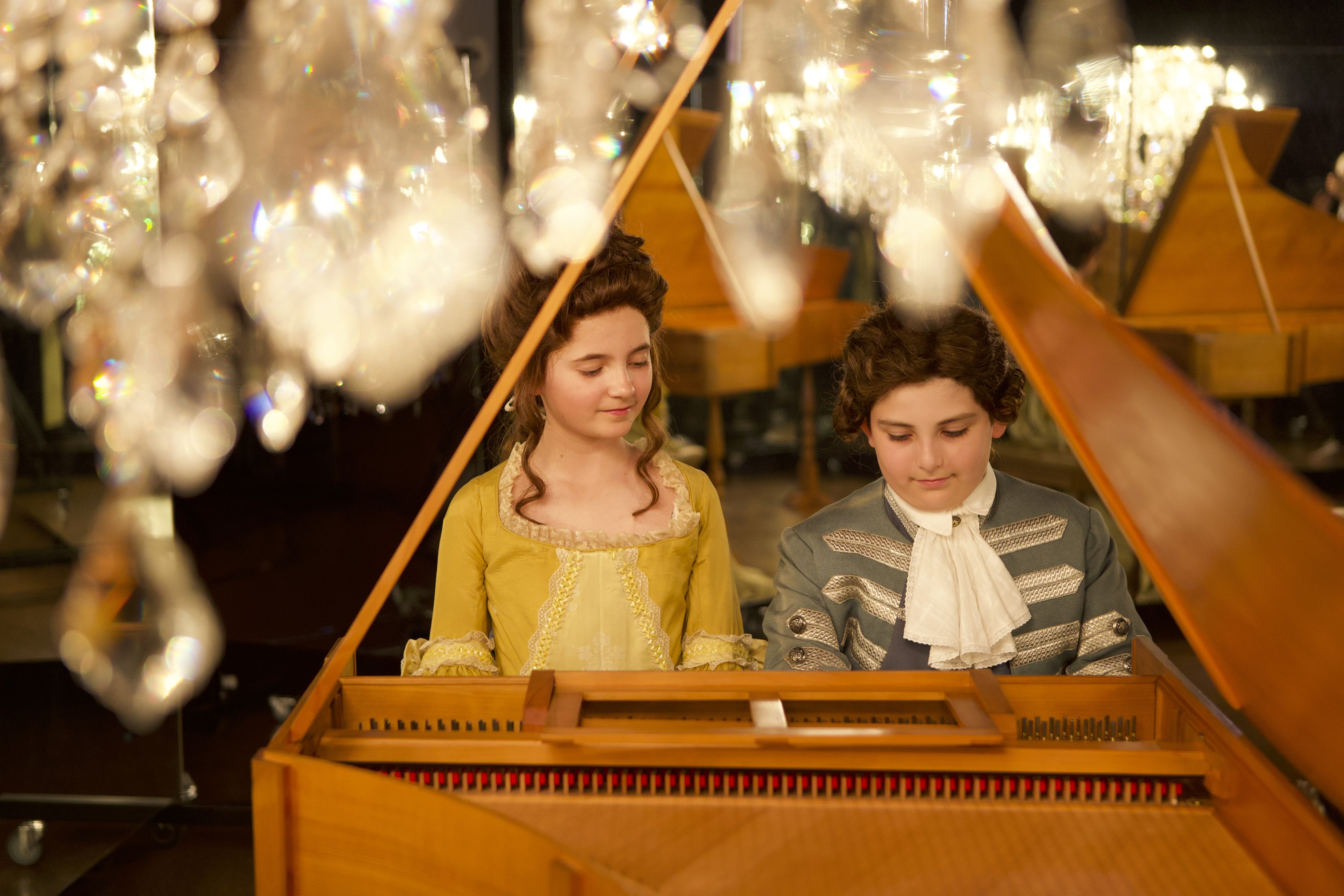
Maria Anna and Wolfgang Mozart performed together on the harpsichord to great acclaim during a childhood Grand Tour of Europe, as seen in SECRETS OF THE DEAD: MOZART’S SISTER on PBS. Photo: Alina Gozin’a/©Media Stockade.
However Maria Anna Mozart has not been forgotten by Mozart scholars and interpreters the world over who have begun to pinpoint her possible contributions to her brother’s body of work. Was she not only Wolfgang’s dedicated copyist but also the co-writer of his earliest work…the work credited solely to him?
The controversies surrounding the siblings’ musical collaborations and the global search for Maria Anna’s own compositions are explored in Mozart’s Sister, the latest hourlong episode of the PBS Secrets of the Dead series, set to premiere tonight, Wednesday, October 9, 2024, at 10:00 p.m. ET/9:00 C. (Check local listings for repeat broadcasts in your region.) It will also stream simultaneously with broadcast (see below for details).
In 1762, when Wolfgang was six and Maria Anna was 11, Leopold took them on a grueling 3-1/2 year Grand Tour of Europe, from Salzburg to Vienna, then on to The Netherlands, Paris and London, where his “miracles from God,” as he called them, played the harpsichord for paying audiences large and small, in palaces, courts, and taverns, garnering critical acclaim. Left to their own devices when their father took ill in London, the children passed the time composing music. It has been suggested that Wolfgang would write the melodies, while Maria Anna would orchestrate and write everything down in her personal notebook. That notebook has become a treasured artifact for Mozart scholars and an indispensable resource for sleuths hoping to prove the extent of the siblings’ collaboration.

Handwriting analysis has played an important role in pinpointing Maria Anna Mozart’s contributions to her brother Wolfgang’s early work. Photo: Shannon Ruddock/©Media Stockade.
In Mozart’s Sister, writer/director Madeleine Hetherton-Miau juxtaposes brief costumed set pieces with reflections from a handful of current Mozart afficionados, conductors, scholars and archivists who appear on-camera in performance or with pages of Maria Anna’s cherished composition notebook, family letters and artifacts close at hand to discuss their efforts to authenticate current evidence and do battle with naysayers.
Two of those pros add much needed flavor to the film’s otherwise textbook feel. Nineteen-year-old Alma Elizabeth Deutscher, a British composer, pianist, violinist, conductor and former child prodigy, compares her own challenges as a precocious young female composer, conductor and musician with Maria Anna’s experiences. And forensic document examiner Heidi Harralson details the surprising revelations culled from the handwriting and calligraphy found in Maria Anna’s notebook and family letters.
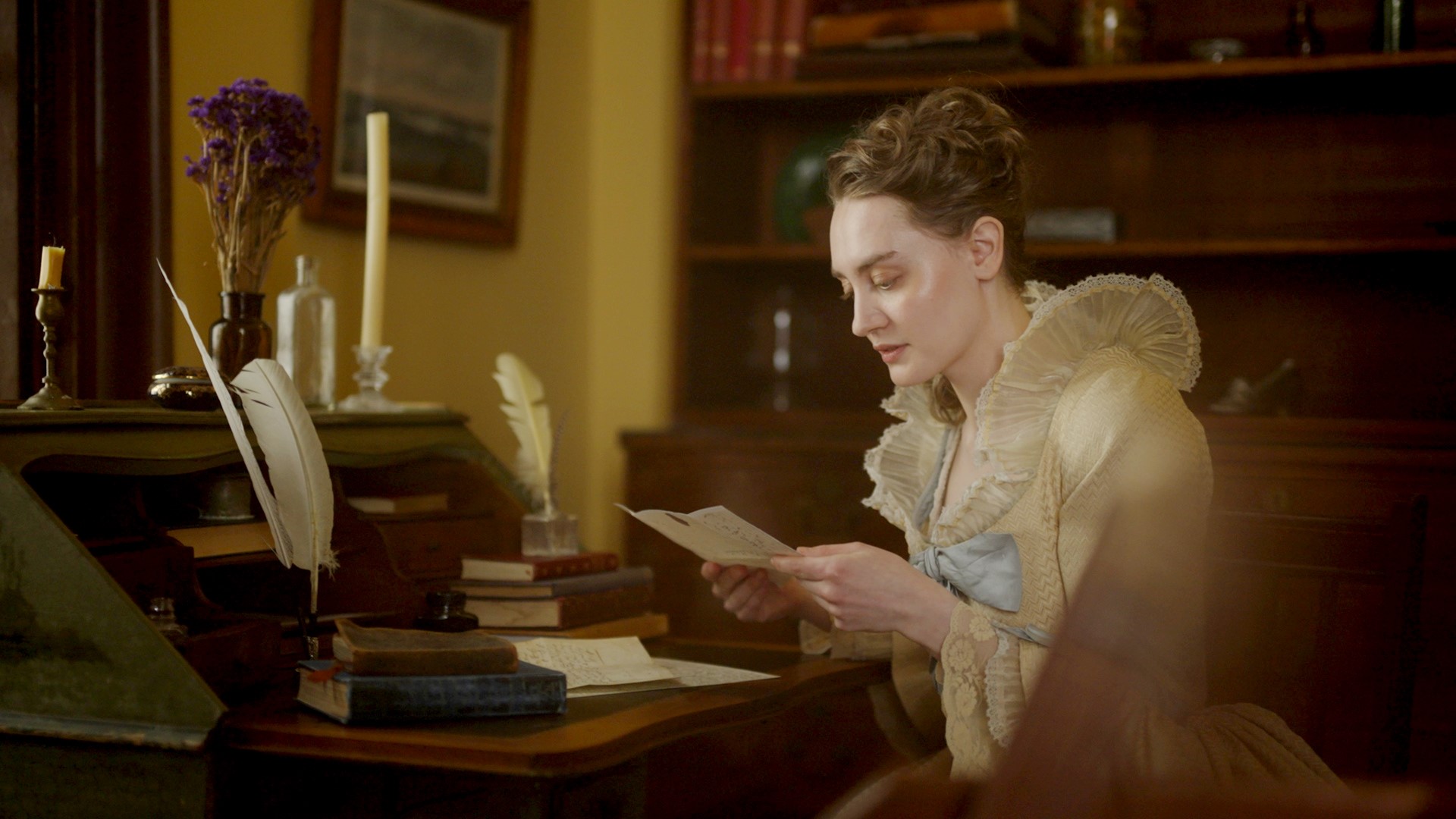
Maria Anna Mozart’s rising musical career came to a screeching halt once she came of age to marry. From SECRETS OF THE DEAD: MOZART’S SISTER on PBS. Photo: Shannon Ruddock/©Media Stockade.
Women in 18th century Europe had no rights or chance to ply their craft as composers, musicians and conductors. Sadly, it took more than 200 years for things to change for women who aspired to fill those roles with distinction in the classical music field. Mozart’s Sister touches on the efforts currently in play to acknowledge Maria Anna Mozart as an active collaborator with her brother, Wolfgang, and as a talented composer in her own right.
As such, The Secrets of the Dead: Mozart’s Sister will be an evergreen addition to music appreciation classes in high school, college, university and adult education venues focusing on Wolfgang Mozart’s family dynamics and childhood. It should also serve as a timely discussion catalyst in women’s studies programs addressing the societal obstacles women have faced throughout history as artists, writers, scientists, community and political leaders. The film should definitely inspire further research and hopefully inspire the production of a feature-length bio-pic about the life and times of Maria Anna Mozart, also known as Nannerl.
Mozart’s Sister debuts on the PBS series Secrets of the Dead tonight, Wednesday, October 9, 2024, 10:00 – 11:00 p.m. ET/9:00 C. (Check local listings for repeat broadcasts in your region.) The film will stream for free simultaneously with broadcast on all station-branded PBS platforms, including http://www.pbs.org/secrets and the PBS App, available on iOS, Android, Roku, Apple TV, Amazon Fire TV, Android TV, Samsung Smart TV, Chromecast and VIZIO. Contact ShopPBS.org for DVD purchase. –Judith Trojan
Discover more from FrontRowCenter
Subscribe to get the latest posts sent to your email.


 FrontRowCenter
This is fascinating, Judy. Although I was aware that Mozart’s sister may have been a co-composer with him, I did not know the extent of her involvement. I really enjoy your reviews and look forward to each one. All the best, Lynn Goldstein Spatzer
LikeLiked by 1 person